Cold Snaps Find the Weak Spot First: A Freeze Walk-Through Before the Forecast Turns
A late-fall walk-through of exposed pipes, hose bibs, and thin walls can show where a cold snap will hit your home first.
Warm, practical advice for the water in your home
The Home Water Report.Softer laundry, clearer glasses, calmer plumbing
The Testing Desk
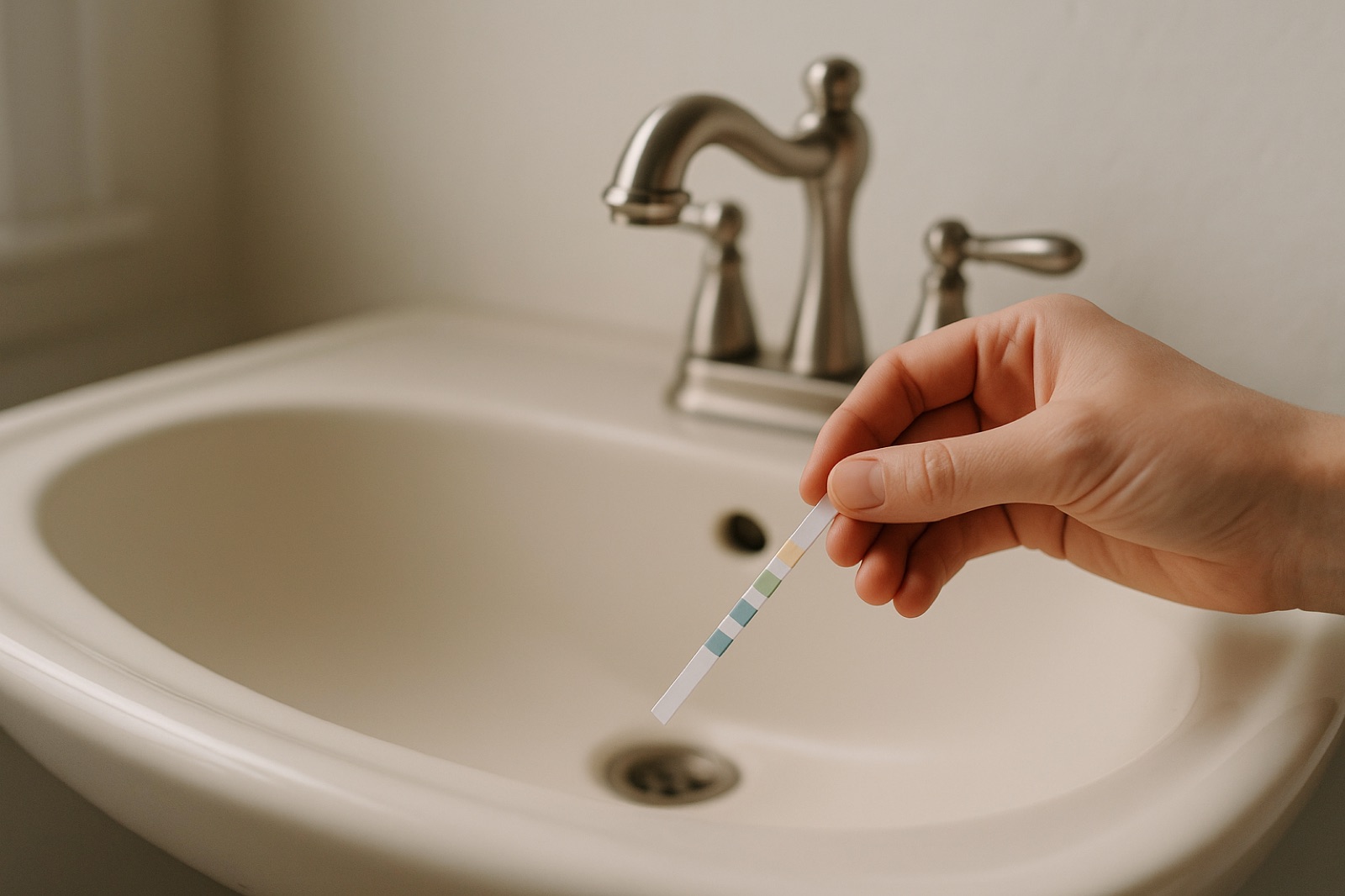
Every good water decision starts with a number. This desk covers what to test, when to test, and whether a ten-dollar kit or a certified lab should do the honors.
A late-fall walk-through of exposed pipes, hose bibs, and thin walls can show where a cold snap will hit your home first.
Five public records show changes upstream of your tap, and a quarterly check takes less time than ordering one lab test.
A thermometer and a minute at the faucet turn a vague sense of warm or hot into a log you can compare across hot weeks and cold ones.
Get a hardness reading from your own tap before you shop, because the softener size, the regeneration schedule, and the salt budget all start with that number.
Mail-in water kits are easy to order, but the lab behind the box decides whether your results are worth trusting.
A short, practical water check before holiday visitors arrive, with the steps you can finish in a few days.
A single water test is a snapshot, so recurring problems call for a calendar, a simple log, and a plan built around the seasons.
Staining is a clue, and a lab sheet read in the right units tells you what to ask a dealer before you buy anything.
A "not detected" result can be a good sign, but it only tells you how sensitive the test was, so learn the limit, the units, and the method before you compare sheets or buy treatment.
When approval paths speed up, the first sign of nearby work may be a change at your tap, so you need your own triggers for when to retest.
When a dust plume is announced nearby, the rain barrel, cistern, and well cap deserve the same attention you give the kitchen tap.
A news report about airborne lead dust in Iowa is a reason to check the plumbing in your own house, not a reason to guess about your tap.
A new AWWA and NACWA report sets research priorities for microplastics, and here is how homeowners can read that news without buying gear on the strength of a headline.
A regional cleanup headline tells you about a lake, but only your own water report or well test can tell you about your kitchen tap.
Slow changes are easy to miss unless you wrote down where things started, so set a baseline for your tap now while you still have a clear point of comparison.
Water infrastructure money means crews will work near your home, so here is how to check your own water before, during, and after the job.
When drilling operators do not publicly name the compounds they use, a homeowner's test plan has to rely on broad panels, detection limits, and well-kept records.
A landfill's own monitoring data is a clue worth understanding, but your kitchen tap sample is the answer that applies to your home.
A landfill or old plant miles away can still shape the water under your feet, so learn how to find what sits upstream and what to ask.
Public water news often arrives as a milestone or a headline, so check what was measured, where, and when before you act on it.
A state milestone can sound like good news, but an unverified cleanup tells you little about the water in your own home until you test it yourself.
A promised audit or sampling round is only a plan until the result arrives, so track the due date, ask for the outcome in writing, and keep your own test records separate.
Coastal flooding can leave more behind than wet streets, so here is how to read your tap, filter, and utility notices once the water drops.
A usage alert from your utility is a starting point, not a verdict, and a few simple checks can tell you whether to call the utility, call a plumber, or relax.
A simple running record of your taps, equipment, and notices lets you spot real change quickly, when memory is least reliable.
A "not detected" result only means something when you know where the lab's floor sits.
A seasonal home can hold weeks of stagnant water in its pipes, so a short arrival routine of meter reading, flushing, and sampling tells you what the tap is delivering before anyone drinks from it.
A home test kit answers a few narrow questions well, so learn which questions it leaves open before you act on a clear result.
Before you buy a filter or book a lab, sketch the path your water takes from the street to your faucets, because you cannot protect water you have never mapped.
Smart meter readings can point you to a hidden leak faster than a bill ever will, but they say nothing about what is in the water, so pair them with a lab test.
If your water starts at a lake, the weather that shapes the intake is a question worth asking your utility before the next storm arrives.
Heavy weather can change your source water before you notice anything at the faucet, so here is what to check before the next front moves in.
When a treatment plant completes a major project, the changes reach your tap, and the first place to look is the utility's annual water quality report.
Federal water money is tightening, so the most reliable record of your tap may be the dated notes you keep at home.
When service stops and comes back, the first week of checks on flow, color, and filters tells you more than the outage itself.
Pipe funding may be shrinking, but the lead question starts at your own tap, and a careful sample tells you where to begin.
A conservation land deal in Georgia is a reminder that the ground above your water source shapes what reaches your tap, and you can check that yourself.
A few dollars of test strips can show you when your tap has changed, but only your utility report and a certified lab can tell you what is in the water.
A water test is only as useful as the paperwork behind it, so learn to read the lab's certificate before you act on a single number.
A billion-dollar wastewater upgrade makes big news, but your own nitrate result is the number that decides which filter, if any, belongs under your sink.
When public water money shifts, the work on your utility's pipes and plants can change your tap, so let those notices set your retest dates.
A cheap gauge and ten minutes can tell you whether the pressure regulator in your home is doing its job before the faucets, appliances, and pipes start showing the strain.
A sulfur smell that shows up only on the hot side usually points to a specific place, and a simple two-tap check can tell you where to look first.
Grains per gallon, milligrams per liter, and parts per million describe the same hardness, so convert your report before you size a softener or compare test results.
Before a repair or a grant-funded project reaches your street, learn which part of the line from the main to your house is yours to watch.
Before you buy any monitoring device, you can use the meter already on your property to find out whether water is moving when nothing should be running.
A disputed school lesson about cattle and climate gives families a practical model for checking water claims at home using a bill, a report, and a notebook.
A home test kit is a product with a shelf life, so the printed date and the place you stored it matter as much as the number it gives you.
A new study on newer plastic additives raises a practical question for homeowners: does the water test you ordered look for them at all?
Lead results depend on how the water was collected, so learn which sample tells you what before you order a kit or read a utility notice.
Nitrate is odorless, colorless, and tasteless, so a clear glass of well water can still carry a number you only learn from a lab.
When a utility's pipe work slows, the tap check you run this month matters more than the replacement schedule you were promised.
A clean-looking PFAS line on a lab report answers a narrower question than most homeowners assume, so read the reporting limit before you relax.
When a wet year makes headlines, the useful response is a testing schedule you set in advance, not a scramble after the forecast changes.
Your utility's yearly water quality report answers more of your questions than the news does, if you know which columns to read first.
Heavy rain moves soil, debris, and runoff toward the places that feed your water, so a short after-storm routine can catch changes early.
Remote monitoring tracks water upstream of your house, so a ten-minute pressure check at your own spigot shows what actually reaches your fixtures.
A clean PFAS result only answers the question the lab was asked, so check which compounds were on the list before you file it away.
Voters approved water measures this week, but a renter's water still depends on the building's equipment, the lease, and who answers the phone when something goes wrong.
Your sinks, glassware, and taps often reveal a water problem before a lab does, but each mark or smell points to a different range of causes, so read them in order.
Voters can approve water measures in one afternoon, but the water in your glass changes only when you know what your own results say.
When federal cancer protections loosen, the paper trail behind your water becomes a job for the homeowner to read.
Big federal rule counts can feel alarming or oddly reassuring, but your tap is judged by your own numbers, read against a target you choose.
Your test report and your softener rating may measure the same hard water in different units, and a quick conversion keeps your sizing honest.
A dated folder turns scattered test sheets, utility reports, and news clippings into a record you can actually use when a question comes up.
A rate increase makes every hidden leak cost more, so a zero-cost meter check is the smartest first step you can take.
A large water user planned down the road is a supply question for anyone on a private well, and a few simple records will tell you more than any headline.
Denver Water's rate increase for 2027 is a reminder that a utility's supply problems and your tap water are separate questions, and a simple baseline keeps them apart.
A result is only as useful as the sample behind it, so check the bottle, the temperature, the timing, and the lab's reporting limit before you ship anything.
A new PFAS headline can raise alarm, but your utility's sample dates, detection limits, and test locations are what tell you what it means for your tap.
A national story about farm harm can raise a fair question, but a clipping is not a test result, so sort it by source, substance, and local record before you spend a dollar.
A new study suggests PFAS may be missed when levels fall below lab limits, so here is how to read the utility's annual report and what to ask before you decide anything.
A clean PFAS line may only mean the lab could not measure the amount, so here is how to read it and what to ask next.
A few dated notes about your taps, equipment, and bills can turn a lab sheet or a rate notice into a clear picture of your water.
After a flood, the trouble may sit under the yard rather than in the faucet, so check the septic system and the drains before you rely on the house again.
Flood stories fade fast, but the water in your house can stay affected for much longer, so a few checks now will tell you whether your tap is safe to use.
Navajo Nation's Clean Water Act eligibility governs discharges and sludge rather than your faucet, so here is how to tell which water rules actually reach your home.
A clean number only answers the questions the lab was asked, so the method line, reporting limit, and holding time deserve a read before you act on it.
Chloramine and free chlorine behave differently in carbon, so the disinfectant named in your utility's report should guide the filter you choose.
Home test kits answer a few practical questions well, but they cannot stand in for a certified lab when the question is PFAS or another contaminant.
Lead usually enters through the pipes and fixtures between the street and your faucet, so the testing, fixture check, and filter choice follow a different path than PFAS does.
A water test is only as trustworthy as the way its sample was collected, so learn the steps before you compare any numbers.
Farm coverage is rising, but a private well needs its own nitrate check on a steady calendar, with a lab report you can actually read.
A quiet house should mean a still water meter, so here is how to test for hidden leaks in about ten minutes and know when to call someone.
A federal support story about coal plants tells you about air rules and energy policy, so check your own water on its own terms before you act on it.
A notebook or spreadsheet kept by the household turns a single lab page into a record you can actually compare over time.
A PFAS result can read zero and still leave a question open, so learn to read the reporting limit before you relax.
Staining fixtures point to specific minerals, and a lab test tells you which ones are in your water before you buy any equipment.
A study that says contamination may be underestimated, an agency that launches a strategy, and a lab report that shows no detection each ask something different of your home.
Research programs and new study headlines move on their own schedules, so build your retest plan around the report on your counter, not the news cycle.
When a farm or chemical headline sends you toward a test kit, the lab's credentials, method, and paperwork decide whether the result means anything.
National stories about farms and PFAS leave one question open, and the answer for your address is usually in the yearly water quality report from your utility.
A test result helps only if you already know which answer would change what your household does, so write that plan before the lab reports back.
National coverage of farming and water changes by the week, but your tap is defined by one fixed question: where your water comes from and what that source is likely to carry.
Two dates on every lab report determine how much a clean-looking result can tell you about your tap today.
A clogged aerator can make clean water look cloudy or weak, so check the screen first and save the lab for the questions only a lab can answer.
When tides push into coastal neighborhoods, the water you drink can become a question, so a few steps now will keep you ready.
Record high tides reached low-lying California neighborhoods this week, so here is how to find out whether salt water could have reached your tap.
A permanent chief takes over at a national utility association this fall, and the more useful habit for homeowners is reading the report their own provider publishes.
How you collect a water sample can change the number on the report, so settle the method with your lab before the water goes in the bottle.
National coverage of farming practices is a reason to check your water, and this plan shows which tests to order and how to read the results.
Methane rule headlines concern the air, but a private well near drilling still deserves a dated record of what the water looks like today.
A "not detected" result can still hide a contaminant above the level you care about, so check the lab's limit before you relax.
A home water sensor can record far more than your pipe readings, so settle who holds the data, how you get it back, and what happens if you stop paying before it goes on the wall.
A federal funding bill can make headlines without changing your tap, so the smarter move is to keep a dated record of your own water results.
A striking demonstration can be real and still tell you little about your tap, so check the test water, the lab, and the full report before you trust the glow.
Public water fixes can take years, so set a simple testing calendar for your home that runs whether or not the headlines do.
When storms soak the ground, a private well owner has to do the watching that a city utility would otherwise handle, and that work starts outside the house.
A river dispute far from home is a good reason to pull the water data for your own address, and the report most homeowners never open is the place to start.
Heavy rain can change what reaches your faucet, so check your water in a set order before you assume it is safe to drink.
A headline about a Great Lakes data center says little about your faucet, but it is a good reason to check the numbers that do.
A "not detected" result only tells you the amount is below the lab's reporting limit, so check that number against the benchmark before you relax.
A township vote on a large data center is a reason to write down how your well performs today, not proof that it will change.
A new lawsuit over pesticide pollution is a reason to find out what your water test covers, not a reason to assume the worst about your tap.
A few documents from your utility and your own plumbing can turn a vague testing question into a useful sampling plan.
Choose a test by the decision it can settle, not by how sophisticated the technology sounds.
Before you order a specialty test or filter, separate regional water demand from a confirmed change in the water reaching your home.
A careful collection routine helps your laboratory result describe the water you actually use, not a contaminated faucet or a mishandled bottle.
When a troubling water claim reaches your feed or neighborhood group, verify what applies to your address before paying for testing or treatment.
Use a negative bacteria result as a baseline, then know which changes around your well and septic system should trigger another test.
A few household checks and a properly interpreted hardness test can tell you whether you need a repair, a filter, a softener, or no new equipment at all.
A controlled cleaning check can help you separate mineral trouble from detergent, appliance, and fixture problems before you shop for treatment.
Scale, odd taste, odor, stains, and contamination concerns can point toward different treatment jobs, so use these stop signs before choosing a softener or filter.
Pair household symptoms with a reliable hardness reading, then rule out plumbing, cleaning, and contamination problems that require a different response.
A simple source, pathway, and barrier check helps private well owners turn septic concerns into a practical testing plan.
Scale, spots, and stubborn soap can support a hard water diagnosis, but each clue needs a simple check before you choose treatment.
A short testing plan can separate hardness problems from taste, odor, staining, and possible contamination before you spend money on the wrong equipment.
Comparing cold-water clues with deposits left by heated water can help you separate true hardness from soap residue, fixture trouble, and filtration problems.
A few carefully chosen water samples can separate real hardness from spotting, soap residue, plumbing trouble, and a softener that simply needs repair.
A simple testing sequence can separate mineral buildup from look-alike problems and show whether your next step is cleaning, repair, filtration, or softening.
Scale, spots, and weak soap can justify a hardness test, but they cannot tell you whether groundwater is affected by a septic problem.
Before choosing a softener or filter, map where scale, taste, odor, staining, or contamination concerns appear and test the water that supplies that spot.
A simple faucet map helps you separate hard source water, a struggling softener, and misleading household symptoms before you buy equipment.
A symptom can point you toward a softener or filter, but a well-chosen water test should make the final call.
Scale, spots, weak lather, and a hardness test become useful only when you know what each clue proves and what it does not.
A few simple comparisons can separate likely mineral hardness from cleaning residue, plumbing trouble, and water quality concerns that need different testing.
Use scale, taste, odor, staining, and contaminant concerns to decide what to test first, what equipment may help, and what should remain separate.
A simple pre-storm record helps you separate ordinary household water problems from changes that deserve fresh testing.
Use scale, taste, odor, staining, and contaminant concerns to choose the right test before comparing a softener, filter, or combined system.
A one-tap, hot-water, and whole-house check can help you separate plumbing problems from water problems before you compare a softener with a filter.
Scale, spots, and weak soap performance can support a softener decision, but only when you test the right water and keep safety questions separate.
A few controlled checks can separate a genuine hardness problem from soap residue, local fixture trouble, or a softener that needs service.
A simple property walk can help you choose better sample locations, explain new water problems, and ask the laboratory for the right tests.
Use household symptoms to narrow the possibilities, then let measurements determine whether you need a softener, a filter, both, or neither.
A few controlled checks can tell you whether recurring household symptoms point to hardness, another water problem, or equipment that simply needs attention.
A simple sequence can separate true hardness from lookalike symptoms and show whether your next step is repair, filtration, or softening.
When chemical news raises questions about your tap water, turn a broad concern into a focused testing plan before you buy treatment.
A controlled before-and-after test can separate true hardness trouble from ordinary spotting, soap quirks, and equipment problems.
Before you buy a softener, compare what you see around the house with a properly collected hardness result.
A sudden change in your water can justify testing, but the right response depends on whether you find hardness, an aesthetic problem, or a contaminant.
A systemwide hardness number can start your investigation, but the decision to soften should come from measurements and symptoms inside your home.
A new farm project is a reason to review your private well routine, not proof that your water has changed.
Two hardness samples can tell you whether you need a new softener, a repair, or a completely different treatment.
Scale, strange taste, odors, stains, and contaminant concerns call for different tests, and the result should determine whether you need a softener, a filter, both, or neither.
A hardness result can help you separate a softener problem from residue, plumbing trouble, and water concerns that require a different test.
Use location, timing, cleaning tests, and a hardness reading to decide whether you need repair, filtration, softening, or no new equipment at all.
Scale, spots, and stubborn suds can point toward hardness, but a measured result should guide your next move.
Where and when a water problem appears can help you separate likely hardness issues from taste, odor, staining, and contaminant concerns.
Scale develops over time, so a sudden change in spots, residue, or soap performance may point to a household issue that deserves investigation before you buy treatment.
A troubling change in a nearby river or lake can justify questions, but it does not automatically tell you whether your household water is unsafe.
A simple comparison, followed by a hardness test, can help you decide whether your home needs cleaning, repair, filtration, or a water softener.
A few familiar clues can point toward hard water, but testing helps you separate mineral buildup from soap residue, plumbing trouble, and problems a softener cannot solve.
A careful inspection, safe electrical restart, and properly timed water test can help you avoid turning storm damage into a household water problem.
Understanding the impact of severe weather on water quality is crucial for homeowners.
Home water testing is essential for ensuring safe and clean drinking water for your family.
Climate change impacts water quality, making testing essential for homeowners.
Testing your home's water supply is crucial for ensuring its safety and quality.
Learn why regular water testing is essential for ensuring safe and clean drinking water in your home.
Water quality testing is essential for ensuring safe and clean drinking water in your home.
Learn how to effectively test your water and ensure it meets safety standards.
Learn why regular water testing is crucial for maintaining safe and clean drinking water at home.
Discover why regular water testing is essential for homeowners today.
Learn why regular water testing can help protect your family and home.
Ensure your home's water quality by understanding the importance of regular testing.
Regular water testing can protect your home and health.
Learn why testing your water regularly is essential for maintaining your home's health and safety.
Regular water testing is crucial for ensuring the safety and quality of your home's water supply.
Regular water testing is essential for ensuring the safety and quality of your home’s water supply.
Learn how to ensure your home's water quality is safe and clean with practical testing methods.
Learn why regular water testing can save you time and money in the long run.
Ensure your home water quality meets safety standards with regular testing.
Knowing what's in your water is essential for safeguarding your health and home.
Regular water testing can prevent costly issues down the line.
Learn how to evaluate and improve your home's water quality in light of environmental challenges.
Learn how to ensure your home water is clean and safe with effective testing and filtration methods.
Explore how water quality affects your home and what you can do to improve it.
Understanding the importance of testing for PFAS in your home water system is crucial for your family's health.
Explore the types of water tests available to ensure your drinking water is safe and clean.
Discover why regular water testing is essential for your home and health.
Understanding how regular testing can protect your household water quality.
Discover why regular water testing is essential for homeowners in today's unpredictable environment.
Regular water testing can help you safeguard your household's health and safety.
Learn how to navigate the complexities of PFAS in your home water supply.
As climate change continues to impact water quality, home water testing becomes essential for homeowners.
As climate change impacts water quality, homeowners must prioritize regular testing.
As climate change alters water quality, regular water testing becomes crucial for homeowners.
Testing your water can help ensure its safety and quality for you and your family.
A comprehensive guide to understanding the importance of home water testing for quality and safety.
Testing your home's water is essential for peace of mind and safety.
Why regular water testing is essential for maintaining water quality in your home.
As climate-related challenges rise, understanding your water quality has never been more crucial.
Explore the critical role of water testing and filtration systems in maintaining safe drinking water.
Why regular water testing is essential for homeowners today
Explore how local water quality issues highlight the need for proactive home water testing.
As concerns about microplastics grow, homeowners need to understand the importance of testing and how it impacts water quality.
Understanding the importance of regular water quality testing can help protect your home and health.
Regular testing can protect your home and health from unseen contaminants.
Home water testing is essential for understanding and improving your water quality.
Learn why regular water testing is essential for homeowners, especially in light of current environmental challenges.
Learn how to ensure your home water is safe from PFAS contamination and what steps you can take.
Microplastics are becoming a growing concern in our drinking water, and testing is essential for homeowners.
Understanding the crucial role of water testing in maintaining quality and safety.
Discover the growing importance of home water testing in today's changing climate.
Home water testing is more crucial than ever, especially in light of emerging contaminants like PFAS.
Water testing is crucial for ensuring the safety and quality of your home's water supply.
Protect your family by understanding the growing risks of chemical contamination in drinking water.
Home water testing is becoming essential for homeowners concerned about contaminants like PFAS and microplastics.
Home water testing can help you stay informed and proactive about your water quality.
Learn why regular water testing is essential for homeowners in light of emerging contaminants.
Learn why regular water testing is crucial for homeowners, especially in times of environmental change.
Protecting your home’s water quality through effective testing methods is essential now more than ever.
Climate change is impacting water quality, making regular testing essential for homeowners.
Learn why water testing is crucial in today's climate and how you can safeguard your home.
Stay informed about PFAS contamination and how to safeguard your water supply.
Stay informed about the quality of your water by testing for contaminants like PFAS and microplastics.
Regular testing reveals hidden contaminants in your drinking water supply.
Water testing is becoming essential for homeowners concerned about contaminants like PFAS and microplastics.
Stay informed about the importance of water testing as new guidelines emerge.
Water testing can save you from unpleasant surprises and ensure quality in your new home.
Stay informed about the water quality in your home and community with proactive testing.
As extreme weather continues to shape our environment, understanding your water quality is more crucial than ever.
Understanding the necessity of regular water testing can empower homeowners to ensure safe and clean drinking water.
Understand how to protect your home water supply from emerging contaminants like PFAS.
Understanding the current landscape of water contaminants can help homeowners make informed decisions.
Understanding water testing for your home is essential for ensuring safe drinking water amidst environmental changes.
Discover how technology can improve your water experience and safety.
Understanding how PFAS contamination affects your water quality and testing options.
Understanding the benefits of regular water testing can lead to a healthier home environment.