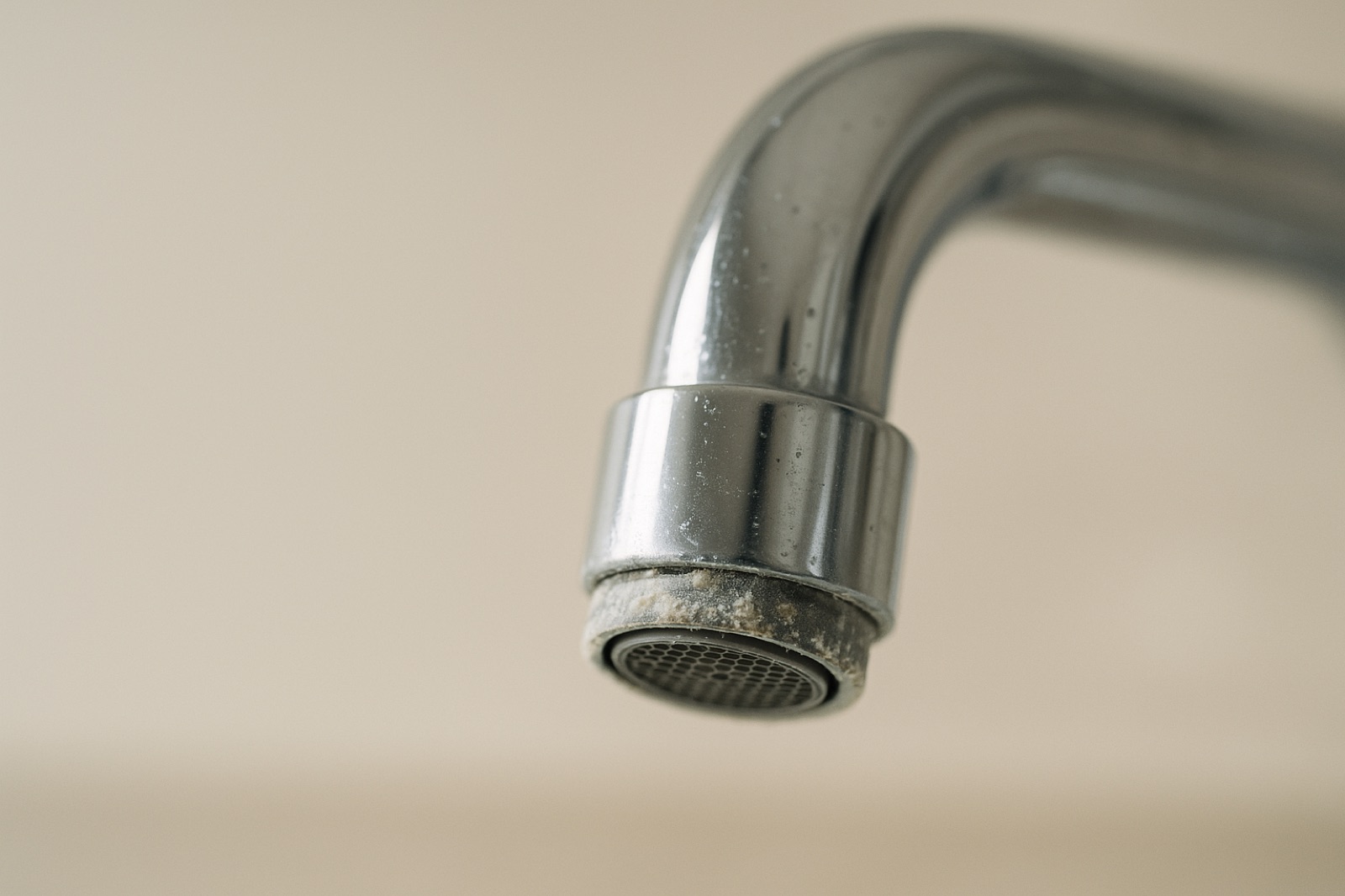
Hot weather can make water problems feel more urgent because showers, laundry, dishwashing, and outdoor use become more noticeable parts of the day. On September 11, 2026, the Guardian community team described a US summer marked by record heat in its request for readers to share how extreme heat affected them. Heat does not prove that your water became harder, but heavier use can reveal deposits and cleaning frustrations you previously overlooked.
If you are seeing white marks on faucets, cloudy glasses, stiff laundry, or disappointing soap lather, you may wonder whether a softener is justified. Those clues matter, but none is conclusive alone. The most useful approach is to separate residue from damage, test the water, and match any treatment to the measured problem.
Start with two damp rags
Choose a faucet or shower door with fresh white spotting. Wipe half the area with a rag dampened with plain water. Use diluted white vinegar on the other half, after confirming that the surface manufacturer permits it. Do not use vinegar on natural stone or other acid-sensitive materials.
If the vinegar-treated side clears more easily, mineral deposits are a reasonable suspect. If both sides remain cloudy, you may be looking at etched glass, damaged finish, soap film, or residue from a cleaning product. A softener can reduce new hardness scale, but it cannot reverse permanent etching or restore a worn fixture coating.
Also note where the marks occur. Deposits concentrated around hot-water fixtures may point toward scale made more visible by heating and evaporation. Marks limited to one sink could instead reflect that fixture, aerator, or cleaning routine. Widespread symptoms on both hot and cold lines make a whole-home water characteristic more plausible.
Let soap performance support the case, not decide it
Hardness minerals interfere with soap and can contribute to poor lather, bathtub rings, and residue on fabrics or skin. Yet soap performance is easy to misread. Detergent formula, dosage, water temperature, washer settings, and an overloaded machine can create similar complaints.
Try the recommended detergent amount for your machine and water conditions before blaming hardness. Clean a clogged showerhead or faucet aerator and observe whether flow improves. If low pressure remains at one fixture, repair may be more appropriate than treatment. If pressure is weak throughout the house, the plumbing system deserves evaluation before you buy water equipment.
Translate the hardness number
A hardness test commonly reports either milligrams per liter, written mg/L, as calcium carbonate, or grains per gallon, written gpg. To compare the units, divide mg/L by about 17.1 to get gpg. For example, 171 mg/L is about 10 gpg.
Test an untreated cold-water tap. If a softener is already installed, collect one sample before the unit and another after it. A single strip can be useful for screening, but a liquid drop test or laboratory result may give you a clearer number when the reading will guide a purchase.
Watch for false positives in your diagnosis. White residue can come from soap, salt spray near a brine system, humidifier dust, or a product left to dry. Orange staining can suggest iron, but a corroding fixture or pipe can look similar. Black particles may come from plumbing components. These problems should not automatically be labeled hardness.
Choose the smallest response that fits
If testing shows modest hardness and the nuisance is limited, regular cleaning may be enough. If confirmed hardness is causing recurring scale, inefficient soap use, and deposits across the home, softening is the treatment designed for that job. Before choosing capacity and settings, Lakeview readers can confirm hardness and size the right system.
Filtration belongs in a different lane. Sediment filters address suspended particles. Carbon filters may address certain tastes, odors, or disinfectants when the product is certified for the specific claim. Neither standard sediment nor carbon filtration should be assumed to soften water. Repair is the better first move when symptoms trace to a failing water heater, blocked aerator, leaking valve, corroded plumbing component, or malfunctioning existing softener.
Why this guide now
The Home Water Report recorded 3,210 page views, 1,068 visitors, 1,258 search crawls, and 2,876 AI crawls. Those totals show that the site is being discovered, but the feed does not provide query-level evidence or conversions. They cannot tell us which symptom brought each reader here or whether anyone ultimately needed equipment.
That uncertainty is a useful reminder for your own home: attention is not diagnosis. Scale, spotting, and weak lather can justify testing. The measured hardness level, symptom pattern, and plumbing condition should determine whether the answer is cleaning, repair, filtration, or softening.