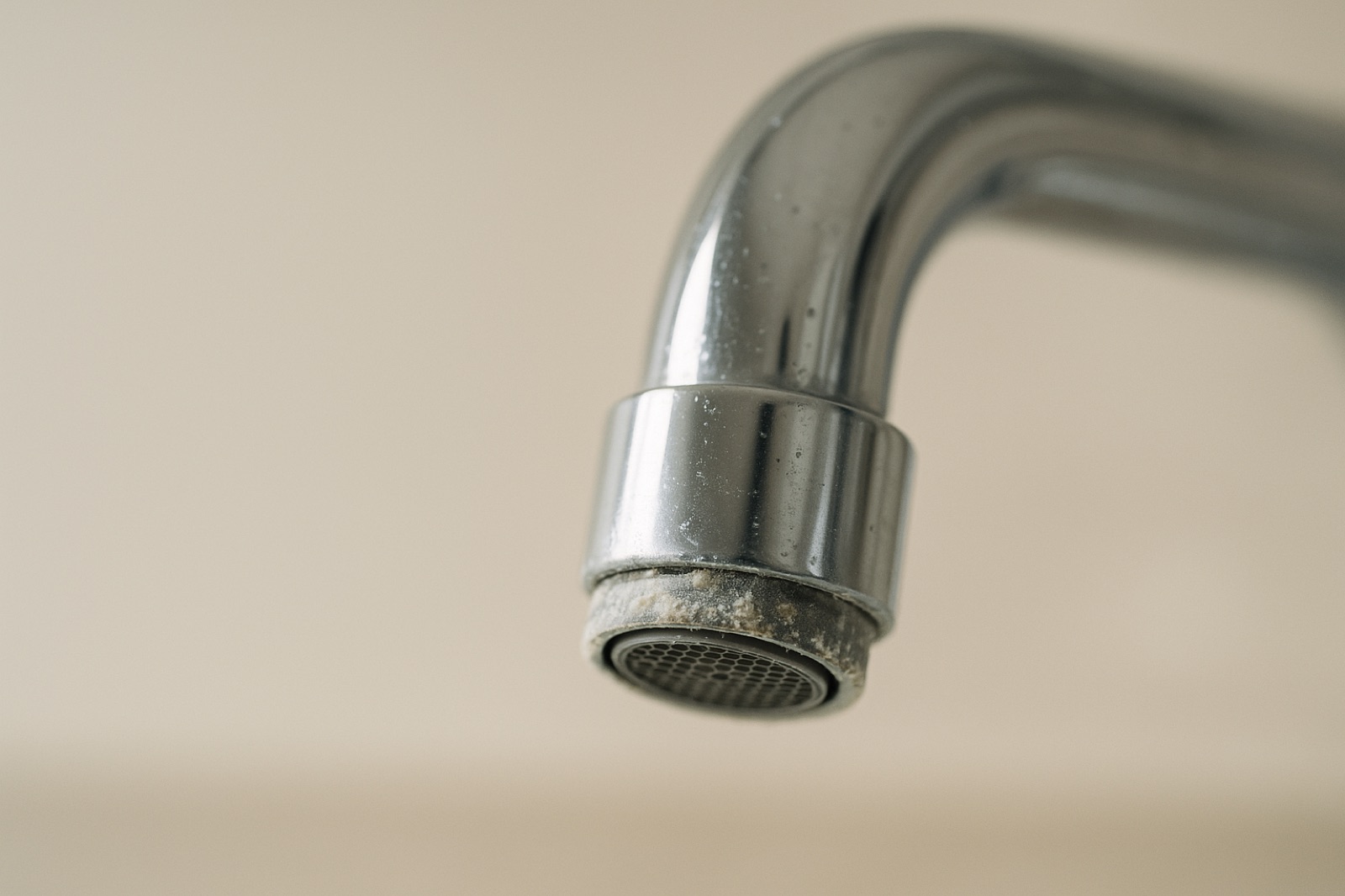
A softener and a filter can sit beside each other in a basement, yet they do very different jobs. That distinction matters when you are staring at crusty faucets, pouring out a glass that tastes odd, or wondering whether a news story says anything useful about your own tap.
The WateReuse Association has released a guidebook intended to help utilities, regulators, and industry practitioners develop state-specific water reuse regulations, according to Water Finance and Management's report on the new water reuse guidebook by WFM Staff. The larger lesson for homeowners is simple: water sources, rules, and treatment goals vary. A broad development in water management does not identify what is happening inside your house. Your symptoms can help you choose a test, but a test should choose the treatment.
Start with the clue you can actually observe
Use this symptom-led matrix to decide what to investigate first:
| What you notice | First check or test | Likely treatment category |
|---|---|---|
| White crust on faucets, showerheads, or heating elements | Hardness test, plus a close look at whether the deposit dissolves with ordinary descaling | Softener if hardness is confirmed and the household wants less scale |
| Unpleasant taste | Compare cold water at several taps, then request testing targeted to the suspected cause | Filter selected for the identified taste source |
| Rotten egg, earthy, musty, or chemical-like odor | Note whether it affects hot water, cold water, or both, then test accordingly | Targeted filtration or correction at the water heater, depending on the finding |
| Orange, brown, blue-green, or black staining | Test for the substances associated with the stain and inspect plumbing conditions | Specialized filtration, corrosion correction, or plumbing work |
| A contaminant concern with or without visible symptoms | Use an appropriate certified laboratory test or review current utility results | A filter certified for the specific contaminant, if treatment is needed |
This is a routing tool, not a diagnosis. Similar-looking deposits can have different causes, and many contaminants do not announce themselves through taste, odor, or color.
Know what each equipment type is being asked to do
A conventional ion-exchange softener addresses hardness minerals. Its practical purpose is reducing the scale and soap-related frustrations associated with hard water. It is not a general contaminant-removal device.
A filter is a broader label, not a single solution. Different filter media and designs target different substances. A sediment filter, carbon filter, iron treatment system, and reverse osmosis unit are not interchangeable simply because stores place them in the same aisle.
You may need both when testing identifies two separate jobs, such as confirmed hardness plus a specific taste or contaminant issue. That does not mean every house benefits from a combined system. It means each component should have a written assignment supported by a result.
Use a testing checklist before requesting quotes
Write down where the symptom appears, when it began, whether it affects hot or cold water, and whether neighbors notice it too. Record your water source, municipal supply or private well. Photograph stains and deposits before cleaning them. If you use municipal water, review the utility's current water-quality information. If a contaminant is your concern, ask which test method and laboratory are appropriate rather than relying on a broad screening strip.
When professional help makes sense, Jones Air & Water offer free in-home water tests. Treat that visit as a water assessment: ask for the measured results, the proposed treatment target, and an explanation of what the recommended equipment will not remove.
Before buying, verify five points: the problem identified, the test supporting it, the equipment's exact treatment claim, any applicable independent certification, and the ongoing schedule for salt, cartridges, cleaning, or service. If a seller cannot connect those points, you do not yet have a complete recommendation.
Why homeowners need a clearer route
The Home Water Report's available audience snapshot includes 3,226 page views, 1,068 visitors, 1,265 search crawls, and 2,891 AI crawls. No assist or CRM data was supplied, so those figures cannot show which content produced consultations or purchases. They do show substantial discovery activity around the site, reinforcing the value of a guide that answers the homeowner's immediate question without pretending every symptom points to the same machine.
Your safest buying sequence is short: observe, test, match, then verify. Scale may point toward softening. Taste, odor, staining, and contaminants usually require more specific investigation. Let the result define the job before a product defines the answer.