A dramatic water story can make every household water problem feel urgent. In a 2026 report, Circle of Blue described a destructive Nepal flood that “looked like an AI fake” as warming and melting reshape the Himalayas. Keith Schneider’s account of the Nepal flood concerns an extreme event, not household hardness. Still, it offers a useful reminder: what water looks like can get your attention, but appearance alone does not identify the problem.
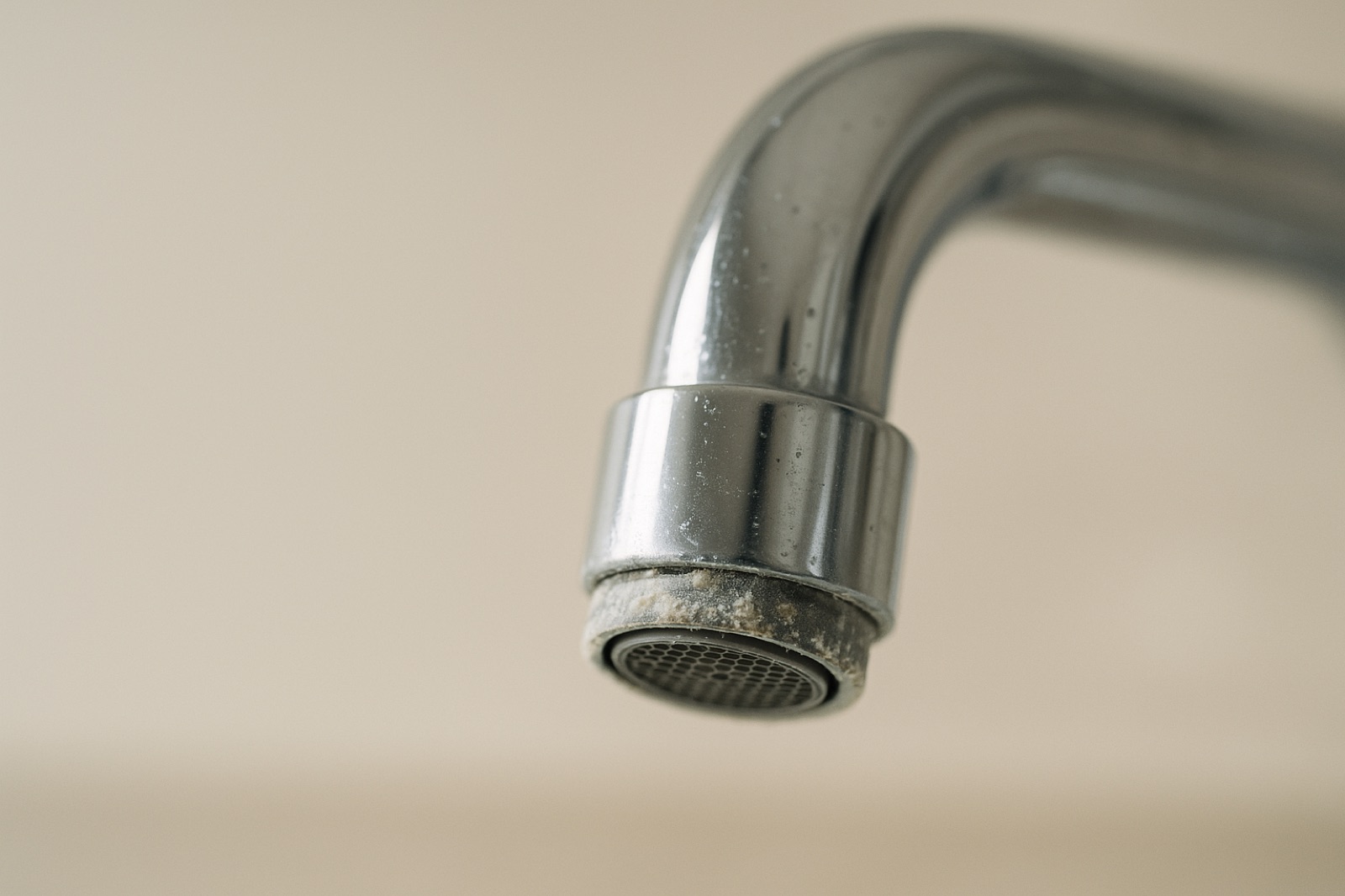
The same principle applies at your sink. White spots, crust around a faucet, and disappointing soap performance can point toward hard water. They do not prove that you need a new softener. A measured hardness result gives you a better starting point, provided you understand the units and test the right water.
Start with the unit, not the label
Hardness is commonly reported as milligrams per liter, or mg/L, expressed as calcium carbonate. Some test kits and water treatment companies use grains per gallon, abbreviated gpg. To make a rough conversion, divide mg/L by 17.1 to get gpg. A result of 171 mg/L is about 10 gpg.
Words such as moderately hard, hard, and very hard are broad classifications. Your practical decision also depends on how quickly deposits return, which fixtures are affected, how much hot water you use, and whether a softener is already installed.
Do not use a total dissolved solids meter as a substitute for a hardness test. That meter responds to many dissolved substances and cannot tell you how much calcium and magnesium are present. A high reading is not automatic proof of hard water, and a reading after softening may remain similar because ion exchange changes which dissolved ions are in the water.
Test before and after existing equipment
If you already own a softener, collect one sample from untreated water and another from a softened cold-water tap. Confirm that the second tap is actually connected to the softener. Outdoor faucets and some kitchen cold-water lines may be intentionally bypassed.
Hard incoming water paired with nearly soft treated water suggests that the equipment is doing its job. If both samples remain similarly hard, check the bypass valve, salt level, power supply, clock, and regeneration schedule. A salt bridge can also leave a tank looking full while preventing salt below from dissolving properly.
A repair may be the sensible next move when the incoming hardness has not changed but an existing unit suddenly stops reducing it. Replacement becomes more reasonable when the control valve, resin, or tank is failing and repair costs no longer fit the equipment’s condition.
Use symptoms as supporting evidence
Scale is the stronger household clue. Look for a hard, chalky deposit on showerheads, faucet aerators, kettles, and surfaces that repeatedly contact heated water. Heat encourages mineral deposits to become more noticeable, so a water heater or hot-water fixture may show the pattern first.
Spots on glass are less specific. They can come from hardness minerals, but they can also reflect detergent residue, rinse aid, dirty wash water, or droplets allowed to dry. Clean one glass thoroughly, rinse it with the water you want to evaluate, and let it air-dry away from the dishwasher. That helps separate a water clue from an appliance or washing problem.
Soap performance is also easy to misread. Product formula, water temperature, load size, and personal expectations all affect suds. Slippery water after softening is not proof that soap remains on your skin. Likewise, abundant bubbles do not establish that water is soft. Treat soap behavior as a clue, then check it against an actual hardness measurement.
Match the response to the finding
A softener is designed to reduce calcium and magnesium hardness. It is a reasonable candidate when testing confirms hardness and scale affects the home broadly. Before choosing capacity or settings, Lakeview can help you confirm hardness and size the right system using the measured level and household demand.
A filter serves a different purpose. Sediment, chlorine taste, odors, iron staining, and specific contaminants require their own evaluation and treatment method. A standard sediment or carbon filter does not soften water. A softener does not make every drinking-water concern disappear.
If only one faucet has weak flow or crust, remove and clean its aerator before planning whole-house treatment. If cloudy hot water, debris, or pressure trouble appears at several fixtures, the water heater or plumbing may deserve inspection. For a private well, unexplained changes in taste, odor, or color call for appropriate water-quality testing, not assumptions based on hardness strips.
Why the distinction matters
The Home Water Report recorded 3,210 page views, 1,068 visitors, 1,258 search crawls, and 2,876 AI crawls in the available reporting period. Those totals suggest interest in water guidance, but they do not reveal individual search queries or treatment conversions. They cannot show that every reader with spots needs a softener.
Your own evidence matters more: a known sampling point, a hardness result with units, a comparison before and after existing equipment, and symptoms found across more than one fixture. With those pieces, you can choose among cleaning, repair, filtration, softening, or further testing without asking one vague clue to make the whole decision.