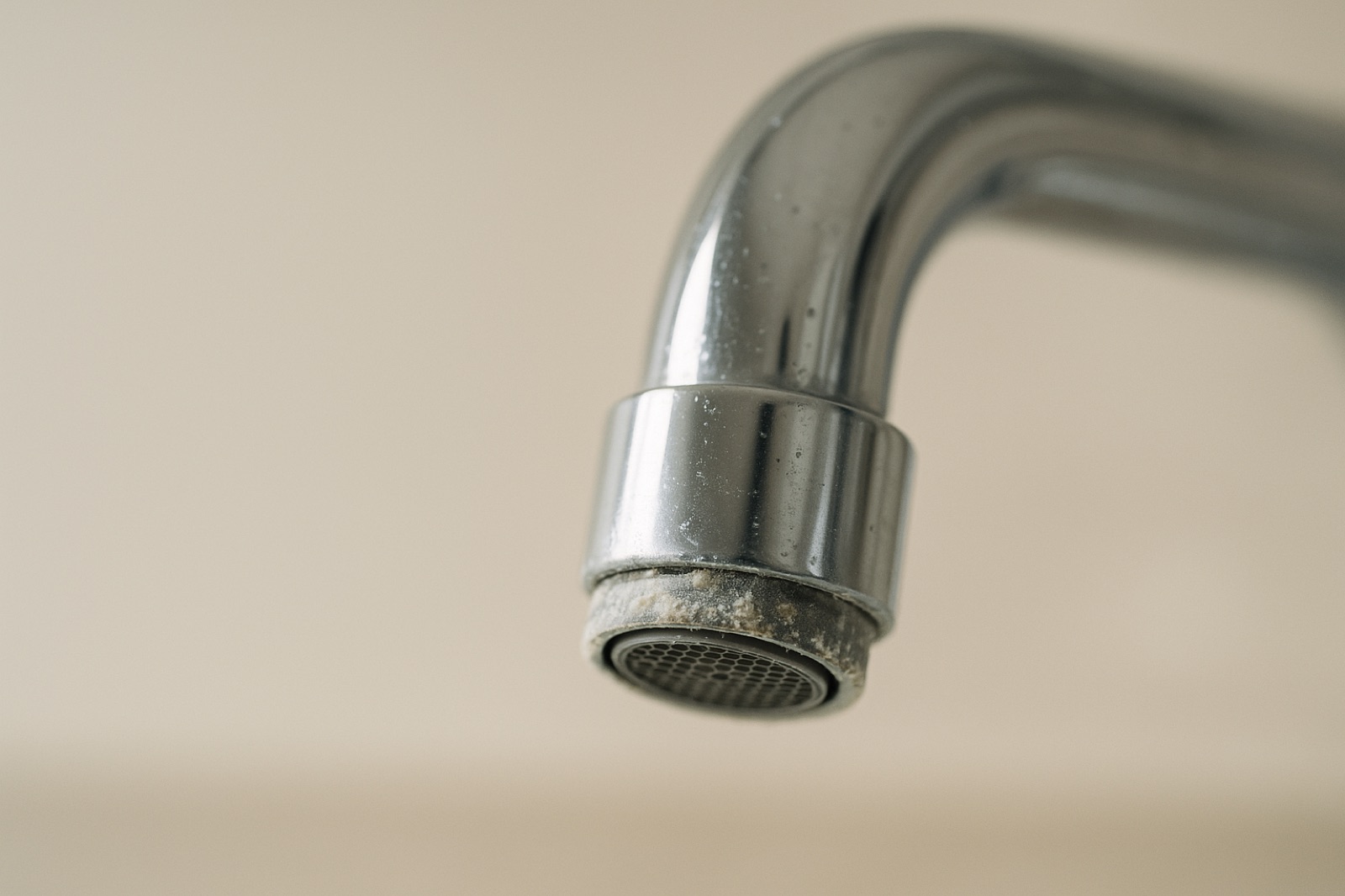
White crust around a faucet can make a water softener seem like the obvious next purchase. Then you notice spotted glasses, stubborn shower film, and soap that never feels quite right. The clues appear to agree, but several common household problems can imitate hard water.
The useful question is not whether you have seen one familiar symptom. It is whether the pattern, location, and test results point to excess calcium and magnesium throughout the home.
A 2026 Circle of Blue story by Brett Walton describes competing priorities for scarce Colorado River water at Glen Canyon Dam, including hydropower, ecosystems, and recreation. The report on how remaining water is being managed is about a watershed decision, not your tap's mineral content. That distinction matters. News about regional water supply can explain why water is receiving public attention, but it cannot diagnose hardness inside your house.
Build a symptom map before buying anything
Start by checking three places: a frequently used cold-water faucet, a hot-water fixture, and the dishwasher. If chalky deposits repeatedly form wherever water evaporates, mineral scale becomes a stronger possibility. If the problem appears only at one faucet, inspect or replace that aerator before considering whole-house equipment.
Hot-only buildup deserves a closer look at the water heater. Sediment, an aging heating element, or an overdue flush can make one part of the plumbing seem worse than the rest. A sudden change after plumbing work also points toward debris or a localized repair issue, especially when the other fixtures remain normal.
Spots are similarly ambiguous. Hardness minerals can remain after droplets dry, but dishwasher detergent, rinse-aid settings, excess detergent, and incomplete rinsing can leave their own film. Wash one glass by hand, rinse it thoroughly, and dry it immediately. Compare it with a glass allowed to air-dry. If only the air-dried glass spots, you have evidence of dissolved material, but not yet proof that a softener is the right fix.
Do not let soap make the diagnosis alone
Hard water can reduce lather and contribute to soap residue. Yet weak suds can also result from the soap formula, the amount used, oily laundry, or a high-efficiency washer operating with little visible foam. Slippery or squeaky skin is subjective and can change when you switch products.
Treat soap performance as supporting evidence. It becomes more meaningful when repeated scale, spotting, and a measured hardness result all point in the same direction.
Read hardness units without getting tripped up
A test may report hardness in grains per gallon, written as gpg, or milligrams per liter as calcium carbonate, written as mg/L. To make a rough conversion, divide mg/L by 17.1 to get gpg. For example, 171 mg/L is about 10 gpg.
Before relying on a strip or drop test, sample cold water from a tap that has not passed through an existing softener. Remove the aerator if it contains visible debris, let the water run briefly, follow the test timing exactly, and check the kit's expiration date. Color strips can be difficult to interpret under warm or dim lighting. A second test, or a laboratory result when broader water-quality questions exist, can help resolve an unclear reading.
A false positive can also come from sampling the wrong location. Water drawn from a hot tap may carry material from the heater. A test taken downstream of treatment tells you how the equipment is performing, not what enters the house. If you already own a softener, compare untreated water before the unit with treated water after it.
Match the remedy to the evidence
Choose repair when symptoms stay at one fixture, begin after plumbing work, or appear mainly on the hot-water side. Choose filtration when testing identifies a contaminant or an aesthetic issue that the selected filter is certified and sized to address. A conventional softener is intended for hardness minerals. It is not a universal contaminant filter.
Softening becomes a reasonable whole-house response when untreated-water testing confirms hardness and the home shows a consistent pattern of scale or soap-related inconvenience. Household water use, peak flow, plumbing layout, and the measured hardness all affect equipment sizing. If you want local help, Lakeview readers can confirm hardness and size the right system before comparing models or prices.
The Home Water Report recorded 3,210 page views, 1,068 visitors, 1,258 search crawls, and 2,876 AI crawls in the available reporting period. Those totals show discovery activity, but the feed lacks query-level evidence and conversions. They do not prove which symptom brought any particular reader here. That is why this guide starts with a household diagnosis, not an assumption that every spot should lead to a sale.