A treatment quote can tell you what equipment costs. It cannot, by itself, tell you what is in your water or whether the proposed equipment addresses it.
That distinction matters when a chemical enters the news. In September 2026, Circle of Blue reported that federal officials are expanding a scientific review of glyphosate, a widely used weedkiller. The report by Carey Gillam on the glyphosate review gives homeowners a reason to ask informed questions, but it does not establish that glyphosate is present at your address. A headline identifies an issue worth understanding. A water test supplies household evidence.
The same discipline helps with more familiar complaints. Scale, unpleasant taste, odors, stains, and contaminant concerns sound like one broad water problem, but they point toward different investigations and different equipment. Start with the symptom, record where it appears, and test before asking a device to solve it.
Use symptoms to choose the next question
| What you notice | What to check | Likely treatment category |
|---|---|---|
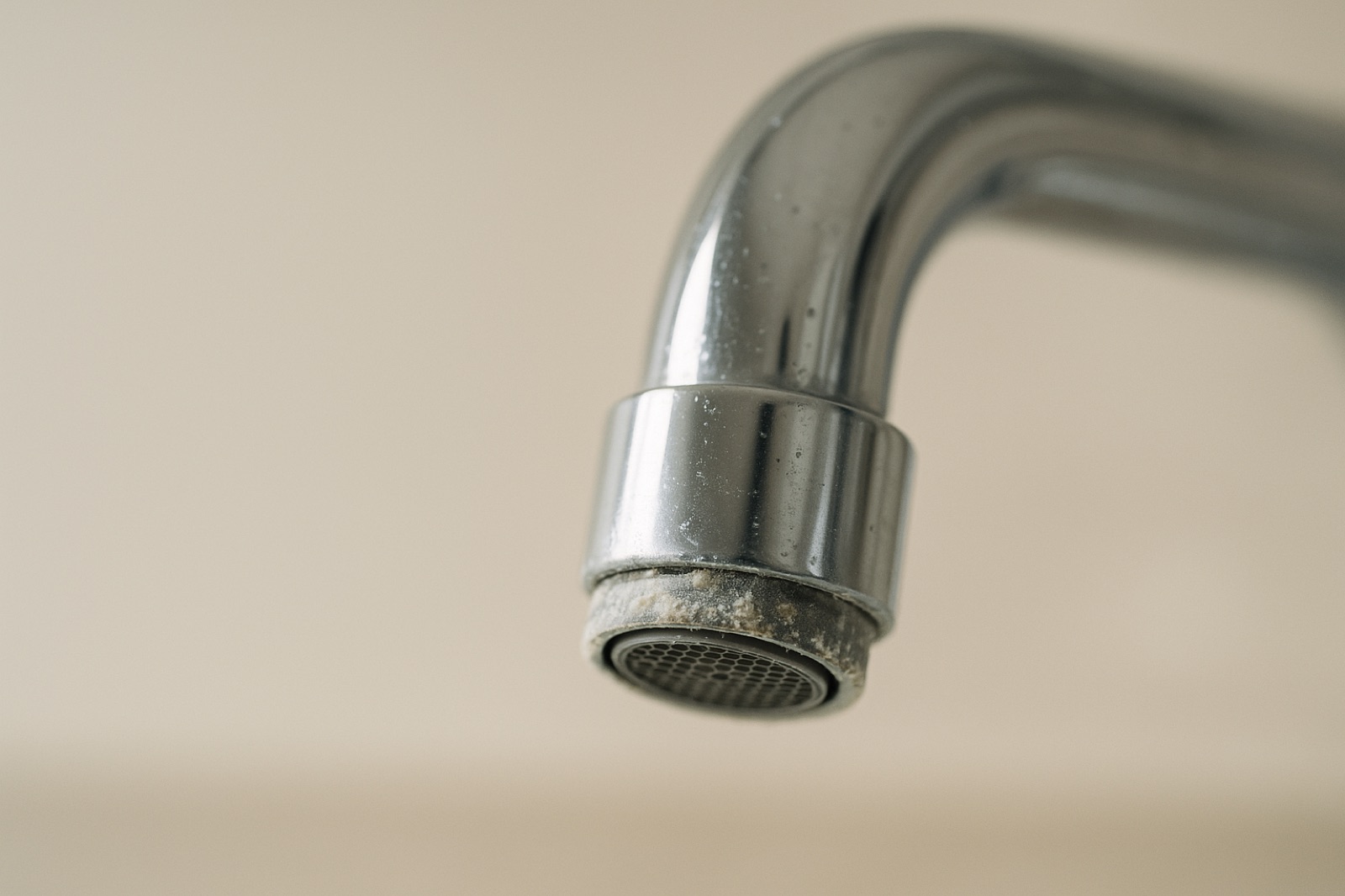
| White crust on faucets, spotting, or scale in hot-water equipment | Hardness, preferably at untreated water and after any existing softener | A softener if testing confirms hardness and the household wants scale control |
| Chlorine-like taste or odor | Whether the issue occurs at every tap, and whether cold water differs from hot | A filter selected for the identified taste or odor source |
| Rust-colored, black, blue, or green staining | Iron, manganese, pH, and possible plumbing corrosion, based on stain color and location | Source-specific filtration or water conditioning, not an automatic softener purchase |
| Concern about pesticides or another named contaminant | A certified laboratory test that includes the specific substance | A filter with performance documentation for that contaminant, if it is detected |
| Several symptoms at once | Separate test results for each suspected cause | Possibly both systems, installed in an order suited to the water chemistry |
This matrix is a starting point, not a diagnosis. A softener primarily exchanges hardness minerals such as calcium and magnesium. It is not a general contaminant filter. A filter, meanwhile, is only as useful as the media, capacity, flow rate, and verified reduction claims that match your problem. The word “filter” alone tells you very little.
Build a testing checklist before collecting samples
First, write down the symptom in plain language. Note its color, taste, smell, texture, and timing. Record whether it affects hot water, cold water, one fixture, or the entire home. This helps separate a plumbing or appliance issue from a supply-wide condition.
Second, identify your water source. Public-water customers can review their utility’s available water-quality information, but conditions inside the home may still affect what reaches a particular tap. Private-well owners are responsible for arranging their own testing and should choose test panels based on local conditions, property history, and the concern they are trying to resolve.
Third, decide what each sample must answer. A hardness result helps evaluate softening. Iron, manganese, and pH results can clarify staining. A contaminant concern calls for a test that names that contaminant. Avoid assuming that a basic screening panel covers every chemical you have heard about.
Fourth, follow the laboratory’s collection directions. The sampling location, container, preservation method, and delivery timing can matter. If you are comparing untreated and treated water, label those samples clearly so the results do not become another source of uncertainty.
Finally, bring the results to the equipment conversation. Ask the seller to connect every recommended component to a measured condition. The proposal should state what the system is intended to reduce, its maintenance needs, expected replacement schedule, and any performance certification relevant to the claim.
Know when the answer is both, or neither
You may need both a softener and a filter when testing confirms hardness plus a separate taste, odor, staining, or contaminant issue. That does not mean any two devices will work well together. Water chemistry, household flow, placement, and maintenance all affect the design.
You may also need neither. A smell isolated to one drain may call for cleaning that drain. A hot-water-only odor may direct attention toward the water heater. Staining from a deteriorating fixture may not justify whole-house treatment. Locating the symptom can save you from buying equipment for a problem the equipment never reaches.
If the results or competing proposals are difficult to interpret, you can schedule a professional water assessment and ask for recommendations tied to the actual measurements.
The demand for clear choices is visible in The Home Water Report’s own audience data: 3,226 page views and 1,068 visitors, alongside 1,265 search crawls and 2,891 AI crawls. No assist or CRM data was supplied, so those figures show attention, not purchases or treatment outcomes. Your household decision still belongs on firmer ground: a defined symptom, the right test, and equipment matched to the result.