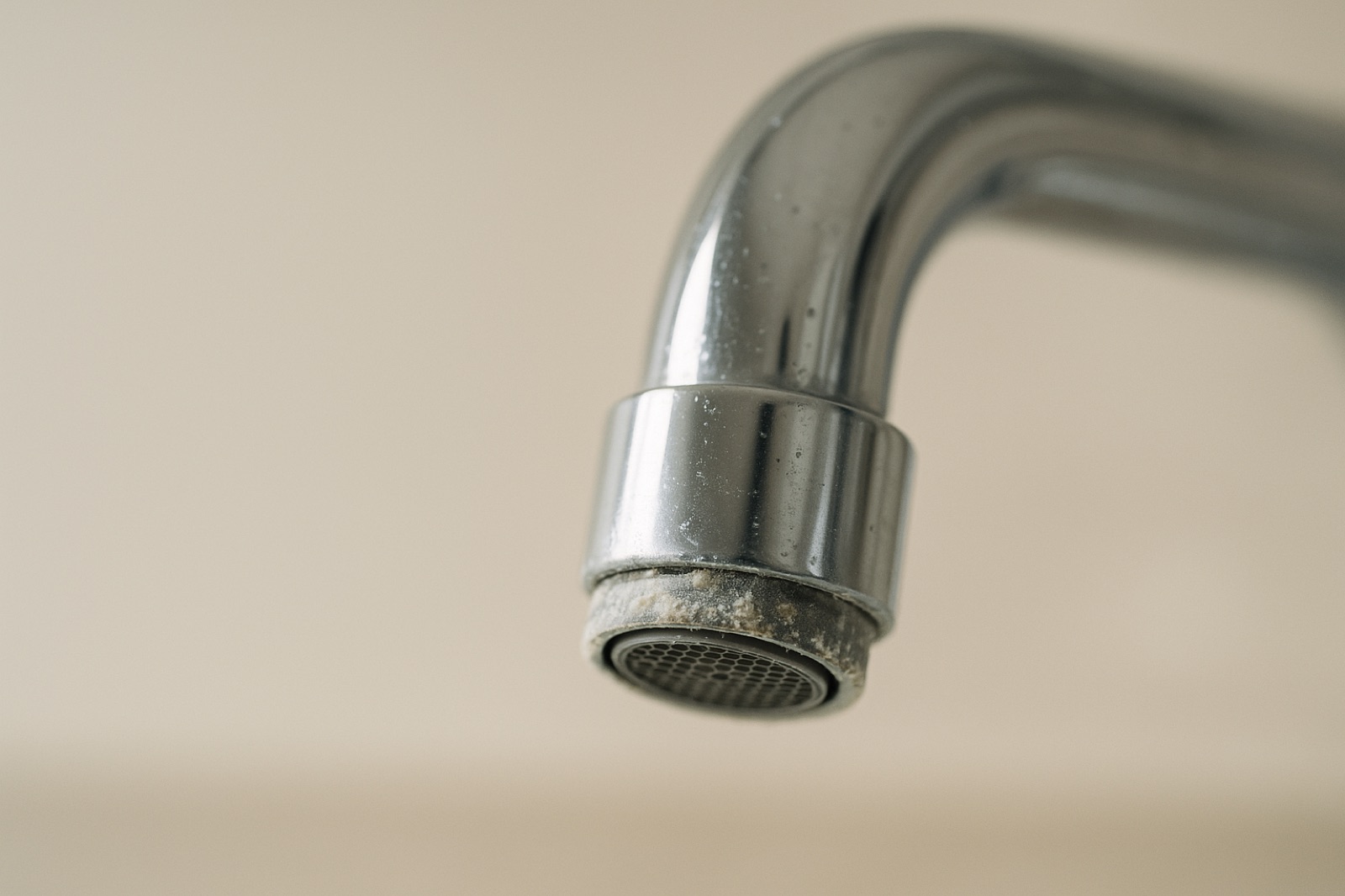
A white crust on the showerhead, an earthy taste at the kitchen sink, and an orange toilet stain may all seem like versions of the same problem: bad water. They are not. Each clue points toward a different question, and buying equipment before separating those questions can leave you with an expensive system that solves only part of the trouble.
Location is especially useful. Does the symptom appear at one faucet or throughout the house? Is it present in both hot and cold water? Does it remain after you run the tap for a few minutes? Your answers cannot identify every contaminant, but they can help you decide what to test and whether you are probably comparing a softener, a filter, or a combination of treatments.
This distinction matters when water conditions may be changing. The Guardian, in a September 10, 2026 story by Gabrielle Canon, reported that Hurricanes Lowell and Lala left damage in Hawaii, including downed power lines, crumbled roads, sunken boats, and destroyed piers on Kauai. The report offers a timely reason to separate visible storm damage from questions about household water. You can read The Guardian's account of Hawaii's summer storms. A storm nearby does not prove that your tap water is contaminated, but a sudden change after flooding, an outage, or a utility notice is a reason to follow official instructions and consider testing.
Start by mapping the symptom
If a bad taste occurs only at one faucet, inspect that faucet's aerator and any attached filter first. If it appears at every cold-water tap, the source or incoming supply deserves more attention. An odor found only in hot water may involve the water heater rather than the entire supply. Staining in one rarely used fixture can reflect local plumbing or standing water, while staining throughout the house suggests a broader water chemistry issue.
Timing adds another layer. Record whether the symptom is constant, appears first thing in the morning, begins after plumbing work, or comes and goes with utility maintenance. Take photos of stains and scale, but do not rely on color alone. Different substances can leave similar marks, and appearance cannot tell you whether an invisible contaminant is present.
Softener versus filter matrix
| What you notice | Likely treatment category to investigate | What to confirm first |
|---|---|---|
| Chalky scale, spotted glassware, stiff laundry, soap that performs poorly | Water softener | Measured hardness, household water use, and whether symptoms occur throughout the home |
| Chlorine-like taste or odor across several cold-water taps | Activated carbon filtration | Water provider information, filter performance claims, flow requirements, and test results when appropriate |
| Sediment or visible particles | Sediment filtration, sometimes followed by other treatment | Particle type, where it appears, plumbing condition, and whether the home uses a private well |
| Orange, brown, blue-green, or black staining | Depends on the cause, potentially specialized filtration or corrosion correction | Laboratory results for relevant metals and basic water chemistry |
| Concern about lead, PFAS, nitrate, bacteria, or another specific contaminant | A filter certified for that particular reduction claim, or another targeted treatment | A suitable test and independently verified product performance |
| Scale plus a confirmed taste, odor, or contaminant issue | Softener and filter, each assigned a separate job | Test results, installation order, service flow, maintenance, and operating cost |
A softener primarily addresses hardness minerals through ion exchange. It is not a general contaminant filter. A filter, meanwhile, should be selected for a defined reduction claim. The word “filter” alone does not tell you whether a product addresses sediment, taste and odor, lead, or another concern.
Your testing checklist
Before requesting proposals, write down your water source, the affected fixtures, whether hot and cold water differ, when the issue began, and any recent plumbing or neighborhood event. Gather your utility's water-quality information if you receive public water. For a private well, choose tests based on local conditions, the well's history, and applicable guidance rather than buying the largest available panel without a reason.
Ask the laboratory or treatment professional how samples should be collected. Some questions require first-draw water, while others call for flushing the line first. Use the specified bottles and follow holding-time and temperature instructions. Then compare every proposed device with the measured problem, its verified reduction claims, required flow rate, replacement schedule, wastewater or salt use, and ongoing cost.
If the symptoms overlap or you are unsure which tests fit, schedule a professional water assessment. Bring your symptom map and results. That turns the conversation from “Which machine should I buy?” into the more useful question: “What exactly needs to change in my water?”