A hardness test can give you a useful number, but only if you know which water you sampled. In many homes, outdoor faucets bypass the softener, some kitchen cold lines do too, and hot water has been sitting in the water heater. Test the wrong tap and you can mistake normal plumbing design for equipment failure.
This matters because household equipment often keeps operating after its performance has slipped. Water Finance and Management describes a similar challenge at the utility level in its report on aging billing practices and system upgrades. The story concerns utility administration, not home treatment, but its practical lesson carries over: something can appear to work, more or less, while producing avoidable costs and service problems. Your softener deserves a performance check before you assume it needs replacement.
Draw your sampling map first
Identify three kinds of taps in your home: untreated cold water, treated cold water, and hot water. Your plumbing may not provide all three conveniently, so confirm the route instead of guessing.
An outdoor spigot often supplies untreated water, although not every installation follows that pattern. A bathroom cold tap commonly receives softened water. The kitchen cold tap may be treated or bypassed, depending on homeowner preference and plumbing layout. Hot water is usually treated if the water heater receives softened water, but it is a poor first sample because the tank holds water from earlier hours or days.
Start with one confirmed untreated cold tap and one confirmed treated cold tap. Let each run briefly, use clean containers, and follow the kit directions exactly. If you have no existing softener, one representative cold-water sample is enough for an initial hardness check.
Read the unit before interpreting the number
Hardness may be reported in milligrams per liter, or mg/L, expressed as calcium carbonate. It may also appear as parts per million, which is roughly equivalent for this household comparison, or as grains per gallon, abbreviated gpg.
One gpg is about 17.1 mg/L. To convert mg/L to gpg, divide by 17.1. For example, 171 mg/L is about 10 gpg. Always copy the number and unit together. Confusing 120 mg/L with 120 gpg can turn a useful result into a wildly misleading basis for sizing.
A total dissolved solids meter is not a hardness test. It responds broadly to dissolved material and cannot isolate calcium and magnesium. Softened water may still produce a substantial total dissolved solids reading because ion exchange replaces hardness minerals with other ions rather than removing everything dissolved in the water.
Use symptoms to support the test, not overrule it
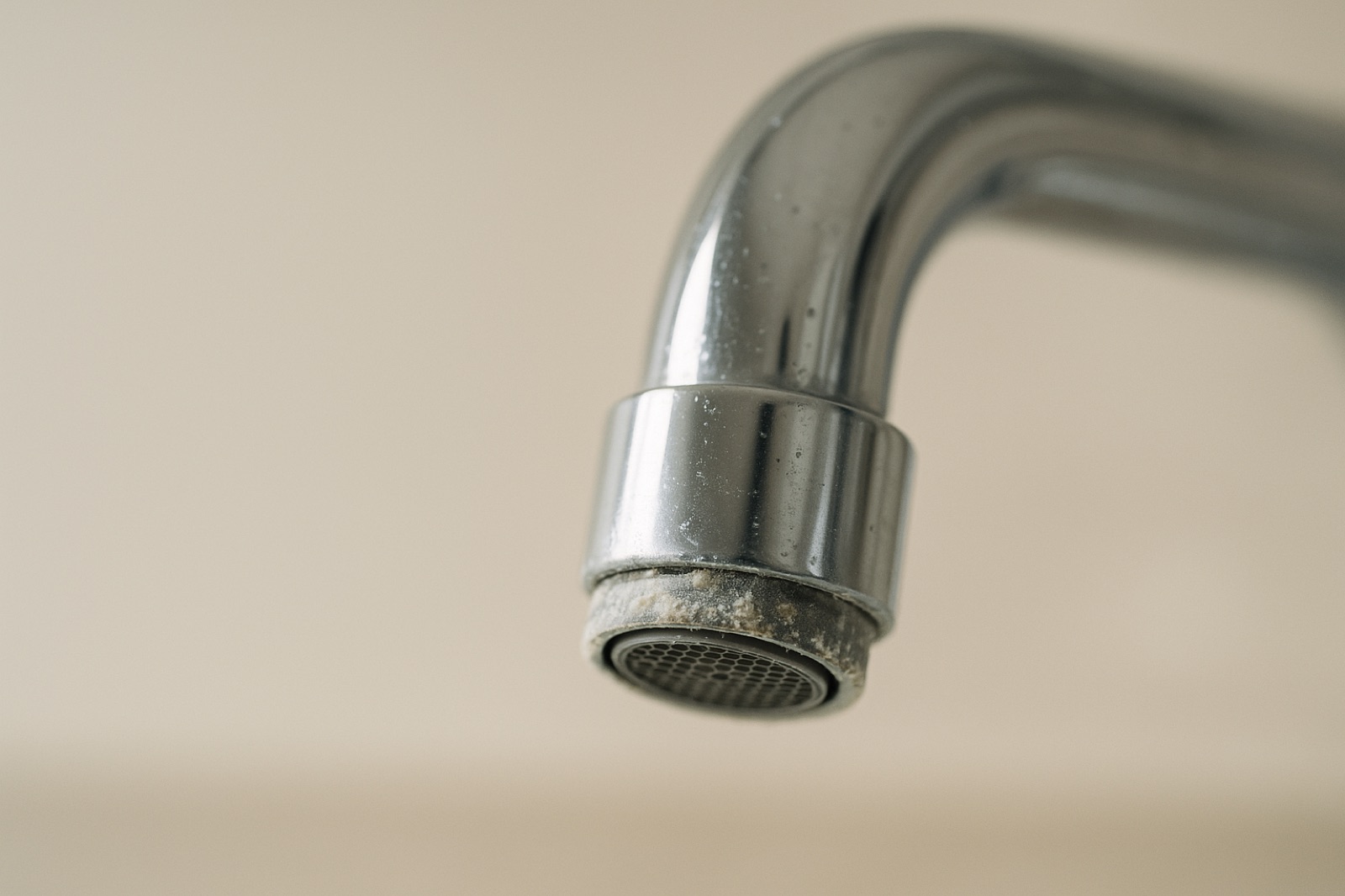
Recurring chalky scale on showerheads, aerators, kettles, and heated surfaces supports a hard-water diagnosis. A few white spots do not. Spots can also result from detergent, rinse aid, cleaning products, droplets left to dry, or permanent glass etching.
Soap performance can mislead you too. Water hardness can reduce lather and contribute to residue, but soap formula, dose, temperature, and washing-machine settings also matter. If a new detergent or appliance setting preceded the complaint, test that variable before blaming the water.
Home test strips can create false positives when they are expired, stored in humidity, dipped too long, or read outside the instructed time window. If the color falls between ranges or conflicts with what you see throughout the house, repeat the test with fresh supplies. A drop-count titration kit or professional test can give you a clearer number when equipment sizing is at stake.
Let the paired readings choose the response
If untreated water is hard and treated water is much lower, the softener is performing its main job. Investigate dishwasher settings, cleaner residue, isolated fixture scale, or glass damage before changing the system.
If both readings are similarly hard, check the softener's bypass position, salt level, power, clock, hardness setting, and regeneration schedule. A salt bridge can make a brine tank look full while preventing proper operation. Persistent high treated-water hardness is a repair or service question before it becomes a replacement decision.
If untreated hardness is modest and symptoms are limited to one fixture, clean the aerator and inspect nearby plumbing. Whole-house softening may offer little benefit.
If the complaint is sediment, chlorine-like taste, odor, unusual color, or staining that a hardness result does not explain, move toward targeted testing or filtration. Sediment and carbon filters perform different jobs from a softener. No single unit should be expected to solve every water complaint.
When measured hardness agrees with recurring scale and poor soap performance across the home, softening becomes a reasonable option. At that point, Lakeview can help you confirm hardness and size the right system using the result, household demand, and plumbing layout.
What the audience numbers cannot diagnose
TheHomeWaterReport.com recorded 3,210 page views, 1,068 visitors, 1,258 search crawls, and 2,876 AI crawls. Those figures show discovery, but the feed lacks query-level evidence and conversions. They cannot tell us which readers have confirmed hardness or whether anyone needs a softener.
Your two well-chosen samples are more useful than a pile of general symptoms. Confirm where the water came from, keep the units attached, and compare untreated water with treated water. That small map can point you toward cleaning, repair, filtration, or softening without asking one spot or one strip to decide everything.