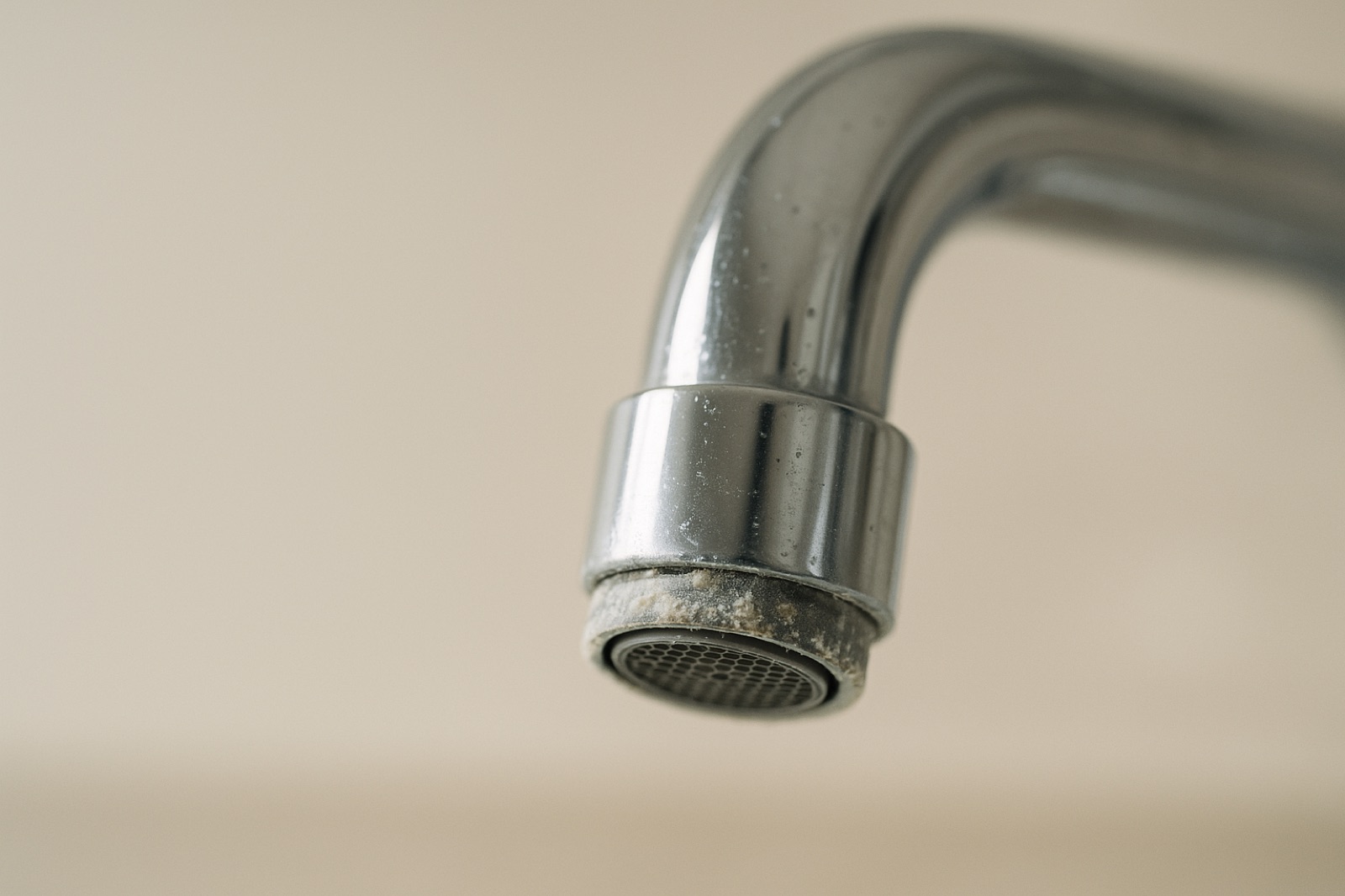
Hard water usually leaves a pattern, not a surprise. You may notice a chalky ring returning around a faucet, cloudy shower glass, or soap that takes more effort to rinse from a sink. When several clues develop gradually and a hardness test supports them, a softener may be a sensible answer.
But what if the change seems to happen overnight? Before treating a new white film or disappointing dishwasher load as proof of hard water, look at what changed in your home and community. Timing can help you separate a mineral problem from residue, a plumbing fault, or a temporary change in how water is being used.
That distinction feels especially relevant when damaged infrastructure is in the news. On September 10, 2026, The Guardian reported that Hurricanes Lowell and Lala left downed trees and power lines, crumbled roads, sunken boats, and destroyed piers in Hawaii. The report on Hawaii's storm damage does not establish anything about your tap water. It does offer a useful homeowner lesson: visible trouble and its actual cause are not always the same thing.
Start with the speed of the change
Mineral scale accumulates as water evaporates or is heated. If deposits have slowly become more stubborn across several fixtures, hardness belongs on your list of suspects. If every glass suddenly looks cloudy after one dishwasher cycle, first inspect the machine, detergent dose, rinse aid setting, and water temperature.
A single affected fixture also weakens the case for a whole-house hardness problem. A rough white crust on one faucet could come from a leaking aerator or repeated drips. Weak flow at one showerhead may reflect debris or a clogged screen. If the evidence is isolated, examine and clean that component before shopping for equipment.
Read spots before you count them
Hard-water spots are mineral deposits left after droplets dry. They often appear on glass, chrome, tile, kettles, and heating elements. Yet several look-alikes can create false positives. Soap film may feel waxy, detergent can dry into a powdery coating, and cleaning products can leave a haze. Dust or construction residue may settle on damp surfaces and resemble scale.
Try cleaning a small area with the product recommended for that surface, then watch how quickly the mark returns. A deposit that repeatedly follows drying water across multiple rooms is more meaningful than residue found only where one cleaner or appliance is used.
Use soap performance as supporting evidence
Hardness minerals interfere with ordinary soap and can contribute to curd-like residue. Still, lather alone is a poor test. Product formulation, the amount used, water temperature, and personal expectations all affect how soap behaves.
Compare like with like. Use the same soap, similar water temperature, and similar amounts at two fixtures. If performance changed only at one location, inspect that fixture. If it changed throughout the house and you also see recurring scale, testing becomes the useful next step.
Translate the hardness number
Water hardness is commonly reported as milligrams per liter, or parts per million, expressed as calcium carbonate. It may also appear as grains per gallon. To make a rough conversion, divide milligrams per liter by 17.1 to get grains per gallon.
The number confirms how much measurable hardness is present, but it does not choose equipment by itself. Household water use, peak flow, plumbing layout, and any iron or sediment concerns can affect the appropriate treatment and size. Test a representative cold-water tap before treatment, and record the unit shown on the report or test kit.
Match the response to the finding
If the hardness result is consistent with widespread scale and poor soap performance, a properly sized ion-exchange softener is the direct treatment for calcium and magnesium hardness. Lakeview-area homeowners who want an in-home evaluation can confirm hardness and size the right system before comparing equipment.
If the water tests hard but the sudden symptom appears at only one fixture, repair or cleaning may still be the first move. If particles are causing clogged screens or visible sediment, filtration may be appropriate, but a sediment filter does not soften water. Taste, odor, or a specific contaminant concern calls for targeted testing and possibly a different filter. A softener should not be treated as a universal purifier.
The Home Water Report recorded 3,210 pageviews, 1,068 visitors, 1,258 search crawls, and 2,876 AI crawls in the available snapshot. Those figures show discovery activity, but the feed lacks query-level evidence and conversions. They cannot tell us which symptom brought any individual homeowner here or whether that person needed a softener.
Your own evidence can be more decisive: note when the problem began, map where it appears, rule out isolated equipment issues, and obtain a hardness result with clearly labeled units. That sequence turns a vague annoyance into a treatment decision you can defend.