Discolored water after a major weather event can make any homeowner question what is coming from the tap. On September 27, 2026, The Guardian, in reporting by Marina Dunbar, described a nor’easter that brought flooding, damaging winds, and power outages along the East Coast. That kind of disruption is a reason to follow your water utility’s instructions and investigate sudden changes. It is not, by itself, evidence that your home needs a water softener.
A softener is meant to address hardness minerals. It does not disinfect water, remove every contaminant, or repair a plumbing problem. Before you shop, build a small case file from symptoms, locations, timing, and test results. The goal is not to prove that your water is imperfect. It is to identify the job that equipment would actually need to do.
Separate persistent symptoms from temporary changes
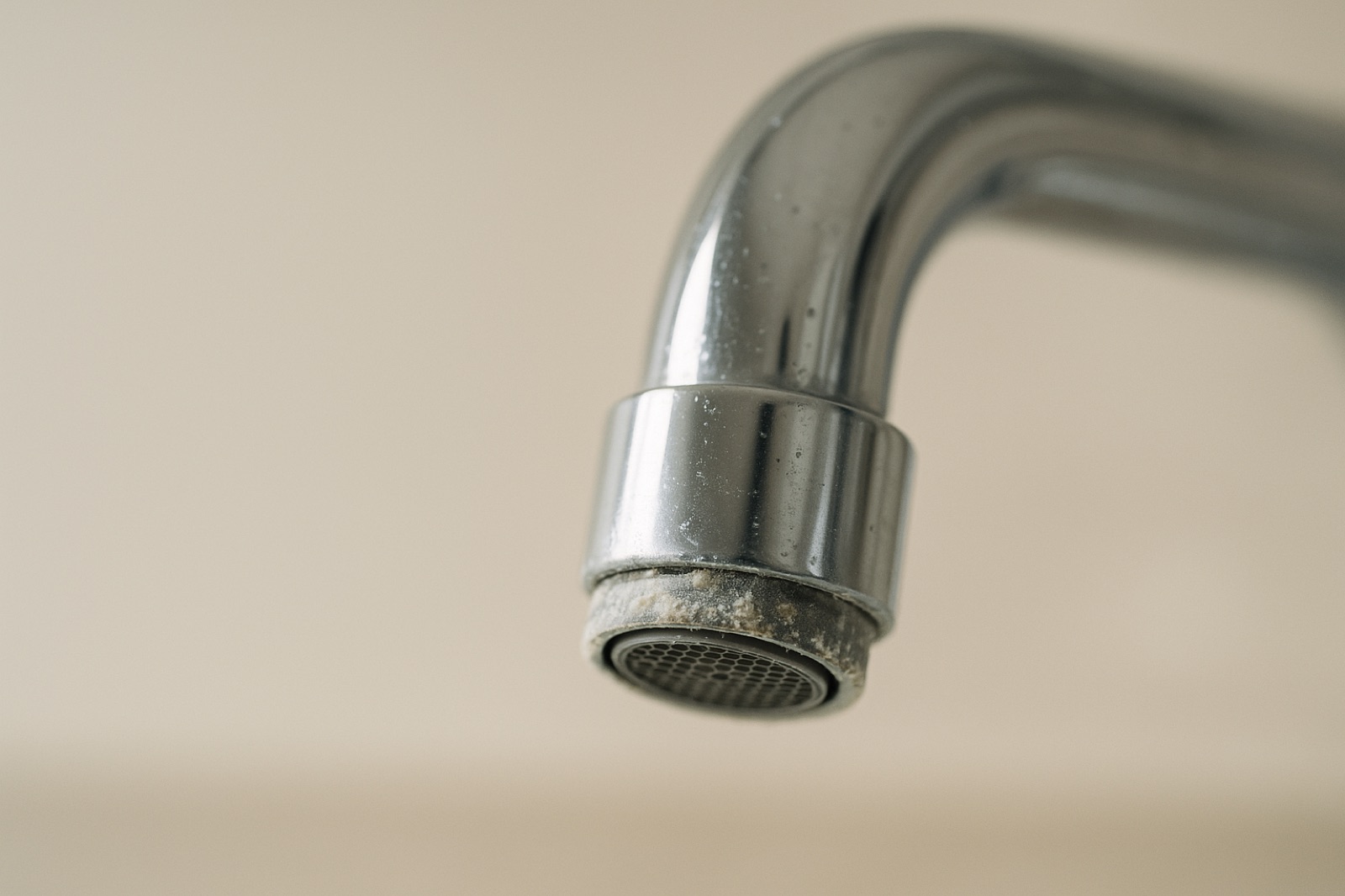
Hardness usually leaves a pattern that repeats during ordinary conditions. Look for crust on faucet aerators, deposits around showerheads, mineral buildup in kettles, or soap that requires more effort to rinse from fixtures and fabrics. One cloudy glass or one morning of unusual tap water is weak evidence.
Make notes for a week or two. Record which fixtures are affected, whether hot and cold water behave differently, and whether the symptom returns after cleaning. If only the hot side produces debris or cloudy water, the water heater deserves inspection. If one faucet has poor flow, its aerator or local supply line may be the problem. House-wide, recurring deposits make a hardness test more useful.
Do not let spotting make the decision
White spots can support a hardness diagnosis, but they can also mislead you. Dishwasher detergent, rinse aid settings, incomplete drying, dissolved salts, and permanently etched glass may produce marks that resemble mineral residue.
Try cleaning one affected glass by hand. If the film comes off, residue is more likely than permanent etching. Then compare a sample washed with untreated cold water against one from another fixture. This does not replace testing, but it helps you avoid treating a dishwasher setup as a whole-house water problem.
Use soap as a clue, not a measurement
Hard water can reduce lather and leave soap residue, yet the soap test has plenty of false positives. Different soaps contain different surfactants, oils, fragrances, and moisturizers. Water temperature and the amount of product used also change the result.
If your shower feels different after switching soap, do not assume the water changed. Repeat the comparison with the same soap, water temperature, and amount. A consistent difference between untreated and softened taps can reveal a softener issue, but bubbles alone cannot tell you the hardness level.
Get the units straight
A hardness result may appear as grains per gallon, abbreviated gpg, or milligrams per liter as calcium carbonate, written mg/L. One gpg is approximately 17.1 mg/L. Divide mg/L by 17.1 to estimate gpg, or multiply gpg by 17.1 to estimate mg/L.
Test cold water before any treatment equipment to learn the incoming hardness. If you already own a softener, test a second cold sample after it. Label the containers before collecting them. A result near zero after the unit, paired with a much higher result before it, shows that the softener is reducing hardness even if spotting remains.
For a purchase decision, a drop-count titration kit generally gives a more useful numerical result than a strip with broad color ranges. A laboratory test becomes more valuable when you have a private well, unexplained staining or odor, or several treatment questions beyond hardness.
Match the response to the evidence
Choose repair when incoming water is measurably hard but treated water is also hard. First check salt level, bypass position, power, time settings, recent regeneration, and whether household demand has changed. A service technician can then evaluate the valve, injector, brine draw, resin, and programming.
Consider softening when repeated testing confirms hardness and the symptoms are widespread enough to justify ongoing salt, water use, and maintenance. Household occupancy, peak flow, measured hardness, and other water conditions all affect sizing. Lakeview homeowners can use an assessment to confirm hardness and size the right system.
Choose filtration when the documented target is sediment, taste, odor, disinfectant, or a specific contaminant that appropriate filter media can reduce. Some homes need both filtration and softening, but each piece should have a defined job. Sudden discoloration, an official advisory, or a suspected safety issue calls for utility guidance and suitable testing, not an automatic softener purchase.
What reader numbers can and cannot tell us
The Home Water Report has recorded 3,210 page views, 1,068 visitors, 1,258 search crawls, and 2,876 AI crawls in the available feed. Those totals show substantial discovery activity, but the feed lacks query-level evidence and conversions. It cannot tell us which symptom brought an individual homeowner here or whether that person needs equipment. Your measurements still matter more than a popular diagnosis.
A useful hard water case file is simple: persistent symptoms, their locations, before-and-after hardness readings, and notes on existing equipment. With that evidence, you can decide whether to clean, repair, filter, soften, or keep watching, without asking one ambiguous clue to make an expensive decision.