Your utility water report may list hardness, calcium, or magnesium, but it cannot tell you by itself whether your house needs a water softener. That report describes water within a larger system. Your plumbing, water heater, treatment equipment, and daily demand can change what you actually experience at the tap.
The practical lesson is simple: use the utility number as background, then test the water where you use it. That extra step can keep you from buying a softener for a filtration problem, replacing equipment that only needs repair, or sizing a new system around an unrepresentative number.
Match the equipment to the water it will handle
A September 2026 article by Brandon Festa and Jason Hackbarth in Water Finance and Management explains that wastewater conditions change substantially from one treatment stage to another. Its focus is industrial valve selection, but the homeowner lesson is useful: equipment should be matched to the water and job at the point where it will operate. Read the outlet's discussion of matching valve technology to changing process conditions.
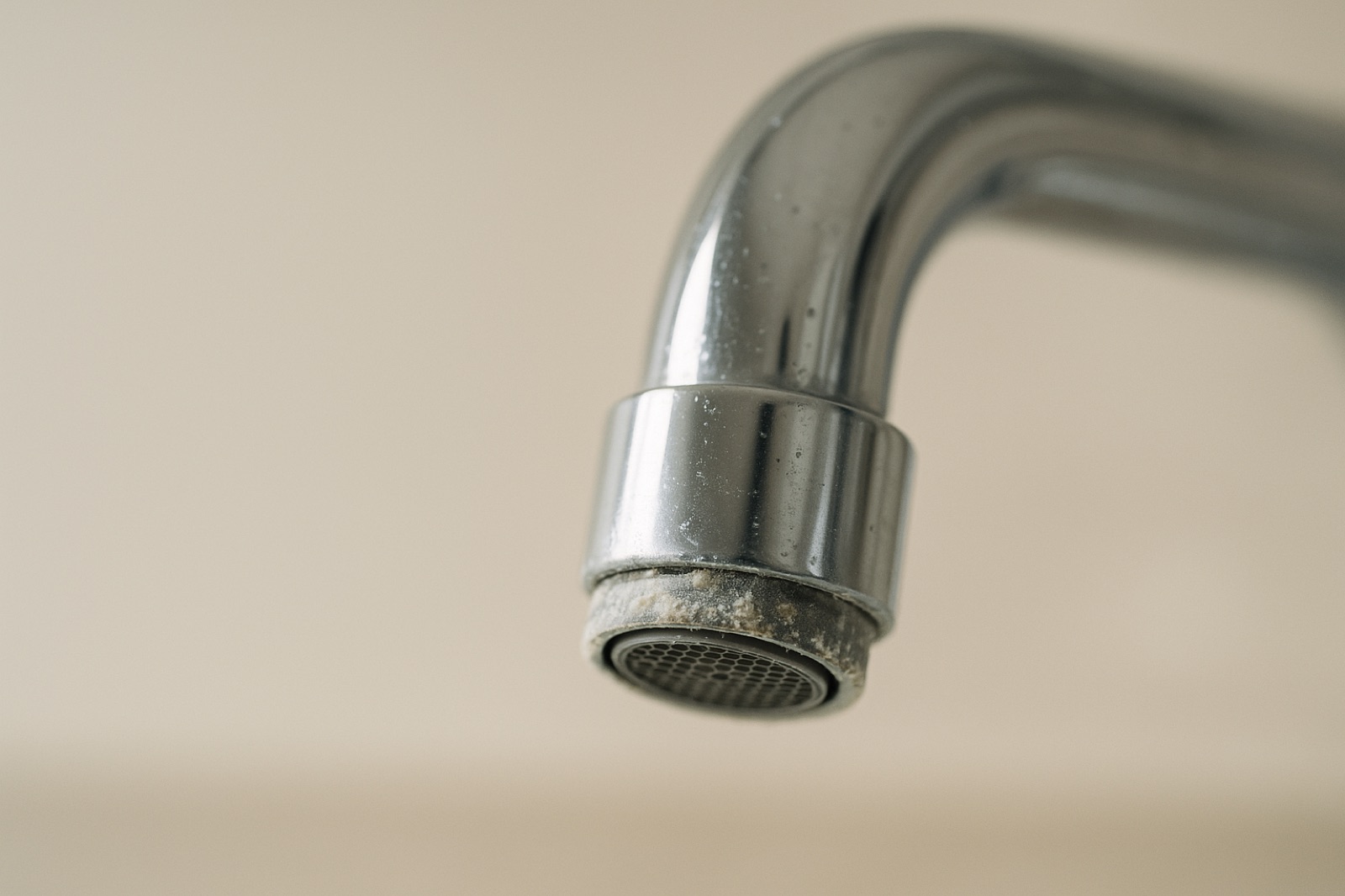
Your house is not a treatment plant, but it also has multiple water environments. An outdoor faucet may branch off before a softener. A kitchen cold line may be intentionally unsoftened. A water heater can collect scale. One bathroom may have a clogged aerator while every other fixture works normally. A single symptom or report number cannot sort out all those possibilities.
Translate the hardness number first
Hardness commonly appears as milligrams per liter, or mg/L, expressed as calcium carbonate. Water treatment companies often discuss grains per gallon, or gpg. To make a rough conversion, divide mg/L by 17.1. A report showing 171 mg/L is about 10 gpg.
Do not stop at the conversion. Check whether the number is an average, a range, or a result from one sampling location. Then collect a fresh hardness result from a cold indoor tap. If you already own a softener, test both untreated water before the unit and treated water after it. Record the units so you do not accidentally compare mg/L with gpg as though they were the same scale.
Give each symptom the right amount of weight
Crust on a showerhead or heating element is stronger evidence of mineral scale than a few spots on a drinking glass. Spots can also come from detergent, rinse aid, dishwasher settings, incomplete drying, or residue left after treated water evaporates. A cloudy glass that stays cloudy after cleaning may be etched rather than coated.
Soap performance is another clue, not a verdict. Hardness can make soap harder to lather and encourage film, but product formulation, water temperature, and the amount of soap also matter. A quick suds experiment is too easy to influence to serve as your only test.
Look for agreement among three things: a measured hardness level, recurring scale in more than one hot-water location, and persistent cleaning or soap complaints. When the evidence conflicts, investigate the conflict before shopping.
Choose repair, filtration, or softening
If untreated water tests hard but water leaving an existing softener also tests hard, begin with repair and setup checks. Confirm that the unit is not bypassed, has usable salt, regenerates, and is programmed for the incoming hardness. A failed valve, salt bridge, exhausted resin, or incorrect setting can imitate an undersized system.
If hardness is confirmed throughout the house and the scale burden is worth reducing, softening is the appropriate category. System sizing should account for measured hardness, household water use, peak flow, and any iron the equipment is expected to address. Lakeview can help you confirm hardness and size the right system before installation.
If your complaint is chlorine taste, sediment, odor, or a particular contaminant, hardness testing does not establish that a softener will solve it. Those concerns call for targeted testing and, when results support it, an appropriate filter. A softener mainly exchanges hardness minerals. It is not a universal purifier.
What reader numbers do and do not prove
The Home Water Report has recorded 3,210 page views, 1,068 visitors, 1,258 search crawls, and 2,876 AI crawls. Those figures show that people and automated systems are reaching the site. The feed does not provide query-level evidence or conversions, so it cannot show how many visitors specifically wanted a softener or acted on this guidance.
Your own decision deserves better evidence than traffic totals or a neighborhood assumption. Start with the utility report, verify hardness at home, rule out false positives, and match the response to the measured problem. Sometimes that leads to a softener. Sometimes it leads to a repair, a filter, or simply a better cleaning routine.