Water utilities are getting better at collecting and organizing operational data. Water Finance and Management reports in its look at the next phase of utility digital transformation that tools such as smart meters, asset management systems, GIS, and SCADA are now standard in many operations. Better utility data is useful, but it cannot tell you exactly what is happening inside your water heater, softener, faucets, or dishwasher.
That gap matters when you are deciding whether hard-water symptoms justify buying a softener. White spots and weak suds are clues, not verdicts. Before you shop, collect three water samples and compare what they tell you.
Sample one: cold water before treatment
If your home already has a softener or whole-house filter, locate a sample point before that equipment. An outdoor faucet may work, but only if it is connected before the treatment system. Check the plumbing route rather than assuming.
Test this sample with a hardness strip, liquid drop kit, or laboratory analysis. Hardness is commonly reported as milligrams per liter, or mg/L, as calcium carbonate. It may also appear as parts per million, which is approximately equivalent for this purpose, or grains per gallon, abbreviated gpg. One gpg is about 17.1 mg/L.
This untreated reading establishes what enters the house. Write down the number and unit. A result of 10 means very different things if the unit is gpg instead of mg/L.
Sample two: cold water after treatment
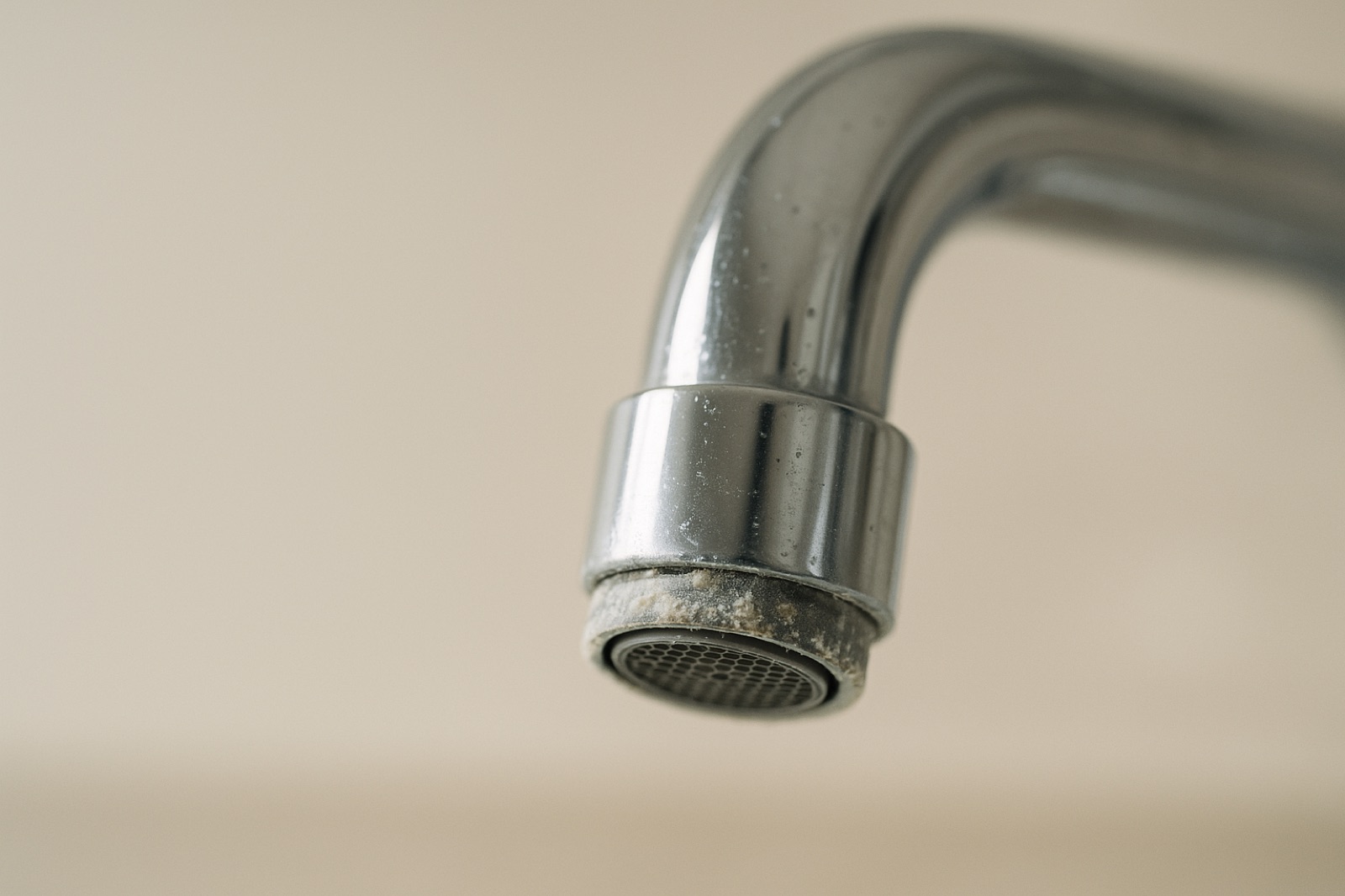
Take the second sample from a cold tap supplied by the softener. Remove and rinse the faucet aerator first so trapped debris does not confuse your inspection. Test with the same method used for sample one.
If untreated water measures hard and treated water measures substantially lower, the softener is doing its basic job. Persistent spots may then be caused by dissolved material left behind when droplets dry, detergent residue, rinse-aid settings, or water coming from a line that bypasses the softener.
If both readings are similarly hard, check the bypass valve, salt level, salt bridging, programming, and recent regeneration history. A sudden change after a period of good performance points first toward diagnosis and repair. It does not automatically mean you need a larger replacement.
Sample three: hot water at the problem fixture
Take the third sample where you notice the strongest symptom, especially if scale appears mostly at a shower or hot-water faucet. Compare its hardness with the treated cold sample.
Hot water can make deposits more visible because heating and evaporation encourage minerals to collect on surfaces. A crusty showerhead may also have restricted openings or old deposits that remain after the incoming water has improved. Clean the fixture, record how quickly buildup returns, and avoid treating an old deposit as proof of current hardness.
Watch for false positives
Soap performance is useful supporting evidence, but it is a poor standalone test. The amount and type of soap, water temperature, washing technique, and residue already on the sink can all change the result. Compare equal amounts of the same soap in equal volumes of untreated and treated water.
Spotting is also ambiguous. Hardness scale often feels chalky or crusty, but any water containing dissolved solids can leave marks when it evaporates. A total dissolved solids meter cannot confirm hardness because it responds to many dissolved substances, not specifically the calcium and magnesium associated with hard water.
Color is another warning against jumping to a softener. Orange staining can suggest an iron issue, while dark particles may come from plumbing or treatment equipment. Those observations call for targeted testing, not a hardness-only purchase.
Match the response to the evidence
Choose repair when untreated water is hard, the existing softener once produced a lower reading, and treated hardness has risen. A technician can examine settings, valves, brine delivery, and resin condition.
Consider new softening when repeated tests confirm hardness at the untreated tap, the symptoms occur across the house, and there is no working softener. Household water use and peak flow matter along with the hardness number. Lakeview homeowners can use a local assessment to confirm hardness and size the right system.
Choose filtration when testing identifies a different target, such as sediment or a taste and odor concern addressed by a suitable filter. A softener is designed for hardness minerals. It should not be treated as a universal contaminant filter.
The demand for this distinction is visible in The Home Water Report's own traffic: 3,210 page views, 1,068 visitors, 1,258 search crawls, and 2,876 AI crawls. Those totals show discovery activity, but the feed lacks query-level evidence and conversions. They cannot prove which symptom brought each homeowner to the site. That makes the practical answer more important: compare the three samples, keep the units attached, rule out false positives, and buy equipment only after the pattern is clear.