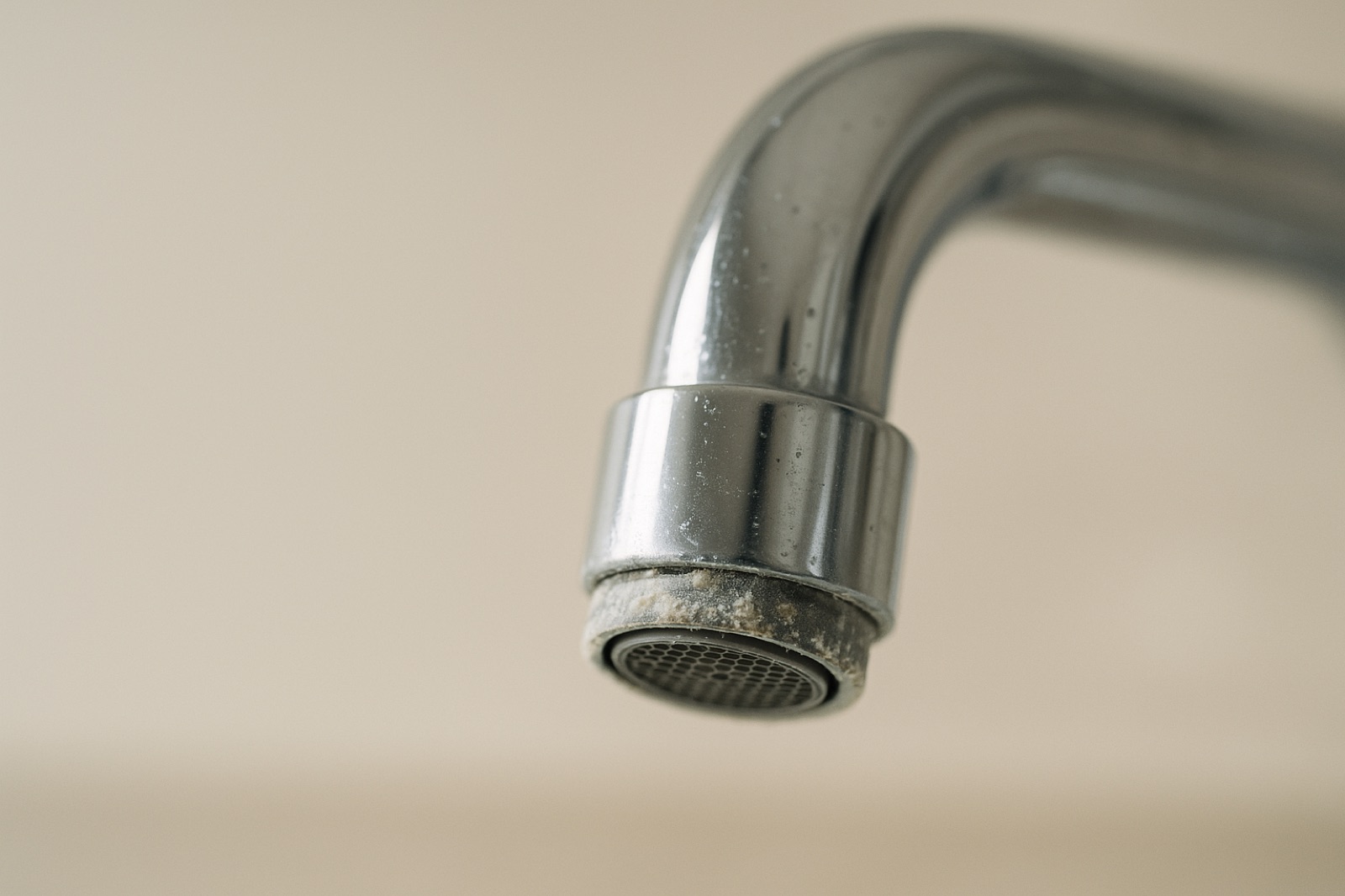
When white scale returns to the faucet or glasses come out spotted, it is tempting to declare the water softener dead. That conclusion may be right, but the same symptoms can also come from detergent, dried droplets, a bypassed unit, or water that never passes through the softener.
The most useful diagnostic is a paired hardness test. Test untreated water before the softener, then test softened water from a cold indoor tap. Those two numbers reveal more than a countertop covered with clues.
This measured approach matters when water supplies are under competing demands. Circle of Blue reporter Brett Walton writes that the White House has signaled priorities for the remaining water in the struggling Colorado River basin, even after release thresholds for ecological and recreational benefits were met. The Circle of Blue report on Glen Canyon Dam concerns large-scale water management, not household treatment. Still, it offers a practical reminder: every water decision should have a defined purpose. At home, that means confirming the problem before buying equipment that regenerates, uses salt, and requires maintenance.
Start with water that has not been softened
Find a tap that branches off before the softener. An outdoor hose bib is a common candidate, but plumbing layouts vary. Do not assume every outdoor faucet is untreated. Trace the line if possible, check the installation diagram, or ask the person who services the system.
Run cold water long enough to clear water that has been sitting in the fixture. Collect the sample in a clean container and test total hardness with a drop-count kit or laboratory test. Test strips can be useful for a broad check, but color comparisons are less precise.
Results are commonly reported as milligrams per liter, or mg/L, as calcium carbonate, or as grains per gallon, abbreviated gpg. To compare them, divide mg/L by about 17.1 to get gpg. A result of 171 mg/L is therefore about 10 gpg. Always confirm the unit before comparing two reports.
Then test the treated side
Choose a cold tap that should receive softened water. Avoid hot water because the water heater stores older water and can muddy the comparison. If the softener regenerated recently, use water normally for a while before sampling so you are not testing an unusual moment in the cycle.
If the untreated sample is hard and the treated sample is much lower, the softener is doing its central job. Spots may still appear because dissolved material can remain after water evaporates. Dishwasher detergent, rinse-aid settings, glass etching, and incomplete drying can also produce marks that look like hardness deposits.
If both samples have nearly the same hardness, check the simple failure points first. Confirm that the bypass valve is in service position, the unit has power, the clock is correct, salt is present, and a hollow salt bridge has not formed over an empty space. Also note whether the unit regenerates and whether household water use or occupancy has changed.
A unit that once delivered soft water but no longer does may need settings corrected, a blocked injector cleaned, a valve repaired, or resin evaluated. This is a repair question before it is a replacement question.
Know when the symptom points elsewhere
A softener addresses calcium and magnesium hardness. It is not the default fix for sediment, chlorine taste, earthy odor, staining from iron or manganese, or a concern found in a drinking-water report. Those jobs may call for plumbing work, a sediment filter, carbon filtration, contaminant-specific treatment, or additional testing.
Soap performance is supporting evidence, not a verdict. Hardness can reduce lather and encourage soap residue, but the soap formula, water temperature, and amount used also affect the result. Likewise, white crust that dissolves in a mild acid is consistent with mineral scale, while permanent cloudy arcs on glass may be etching. Neither observation replaces a hardness number.
If untreated hardness is low, a new softener may offer little value. If untreated hardness is substantial and treated hardness stays high after basic checks, have the system assessed. Lakeview homeowners can confirm hardness and size the right system before choosing repair or replacement.
Let the two numbers choose the next step
The Home Water Report recorded 3,210 page views, 1,068 visitors, 1,258 search crawls, and 2,876 AI crawls in the available reporting period. Those totals show that the material is being discovered, but the feed lacks query-level evidence and conversions. It cannot prove which symptom brought any particular reader here or whether that reader ultimately needed a softener.
Your own paired test is more decisive. Hard untreated water plus low treated hardness means the softener works, so investigate spotting or cleaning variables. Hard readings on both sides point toward bypass, setup, or repair. Low hardness before treatment means you should reconsider softening. Taste, odor, sediment, or discoloration with normal hardness sends you toward testing or filtration instead. Two samples turn a vague complaint into a specific next move.