When unusually heavy rain is in the forecast, it is reasonable to pay closer attention to your water. It is not a reason to buy a softener or filter based on worry alone.
On September 21, 2026, The Guardian reported that California was preparing for severe winter storms and flooding after the governor declared an emergency. The article says the El Niño pattern is expected to bring an “extremely wet winter” to the state. The California storm outlook reported by The Guardian is a useful reminder for homeowners everywhere: weather can change what you observe, but a water symptom still needs to be identified before it can be treated.
Your first job is to separate a temporary change from a continuing household water problem. Then you can decide whether you need testing, filtration, softening, or more than one approach.
Start with what changed, and where
If your water looks, smells, or tastes different after heavy rain, write down when the change began. Check cold water at a frequently used kitchen tap, then compare it with another faucet. If you use a private well, note any flooding, standing water, loss of power, or work performed near the well. Avoid opening or servicing well equipment during unsafe conditions.
A problem at one faucet can point toward an aerator, fixture, supply line, or local plumbing issue. A change throughout the house deserves broader investigation. Neither observation identifies a contaminant, but both make testing and troubleshooting more focused.
Use this softener-versus-filter matrix
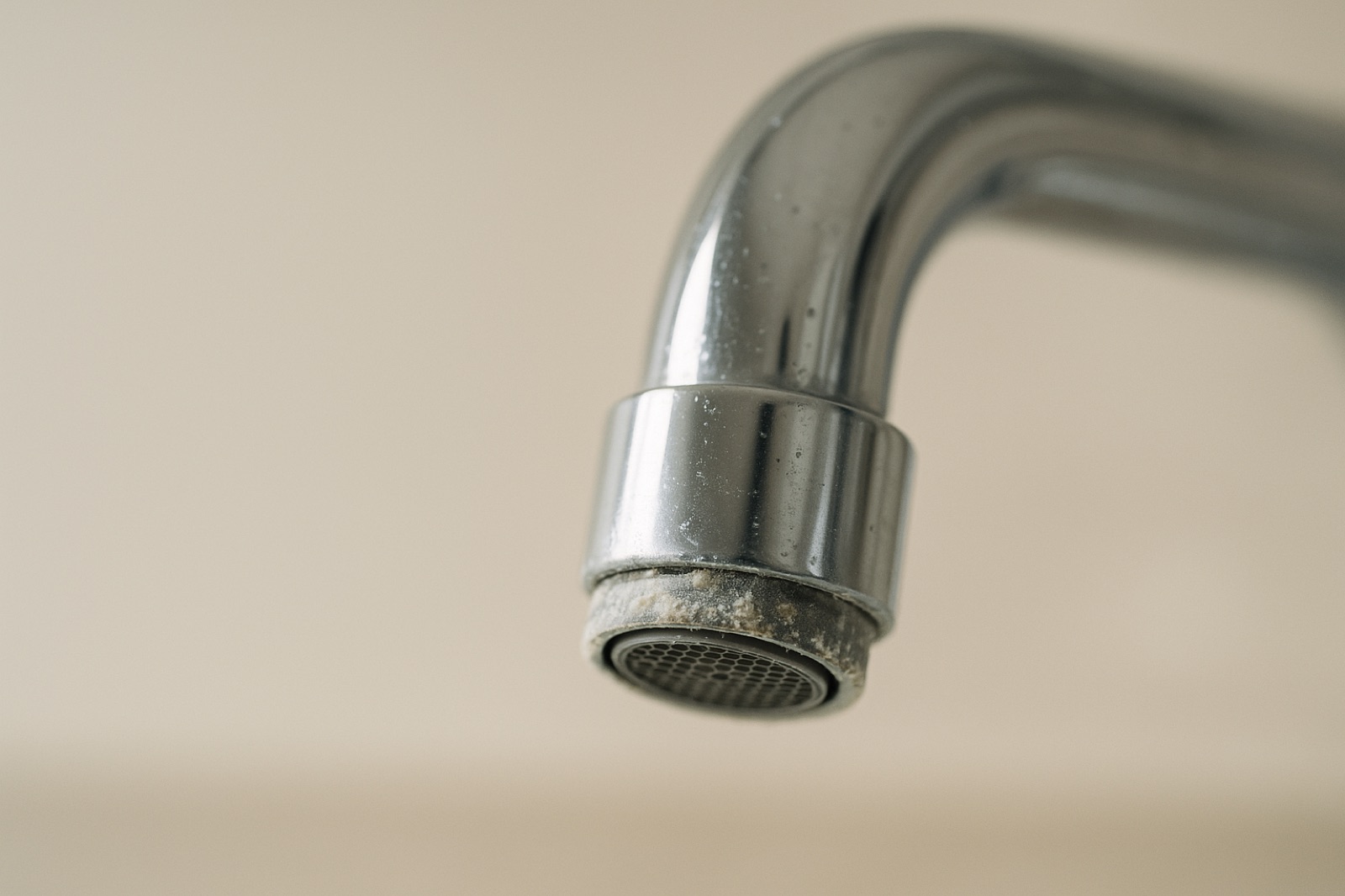
Scale and white mineral deposits: A softener may be the right tool when testing confirms hardness. Conventional filtration does not generally remove dissolved hardness minerals. However, residue that appears only after a storm or at one fixture should not be treated as proof that the whole house needs softening.
Unpleasant taste or odor: Filtration may help, but the filter type depends on the cause. Carbon is commonly considered for certain taste and odor complaints, while sediment calls for a different approach. A softener is not a general taste or odor treatment. If the change is sudden, test or investigate the source before purchasing equipment.
Orange, brown, blue-green, or black staining: Stains can be associated with iron, manganese, corrosion, or other conditions. The color is a clue, not a diagnosis. A softener can handle limited amounts of some dissolved minerals under suitable conditions, but dedicated filtration or correction of a plumbing problem may be more appropriate.
Cloudiness or visible particles: Let a clear glass sit undisturbed. Cloudiness that clears from the bottom upward may be trapped air. Material that settles may justify sediment testing and inspection. Do not assume a softener will solve visible particles.
Possible contaminants: Testing comes first. Microorganisms, nitrate, metals, and other contaminants require different sampling methods and treatment technologies. Taste, odor, and appearance cannot establish whether water is safe.
More than one confirmed problem: You may need both systems. Softening addresses hardness. Filtration addresses a defined set of other substances. When both are necessary, equipment order, flow capacity, and maintenance requirements should be planned as one system.
A testing checklist before you shop
For a private well, begin with the conditions around your property and the test recommendations of your local or state health authority. For utility water, review notices from your provider and determine whether neighbors served by the same system noticed a similar change.
Record the affected faucets, water temperature, symptom, timing, and whether the issue disappears after running the tap. Photograph staining or sediment. If you already have treatment equipment, collect its model, age, service history, and last filter-change date.
Ask the laboratory or water professional how to collect the sample. Sampling before and after existing equipment can help show whether the incoming water changed or the treatment system stopped doing its job. If you want help defining the right sampling points, you can schedule a professional water assessment.
Let evidence set the purchase order
The demand for a clear choice is visible in this publication's audience data: The Home Water Report recorded 3,226 page views, 1,068 visitors, 1,265 search crawls, and 2,891 AI crawls, with no assist or CRM data supplied. Those figures do not reveal which treatment any household needs. They do show why the distinction must be plain.
Choose a softener for confirmed hardness. Choose a filter for a specifically identified substance it is certified and sized to reduce. Test first when the symptom is new, widespread, linked to changing conditions, or potentially related to contamination. After heavy rain, the most useful first purchase may be neither machine. It may be a well-chosen water test.