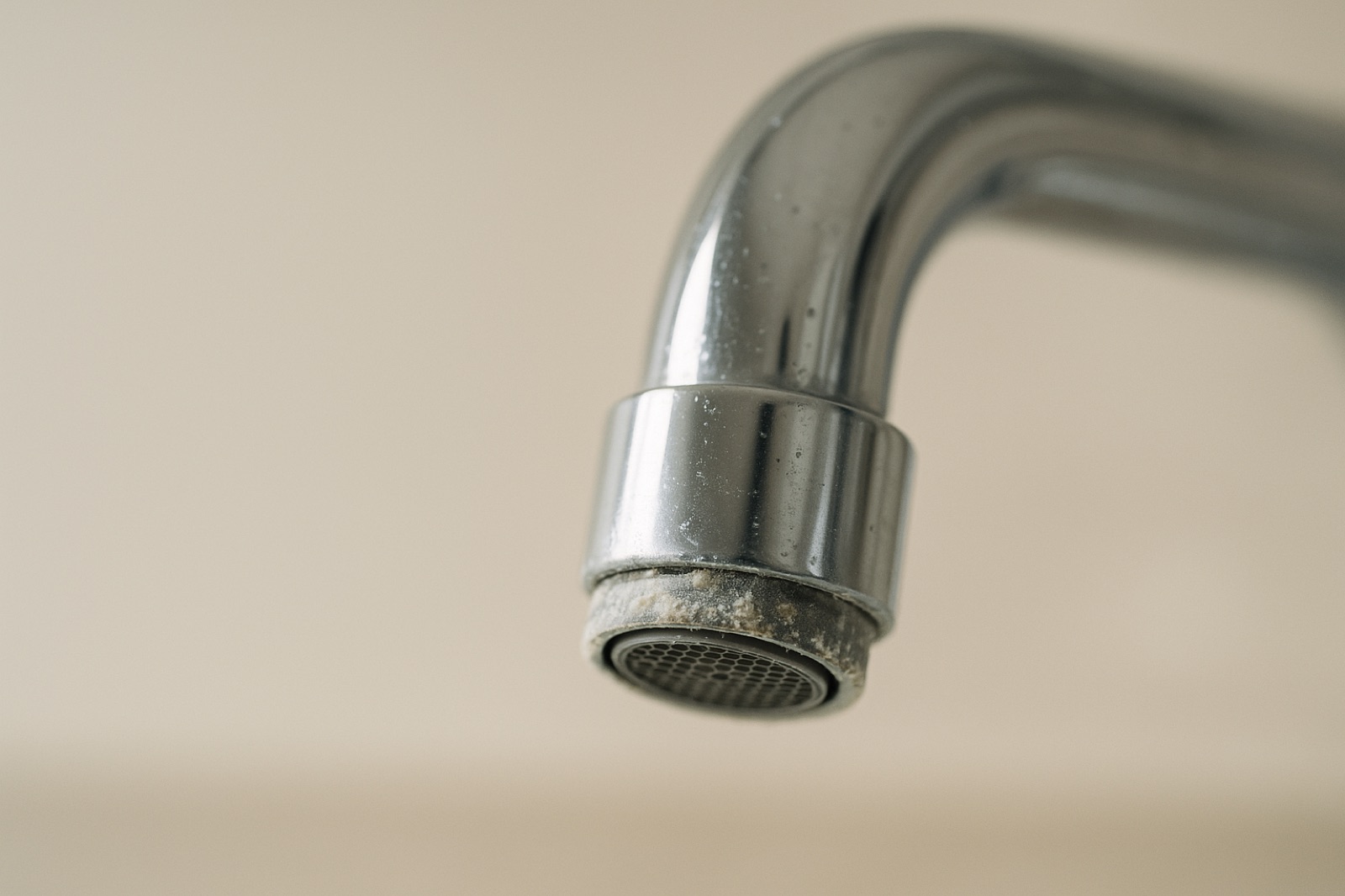
Your water can leave white scale on a faucet, taste unpleasant at the kitchen sink, smell odd in the shower, stain a toilet, and still raise a separate question about contaminants. Those clues may arrive together, but they do not necessarily share one cause or one solution.
That distinction matters when conditions outside your home are changing. In an October 2026 story, Circle of Blue examines what forest fires may mean for lakes and describes scientists studying wildfire impacts on water. The homeowner lesson is modest but useful: changes in a water source can create questions that cannot be answered by looking at your plumbing or assuming your usual treatment is suitable.
A symptom map helps you separate household nuisances from questions that require testing. It also prevents a salesperson, or your own frustration, from asking one appliance to solve every complaint.
Start with the symptom, then choose the next step
| What you notice | What it may justify checking | Likely treatment lane |
|---|---|---|
| Chalky scale on fixtures or heating surfaces | Hardness, plus whether deposits appear throughout the house | Softening, if testing confirms hardness at a level you want to manage |
| Unpleasant taste | Whether it occurs at every tap, only on cold water, or only through one fixture | Filtration may help, but the filter must be selected for the identified cause |
| Odor | Hot versus cold water, one drain versus the water itself, and changes over time | Plumbing correction, water heater service, filtration, or disinfection may be considered after diagnosis |
| Orange, brown, blue, or green staining | Iron, manganese, pH, corrosion indicators, and the affected fixtures | Targeted filtration or water chemistry correction, not an automatic softener purchase |
| Concern about contaminants | A laboratory test chosen for your water source and the specific concern | Certified point of use or whole house treatment matched to the result |
This is not a list of diagnoses. Scale strongly supports checking hardness, but appearance alone does not provide the number needed to size equipment. Taste and odor can guide your investigation, but they cannot establish that water is safe or unsafe. Stains are evidence worth documenting, not proof of one particular substance.
Know what a softener and a filter are being asked to do
A conventional ion exchange softener is principally a hardness tool. It can reduce the calcium and magnesium responsible for common scale problems. It is not a general contaminant barrier, and it should not be treated as one.
A filter is a broader equipment category, not a single capability. Sediment cartridges, activated carbon systems, iron treatment, and membrane systems perform different jobs. The useful question is not whether filtration sounds more comprehensive. It is whether a specific system has credible performance information for the substance or condition found in your water.
Some homes reasonably need both. If confirmed hardness affects fixtures throughout the house while a tested drinking water concern is limited to ingestion, a whole house softener and a point of use drinking water system may create a cleaner division of labor. That is often easier to evaluate than searching for one device with a long list of loosely connected claims.
Use this testing checklist before requesting quotes
First, record where each symptom appears. Check hot and cold water separately, compare multiple taps, and note whether outdoor water shows the same condition. Photograph stains and deposits before cleaning them.
Second, write down timing. A sudden change deserves different attention from a condition that has been steady for years. Note utility notices, well work, plumbing repairs, filter changes, and nearby events that could plausibly affect the source, without assuming any one event caused the problem.
Third, identify your source. Public water customers can review their supplier information and ask about a noticeable change. Private well owners are responsible for arranging appropriate testing. In either case, choose tests for the actual question rather than buying the largest package available.
Fourth, keep nuisance and contaminant decisions separate. Test hardness to evaluate scale and softener sizing. Use suitable laboratory analysis for contaminant concerns. Do not use taste, clarity, or a hardness result as a substitute for that analysis.
Finally, ask every equipment provider to connect the recommendation to a result. The proposal should identify the problem, the treatment method, the intended location, maintenance needs, and the evidence supporting its performance. If your clues remain mixed, you can schedule a professional water assessment before committing to equipment.
Why homeowners are asking
The Home Water Report recorded 3,226 page views, 1,068 visitors, 1,265 search crawls, and 2,891 AI crawls in the supplied reporting period. No assist or customer relationship management data was supplied, so those figures show attention, not purchases or outcomes. For Erica and other homeowners comparing treatment options, the practical conclusion is simpler: begin with the complaint, verify its cause, and give each piece of equipment one clearly defined job.