Water quality professionals are gathering in New Orleans as homeowners face a familiar question at the kitchen sink: Does this water problem actually call for a softener? Water Finance and Management, in a report by WFM Staff, says WEFTEC returns September 26 through 30 amid numerous water issues. The event is expected to bring together more than 23,000 registrants and 1,000 exhibitors. That scale is a useful reminder that water treatment includes many different problems and technologies. At home, your job is much narrower. You need to identify what is happening in your water before choosing equipment.
This guide answers one practical demand: deciding whether suspected hard-water symptoms justify a water softener. The Home Water Report recorded 3,210 page views, 1,068 visitors, 1,258 search crawls, and 2,876 AI crawls in the available reporting period. Those totals show substantial activity, but the feed does not include search queries or conversions. It cannot tell us which symptoms brought each reader here or whether anyone later bought treatment. That makes a careful diagnostic guide more useful than pretending the traffic proves purchase intent.
Check 1: Examine the residue
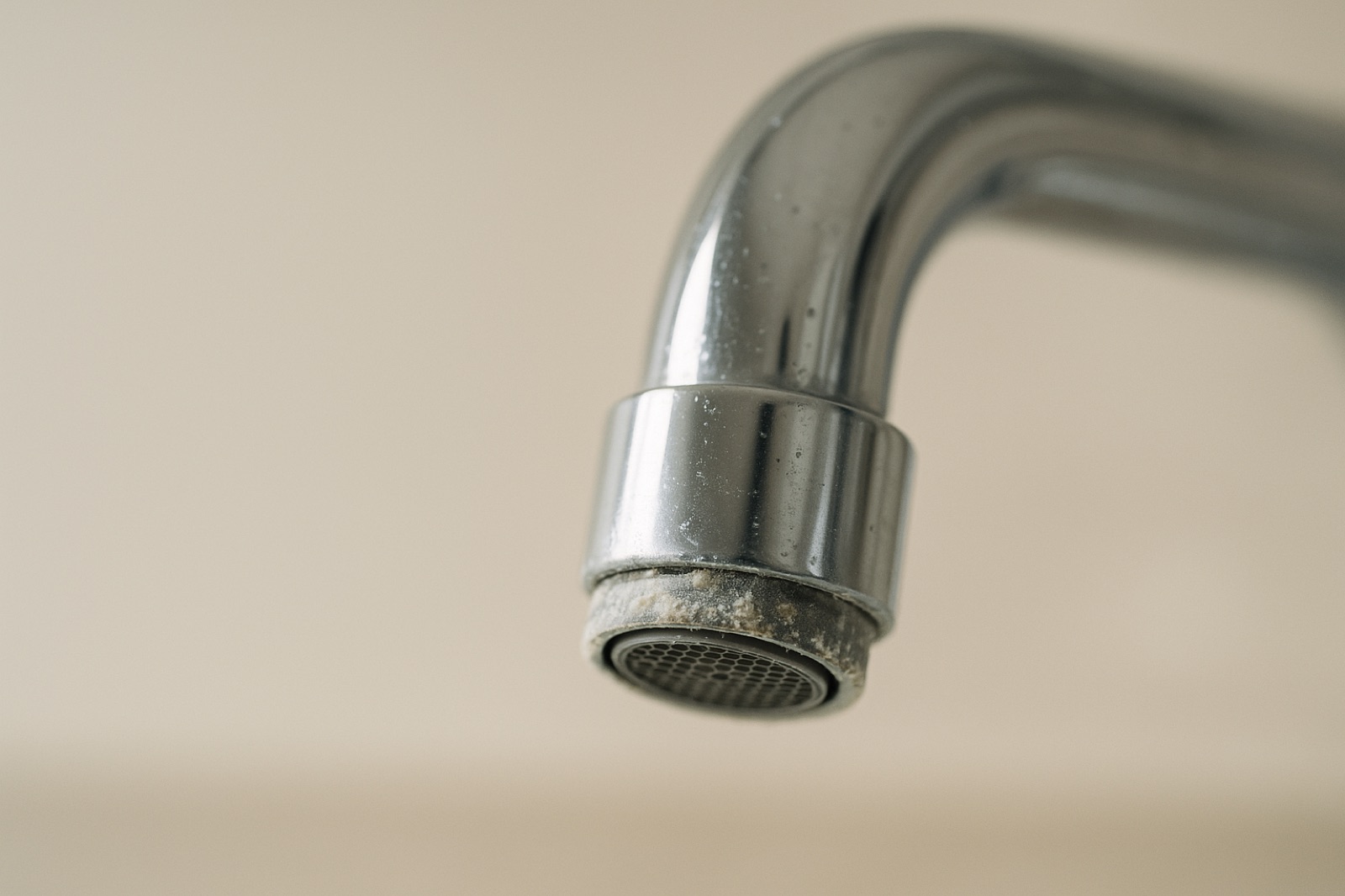
Hard water contains dissolved calcium and magnesium. When water evaporates or is heated, those minerals can remain as pale crust or spots. Look for a repeated pattern on shower doors, faucet aerators, kettles, humidifier parts, and fixtures that regularly get wet.
Texture matters. A hard, chalky deposit that returns after cleaning supports a hardness diagnosis. Loose powder, soap film, salt residue, and ordinary dirt can look similar from a distance. Spots on a single glass are weak evidence because dishwasher detergent, rinse aid, drying conditions, and wash settings can also affect the finish.
Try cleaning one representative area, then watch how quickly the residue returns. Also inspect a fixture supplied by the same water but cleaned differently. A house-wide pattern is more persuasive than one troublesome appliance.
Check 2: Treat soap performance as a clue, not a verdict
Hardness minerals react with traditional soap and can reduce lather or leave a film. You might notice that hand soap feels less productive, shampoo seems difficult to rinse, or laundry looks dull. These observations can support the case for testing, but none confirms hardness by itself.
Modern detergents, water temperature, product quantity, washing-machine settings, and personal expectations all affect suds. Some products are designed to foam very little. Softened water can also make skin feel unusually slick because soap behaves differently, not because the water is failing to rinse it away.
If soap performance changed suddenly while the water source stayed the same, first check for a new detergent, a clogged aerator, a water-heater issue, or a malfunctioning treatment system. Natural hardness usually does not appear overnight without a change in source water or equipment operation.
Check 3: Get the hardness number
A hardness test turns impressions into a treatment decision. Results commonly appear as grains per gallon, abbreviated gpg, or milligrams per liter as calcium carbonate, written mg/L as CaCO3. One grain per gallon is approximately 17.1 mg/L.
Use a reputable laboratory result, a utility report that reflects your current supply, or an on-site test performed correctly. A simple test strip can be useful for screening, but color matching, old strips, poor storage, and testing water from the wrong tap can produce misleading results. If you already have a softener, test untreated water before the unit and treated water after it. Otherwise, a low result at the kitchen tap might only prove that the existing equipment is working.
Hardness also can vary with a private well, a blended municipal supply, or seasonal operating changes. One surprising result deserves confirmation before you purchase major equipment. Lakeview can help you confirm hardness and size the right system when you need an assessment tied to household use.
Match the response to the evidence
Choose repair when testing shows hard water before an existing softener but little or no improvement after it. The cause might involve salt supply, a bypass valve, programming, resin condition, or regeneration. Diagnosis should come before replacement.
Choose softening when a confirmed hardness level aligns with recurring scale and soap-related problems throughout the home. Sizing should account for measured hardness, household demand, and any iron the proposed equipment is intended to handle.
Choose filtration when the target is something other than calcium and magnesium, such as sediment, an objectionable taste, or a specific contaminant established by testing. A conventional softener is not a general-purpose contaminant filter.
Choose more testing when the evidence conflicts. Orange staining, black particles, odors, cloudy water, and sudden changes can point toward other causes. The best buying decision is not the one that explains every annoyance with a single machine. It is the one supported by a repeatable household pattern and a number you can verify.