Water equipment names can sound more comprehensive than they really are. A “filter” may address sediment, taste or a specific contaminant, depending on its media. A softener primarily addresses hardness minerals. A reverse osmosis system treats water at selected taps through a different process. None of those labels, by itself, tells you whether the equipment matches your household’s concern.
That distinction feels timely beyond the equipment room. Circle of Blue reports on a disputed Lake Ontario name change, explaining that researchers warn the change could complicate cross-border management. For homeowners, the modest but useful parallel is this: changing a label does not change the underlying water or the work required to manage it.
If you are shopping in Columbia, begin with the job, not the machine. Your goal may be reducing scale throughout the house, improving drinking water at the kitchen sink, catching visible particles, or investigating an odor. Those are separate assignments, and some homes may need more than one approach.
What does each type of equipment actually do?
A water softener exchanges hardness minerals such as calcium and magnesium for other ions. Its everyday purpose is reducing scale and soap-related problems throughout the plumbing areas it serves. It is not a universal contaminant filter.
A water filter is a broad category. Sediment filters trap particles. Activated carbon commonly targets certain tastes and odors and can reduce particular substances when the product is certified for them. Specialized media are designed for defined water conditions. You cannot judge performance from the word “filter” alone. Ask for the exact model, media, rated capacity and applicable independent certification.
Reverse osmosis is commonly used for drinking and cooking water at one faucet. It uses a membrane and usually several treatment stages. If that narrower drinking-water goal interests you, Reverse Osmosis STL provides additional background on the approach. Whether it belongs in your Columbia home still depends on test results, plumbing and the substances you want reduced.
Use symptoms to choose a test, not a product
Symptoms are useful clues, but they do not identify a cause with certainty. Write down where the issue appears, whether it affects hot water, cold water or both, and whether it occurs at every fixture. Then use that record to select the next measurement.
| What you notice | Useful next check | What not to assume |
|---|---|---|
| White scale on fixtures or glassware | Hardness test reported in a clear unit | That a general filter will soften water |
| Earthy, chlorine-like or other unwanted taste | Compare hot and cold water, then identify the target substance before selecting media | That every carbon filter has identical performance |
| Rust-colored staining | Test for iron and note whether staining appears throughout the house | That hardness is the only cause |
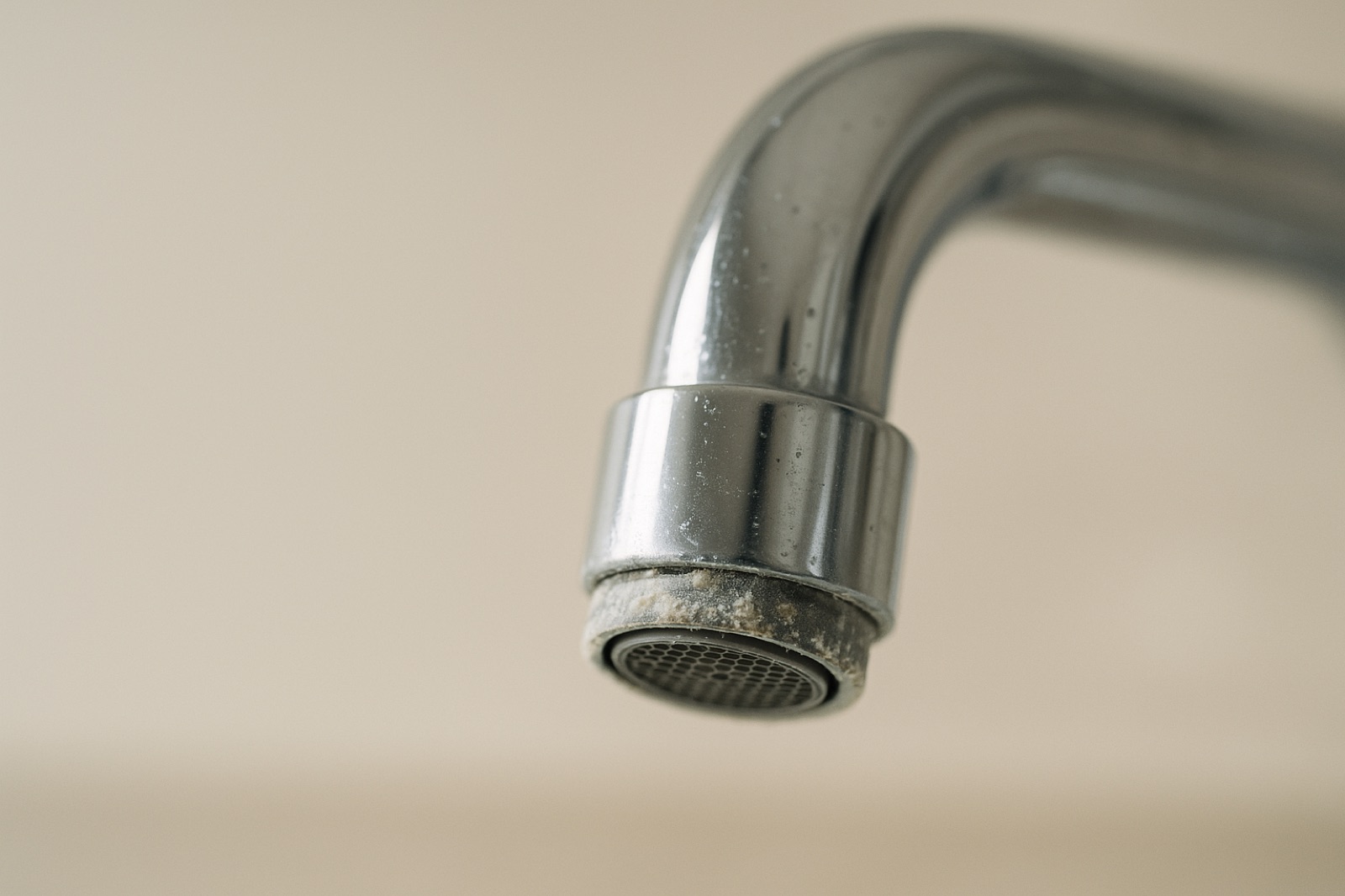
| Visible grit | Inspect faucet aerators and test or evaluate the particle source | That a softener is a sediment filter |
| Concern about drinking-water composition | Use an appropriate laboratory test or current utility report to define the concern | That taste reveals safety |
If a sudden or severe change affects your water, contact the utility or an appropriate water professional before relying on a treatment purchase.
Questions that make an assessment more useful
Bring your notes, any existing test report and the model numbers of equipment already installed. Then ask:
- Which measured result supports this recommendation?
- Is the proposed system treating the whole house or selected taps?
- What specific substances or conditions is it designed to address?
- What will it not address?
- What flow rate, water pressure, drain access and electrical service does it require?
- What routine maintenance, replacement media, salt or filters will you need?
- Can the provider show third-party performance certification for the exact model?
- Will you receive written baseline and follow-up results?
Air & Water Solutions currently lists water testing, softening, filtration and purification among its Columbia-area services. To turn your observations into a defined scope, you can request a Columbia water assessment. Confirm the test method, included services and any cost before the visit.
Interest is real, but local demand is not proven
The Home Water Report records 2,935 page views, 1,260 visitors and 2,874 AI crawls. Those are sitewide signals of water-topic readership. They do not prove that Columbia residents are searching for this particular question, that local interest is growing, or that an article influenced an assessment request. No assist data was supplied. That uncertainty is another reason to keep the guidance practical rather than promotional.
The useful takeaway is simple: do not ask which machine is “best” until you know the job. A careful assessment should connect each recommendation to a symptom, a measurement and a defined treatment claim. If one device is presented as the answer to every concern, ask what the label is hiding.