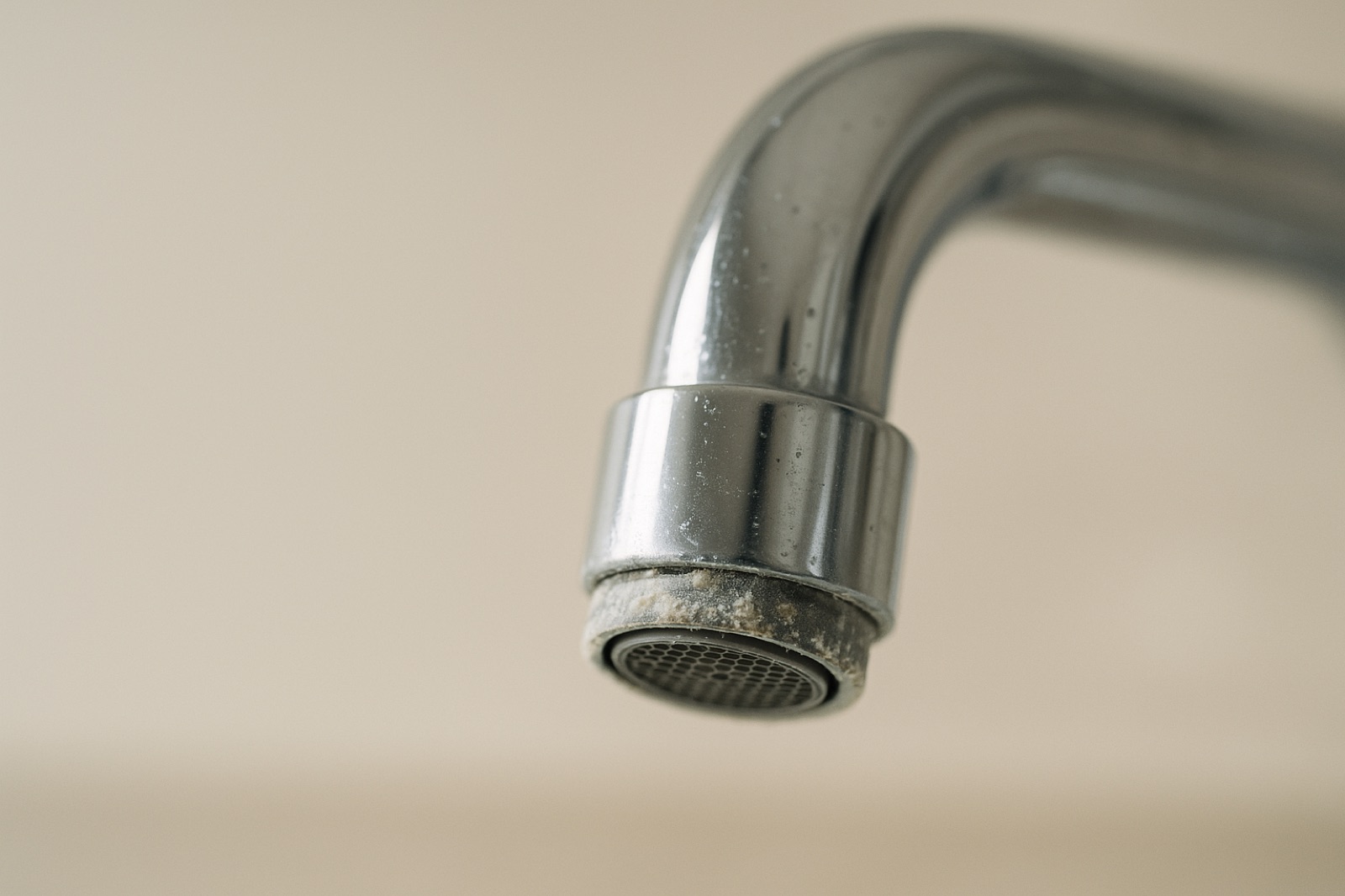
Your water leaves scale on the shower door, tastes unpleasant at the kitchen sink, and occasionally stains a load of laundry. Which problem deserves attention first?
The answer is not necessarily the symptom that annoys you most. A better buying decision starts by sorting each complaint according to urgency, how much of the house it affects, and whether testing has identified a specific cause. That process can keep you from asking one piece of equipment to perform three unrelated jobs.
This distinction matters beyond the equipment aisle. Water Finance and Management reports that the National Utility Contractors Association responded to a proposed 68% cut to the Drinking Water State Revolving Fund following a September 3, 2026, congressional hearing. The proposal concerns funding for public drinking-water infrastructure. It does not tell you anything specific about your tap, but it is a useful reminder that household equipment and public infrastructure have different roles. A filter or softener can address conditions inside your home. It cannot replace the treatment, monitoring, and delivery work performed by a water utility.
First, separate urgency from irritation
Scale, weak suds, and spots on glassware usually belong in the nuisance and equipment-protection category. They can make cleaning harder and allow mineral deposits to collect on fixtures or water-using appliances. Those clues point toward hardness, which is the job a conventional ion-exchange softener is designed to handle.
Taste and odor need a different approach. If the issue appears only at one faucet, inspect the faucet aerator, drain, and nearby plumbing before shopping for a whole-house system. If it appears throughout the home, note whether it affects hot water, cold water, or both. A carbon filter may improve certain taste and odor complaints, but the correct filter depends on the cause.
Possible contaminant concerns belong in the uncertainty category until you have reliable test results or a notice from your utility. Clear water can contain substances you cannot see, smell, or taste. Conversely, an unpleasant taste does not prove that the water contains a dangerous contaminant. Do not use appearance or flavor as a safety test.
Use this softener-versus-filter matrix
| What you notice | Likely next step | Equipment to consider after confirmation |
|---|---|---|
| Chalky scale, spotting, weak suds | Obtain a hardness result | Water softener |
| Unpleasant taste or chlorine-like odor throughout the home | Check the utility report and identify where the symptom occurs | Carbon filtration, if suited to the cause |
| Orange, brown, blue-green, or black staining | Test for the suspected mineral or investigate plumbing corrosion | Cause-specific treatment, not an automatic softener purchase |
| A named contaminant in a laboratory result | Compare the result with an applicable drinking-water benchmark | A filter certified for that specific substance |
| Hardness plus a confirmed drinking-water concern | Treat the two jobs separately | A softener and an appropriate filter |
The important dividing line is simple: softeners primarily exchange hardness minerals, while filters are selected for particular substances or aesthetic problems. Some homes need both. Others need neither.
Test with a purchase decision in mind
Before collecting a sample, write down what the result needs to help you decide. A practical testing checklist includes:
- Your water source, either a public system or private well.
- The symptom, its color or odor, and when it began.
- Whether it occurs at one fixture or throughout the house.
- Whether it affects hot water, cold water, or both.
- Your utility's current water-quality report, if you receive public water.
- A hardness measurement before sizing a softener.
- Laboratory testing for any specific contaminant you are trying to address.
- The treatment device's certification and stated reduction claim.
- Ongoing salt, cartridge, cleaning, and service requirements.
If several symptoms overlap or the test results are difficult to interpret, schedule a professional water assessment. A local specialist such as Reverse Osmosis STL can help connect the reported problem with an appropriate treatment category, but you should still ask to see the test result and the equipment's specific performance claim.
Choose the smallest system that solves the confirmed job
A whole-house softener makes sense when hardness affects fixtures, laundry, and appliances across the home. A point-of-use filter may be more practical when the concern is limited to water used for drinking and cooking. Whole-house filtration deserves consideration when a confirmed, treatable issue affects water throughout the property.
That gives you a sensible order of operations: investigate urgent notices first, test uncertain problems second, and price nuisance improvements third. You may still decide that better-tasting water matters most to your family. The difference is that you will be buying for a defined result, not expecting one tank or cartridge to fix every complaint at the tap.