A familiar name can help people understand the same body of water. A precise test result can do something similar inside your home: give everyone a shared, useful description of the problem. That distinction feels timely after Abigail Mihaly reported for Circle of Blue that an August 27, 2026 executive order changing Lake Ontario's name could complicate longstanding cooperation around the lake. The Circle of Blue report on the Lake Ontario name change is about a much larger water-management issue, but it offers a practical reminder for homeowners. Labels matter, and the wrong label can send work in the wrong direction.
Calling every unpleasant water condition "hard water" creates the same basic problem. Scale, chlorine-like taste, rotten-egg odor, orange staining, and an identified contaminant are different clues. They may require a softener, a filter, another treatment method, or no new equipment at all.
Start with the symptom, but do not stop there
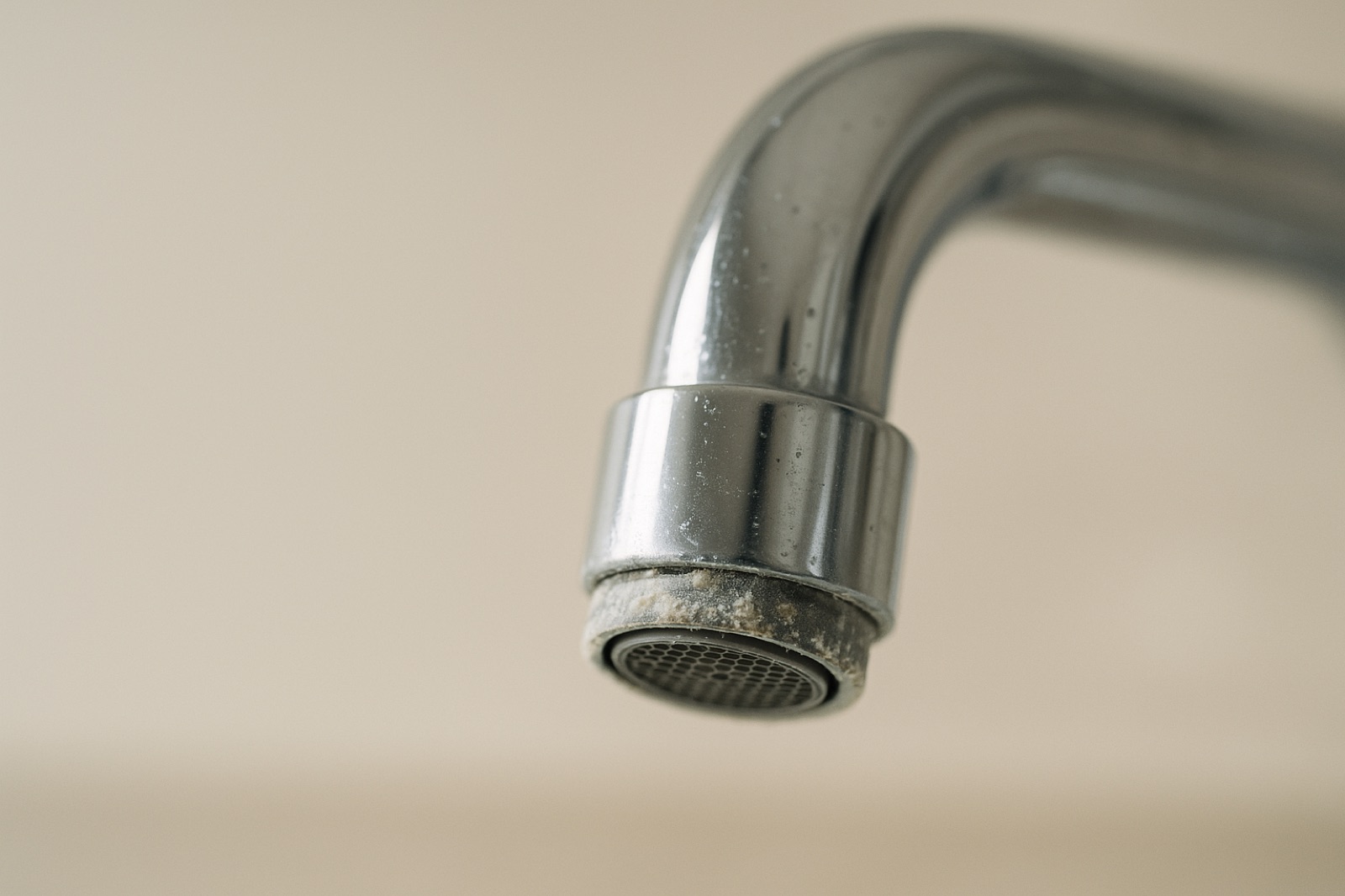
White scale: Chalky buildup on showerheads, faucets, kettles, and heating elements points toward dissolved hardness minerals. A laboratory or properly performed field test for hardness can show whether a softener is justified and help size it. White residue from soap, cleaning products, or evaporation can look similar, so appearance alone is not a final diagnosis.
Unpleasant taste: A chlorine-like taste may lead you toward activated carbon filtration. Metallic, salty, bitter, or suddenly different water deserves testing and a check of whether the issue occurs at one fixture, throughout the house, or only in hot water. A softener is not a general-purpose taste remover.
Odor: First compare hot and cold water. An odor limited to hot water can direct attention toward the water heater. Odor at every cold tap may call for source-water testing and treatment selected for the identified cause. Do not assume that any filter cartridge will handle it.
Staining: Orange or reddish stains can be associated with iron, while dark staining can have other mineral causes. Blue-green marks may point toward plumbing corrosion. Test before selecting equipment because a conventional softener has limits, and some staining problems need dedicated treatment or a plumbing evaluation.
Contaminant concern: You generally cannot identify contaminants by taste, smell, or clarity. Choose tests based on your water source, local information, plumbing, property history, and the specific concern. Then select treatment certified or otherwise demonstrated for that exact reduction job.
Softener versus filter matrix
| Household clue | Likely first step | Possible treatment path |
|---|---|---|
| Scale and recurring soap-related buildup | Test hardness | Softener if hardness and household needs support it |
| Chlorine-like taste or odor | Confirm it affects the intended taps | Carbon filtration sized for point-of-use or whole-home service |
| Orange, dark, or blue-green stains | Test relevant minerals and inspect plumbing | Targeted filtration, conditioning, or plumbing correction |
| Named contaminant | Use an appropriate laboratory test | A treatment specifically matched to that contaminant |
| Both measured hardness and a confirmed filtration need | Define both treatment goals | Separate stages, arranged and sized as a system |
The key word is "possible." A softener exchanges hardness minerals and is designed primarily to control hardness. A filter captures, adsorbs, or otherwise reduces particular substances according to its media and design. One is not automatically a substitute for the other.
Your testing checklist
Before requesting estimates, write down where each symptom appears, whether it affects hot water, cold water, or both, and whether it started suddenly. Note whether you use municipal water or a private well. Photograph stains and scale before cleaning them. Gather any available utility water-quality report, previous laboratory results, and basic information about your plumbing and water heater.
Ask the testing provider which analytes are included, whether the laboratory is appropriately accredited for the work, how the sample must be collected, and how results will be reported. For an equipment proposal, request the test values used, the treatment goal, expected maintenance, replacement schedule, water and energy demands, warranty terms, and evidence that the proposed model addresses the measured problem. If several symptoms overlap, you can schedule a professional water assessment once the client destination is added.
The Home Water Report's current audience snapshot includes 3,226 page views, 1,068 visitors, 1,265 search crawls, and 2,891 AI crawls. No assist or CRM data was supplied, so those figures cannot show which treatment readers ultimately chose. They do show why a clear decision tool matters: people are looking for water answers, but traffic alone cannot diagnose a home.
Your best buying decision begins with a modest goal. Name the symptom accurately, verify it with the right test, and buy only the treatment that matches the result.