A softener and a filter can sit beside each other in a basement, yet do very different jobs. That distinction matters when you are trying to solve several water complaints at once.
The timing is especially relevant in Michigan. Water Finance and Management reports that the Great Lakes Water Authority has released a report documenting the scale of the state's water infrastructure funding crisis and calling for a sustainable statewide funding strategy. The outlet's coverage of the Michigan water infrastructure report is a useful reminder that reliable household water depends on systems beyond your property line. It does not, however, identify what is happening at your particular tap.
Your practical first move is to turn each symptom into a separate question. Then you can test what needs testing and choose equipment by function.
Sort the symptom before shopping
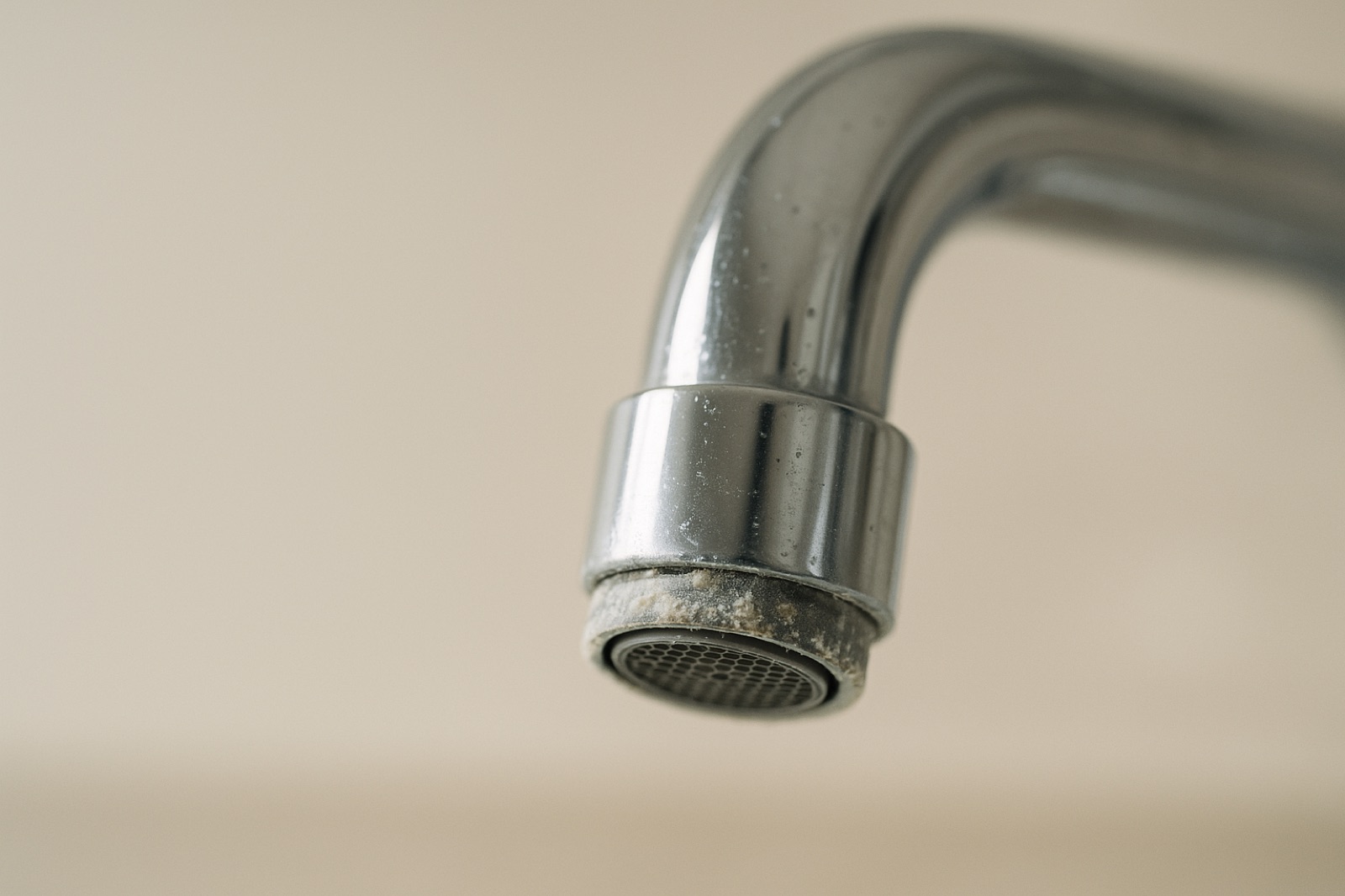
Scale: White or chalky deposits on fixtures, shower glass, or heating elements point you toward a hardness investigation. A softener is designed to address hardness minerals through ion exchange. A typical sediment or carbon filter is not a substitute for that function.
Taste: An unpleasant taste may justify targeted testing and a review of whether it occurs at every tap. If the issue is limited to one faucet, inspect the aerator and local plumbing before planning a whole-house purchase. If it is widespread, record how you would describe the taste and whether it appears in both hot and cold water.
Odor: Note whether the smell is present immediately, only after water stands, or only on the hot side. That pattern can help separate a source-water question from a water-heater or drain issue. Do not assume a softener will remove an odor simply because both problems involve water.
Staining: Record the color and location. Orange, black, blue-green, and reddish stains should not be treated as interchangeable. Photograph the stain before cleaning it, then compare observations with test results rather than buying from color alone.
Contaminants: A contaminant concern calls for a test that identifies the substance and its concentration. Equipment should then be matched to that result, the water flow, and the manufacturer's certified reduction claims. Taste, clarity, and smell cannot establish that water is free of a particular contaminant.
Use this softener-versus-filter matrix
Scale throughout the house: Test hardness. A softener may be the relevant treatment if the result confirms hardness and the maintenance commitment fits your household.
Unwanted taste or odor: Investigate the source and test as appropriate. A filter may fit, but the filter media must be intended for the identified problem.
Colored stains: Test for likely causes before choosing. Depending on the result, treatment may involve specialized filtration, conditioning, corrosion investigation, or plumbing work.
Named contaminant: Use a laboratory result and select a treatment certified for that specific reduction. A softener should not be treated as a general contaminant barrier.
Hardness plus a separate taste, odor, or contaminant issue: You may need both technologies. That does not mean they should be selected as a package without testing. Each device still needs a defined job.
Take a useful testing checklist to the next conversation
Write down whether your home uses a private well or a public supply. List each symptom, where it appears, when it started, and whether it affects hot water, cold water, or both. Collect any available utility water-quality information, prior laboratory reports, and equipment service records. Ask which analytes the proposed test covers, where samples should be taken, and how the results will change the recommendation.
If multiple symptoms remain unexplained, schedule a professional water assessment before requesting equipment quotes. The objective is not to obtain the longest treatment proposal. It is to connect every proposed component to a documented household problem.
This decision guide answers a visible reader need. TheHomeWaterReport.com recorded 3,226 page views, 1,068 visitors, 1,265 search crawls, and 2,891 AI crawls in the supplied reporting period. No assist or CRM data was supplied, so those figures cannot show how many readers eventually requested testing or bought equipment. They do show why the article must make the choice useful on the page itself.
For Erica, the homeowner trying to make a sensible purchase, the best comparison is not softener versus filter in the abstract. It is your confirmed problem versus the exact job each device can perform.