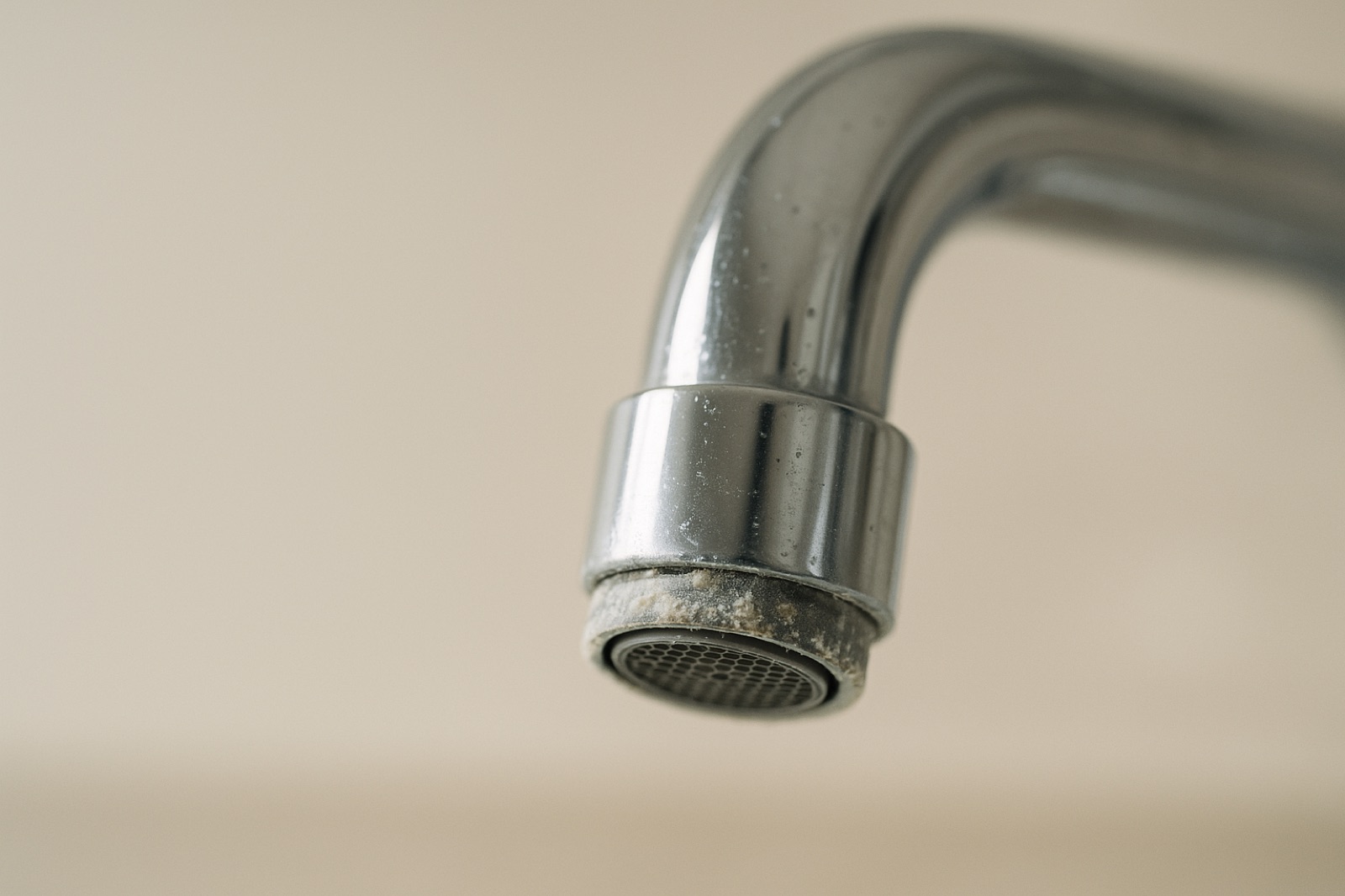
White scale covers the shower door. The kitchen water tastes unpleasant. A toilet develops orange streaks. Then a contaminant headline lands in your news feed. It is easy to treat those clues as one big water problem and start shopping for the most comprehensive system you can afford.
A better approach is to separate the problems before comparing equipment. Softeners and filters perform different jobs, and some symptoms cannot identify the right treatment without a water test. Your goal is not to buy the system that promises the most. It is to identify which problem affects your household, confirm its cause, and choose equipment designed for that specific job.
First, decide what kind of clue you have
Scale is usually a mineral clue. Chalky deposits around faucets, recurring spots on glassware, and crust inside a kettle can point toward hard water. A laboratory or properly performed hardness test can confirm the level. If hardness is the problem throughout the home, a conventional ion exchange softener is the equipment category to compare.
Taste and odor are different. If the issue appears only at one drinking tap, a point of use filter may be enough. If it reaches every faucet, investigate the source before selecting a whole house filter. Also compare cold water with hot water. An odor limited to hot water can direct attention toward the water heater rather than the incoming supply.
Staining requires another branch of the decision. Orange or reddish marks may be associated with iron, while dark staining can have other causes. Color alone is not a treatment specification. Test for the suspected substance and note whether the discoloration appears immediately or only after water sits. That evidence matters because a sediment cartridge, an iron treatment system, and a softener are not interchangeable.
A contaminant concern is the least suitable problem for guesswork. Tom Perkins reported for The Guardian that new research identified chemicals used in US pesticide products that are linked to breast cancer. The September 26, 2026 pesticide research report raises reasonable questions, but it does not establish what is present in your particular tap water. A research finding about product ingredients is not a household water result, and an association is not the same as proof of exposure or cause.
Use this softener versus filter matrix
Choose the softener track when testing confirms hardness and your main complaints are scale, soap performance, or mineral buildup across the house. Ask about capacity, salt use, regeneration settings, drainage, and ongoing maintenance.
Choose the filter track when a test identifies a substance that a specific filter is certified or otherwise documented to reduce. Match the device to the actual target. Carbon, sediment, reverse osmosis, and specialty media solve different problems. Also decide whether treatment is needed at one drinking tap or everywhere water enters the home.
Consider both tracks when you have separately confirmed hardness and a filtration target. In that case, ask how the equipment should be sequenced and how each unit affects flow, pressure, maintenance, and replacement costs.
Choose neither yet when the symptom is intermittent, limited to hot water, confined to one fixture, or unsupported by testing. Plumbing, a water heater, an aerator, or a temporary utility condition may need attention before treatment equipment does.
Take this checklist into testing
Write down every symptom, where it occurs, whether it affects hot water, cold water, or both, and how long the water must run before it appears. Photograph stains and deposits before cleaning them. If you use municipal water, review the utility’s available water quality information. If you use a private well, treat the well and household plumbing as parts of the investigation.
Then ask the laboratory or water professional which samples and methods fit your concern. Do not collect one convenient jar and assume it answers every question. Hardness, metals, microorganisms, and organic chemicals can require different containers, preservation, collection procedures, or laboratories. If you need help defining the test plan, schedule a professional water assessment before requesting equipment quotes.
When results arrive, compare each proposed system against four questions: What measured problem does it address? What performance documentation supports that claim? What will it cost to maintain? What problem will remain afterward?
Let the evidence set the shopping order
This distinction is clearly useful to homeowners. The Home Water Report recorded 3,226 page views and 1,068 visitors, alongside 1,265 search crawls and 2,891 AI crawls. No assistance or customer relationship management data was supplied, so those figures cannot show purchases or treatment outcomes. They do show substantial activity around information that helps readers sort water decisions.
For Erica and any homeowner facing several clues at once, the practical order is simple: map the symptom, test the plausible cause, and buy for the confirmed job. Scale may lead to softening. A verified contaminant may lead to filtration. Two confirmed problems may justify both. The symptom starts the investigation, but the evidence should finish it.