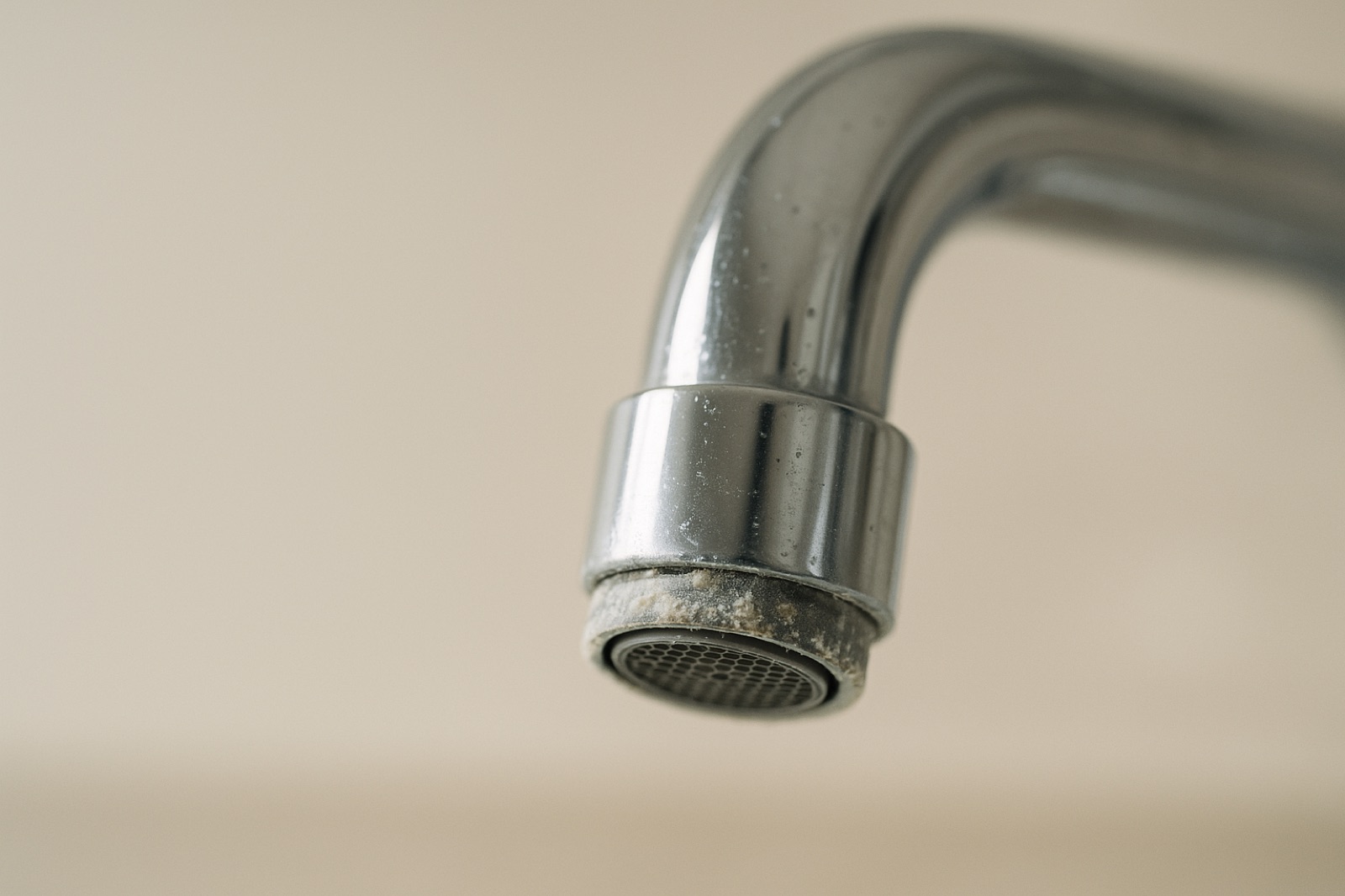
When your water leaves scale, tastes strange, smells unpleasant, stains fixtures, or raises contaminant concerns, the natural impulse is to shop for one machine that fixes everything. That is usually where confusion begins.
A better first move is to score each symptom separately. Some problems point toward a water softener. Others call for filtration. A few require testing before any equipment choice makes sense.
This distinction is becoming more important as water supplies and treatment practices evolve. On October 1, 2026, Water Finance and Management reported that the WateReuse Association had released a guidebook for developing state-specific water reuse regulations. The WFM Staff summary says water reuse is growing in importance nationwide. That story concerns utilities, regulators, and industry professionals, but it carries a useful reminder for your home: knowing what treatment happens upstream does not replace knowing what reaches your tap.
Score the five symptoms
Give your household one point for each condition you regularly observe. Do not count something that happened once during plumbing work or a temporary utility interruption.
Scale: Look for crust on faucet aerators, mineral buildup in a kettle, or deposits around shower fixtures. Repeated scale makes hardness testing worthwhile. A softener is designed to address hardness minerals, while a typical taste and odor filter is not.
Taste: Decide whether the taste appears at every cold-water tap or only one fixture. Run the cold water briefly and compare the kitchen with another faucet. A consistent taste issue may support filtration, but the appropriate filter depends on what causes it.
Odor: Compare hot and cold water. An odor limited to hot water can point your investigation toward the water heater or hot-water plumbing. An odor at every tap calls for broader testing and inspection. Do not assume that a softener will remove it.
Staining: Record the color and location. Orange, dark, blue-green, and chalky deposits do not all have the same cause. Photograph stains before cleaning them, then note how quickly they return. This evidence helps a testing professional choose useful tests instead of relying on appearance alone.
Contaminant concern: Treat this as a question requiring evidence, not as a symptom you can diagnose by sight, smell, or taste. If a notice, well condition, laboratory result, or household circumstance raises concern, identify the specific substance before choosing treatment.
The softener versus filter matrix
| Your main finding | Likely next step | What not to assume |
|---|---|---|
| Repeated scale plus confirmed hardness | Compare softener capacity, regeneration controls, maintenance, and installation needs | A softener automatically handles taste, odor, or contaminants |
| Unpleasant taste or odor throughout the home | Test or identify the cause, then match a filter to it | Every carbon filter treats every possible cause |
| Stains without confirmed hardness | Test for likely causes based on stain color and water source | All staining is a softener problem |
| A named contaminant in a laboratory result | Choose treatment certified or documented for that specific reduction | A broad claim such as cleaner water proves suitability |
| Confirmed hardness plus a separate taste, odor, or contaminant issue | Consider a properly arranged softener and filter system | One device must perform both jobs |
Use this testing checklist before requesting quotes
Write down whether you receive municipal water or use a private well. List affected fixtures, whether hot or cold water is involved, when the problem started, and any plumbing or appliance changes that came first. Photograph deposits and stains. Collect any utility notices and previous laboratory reports.
Next, ask for results with units, detection limits where applicable, and the name of the laboratory or test method. For a private well, build the test list around local conditions and the well itself. For municipal water, begin with available utility information, then investigate conditions that may arise within your building or plumbing.
If the symptoms conflict, or you do not know which tests fit the concern, schedule a professional water assessment. Ask the provider to separate confirmed findings from observations and to explain which finding supports each proposed device.
Why this guide is here
The Home Water Report recorded 3,226 page views, 1,068 visitors, 1,265 search crawls, and 2,891 AI crawls in the supplied reporting. No assist or CRM data was supplied, so those numbers cannot show how many readers bought equipment or resolved a water problem. They do show substantial discovery activity around the site. For you, the useful takeaway is simpler: start with the household problem, confirm its cause, and buy only the treatment that has a defined job.