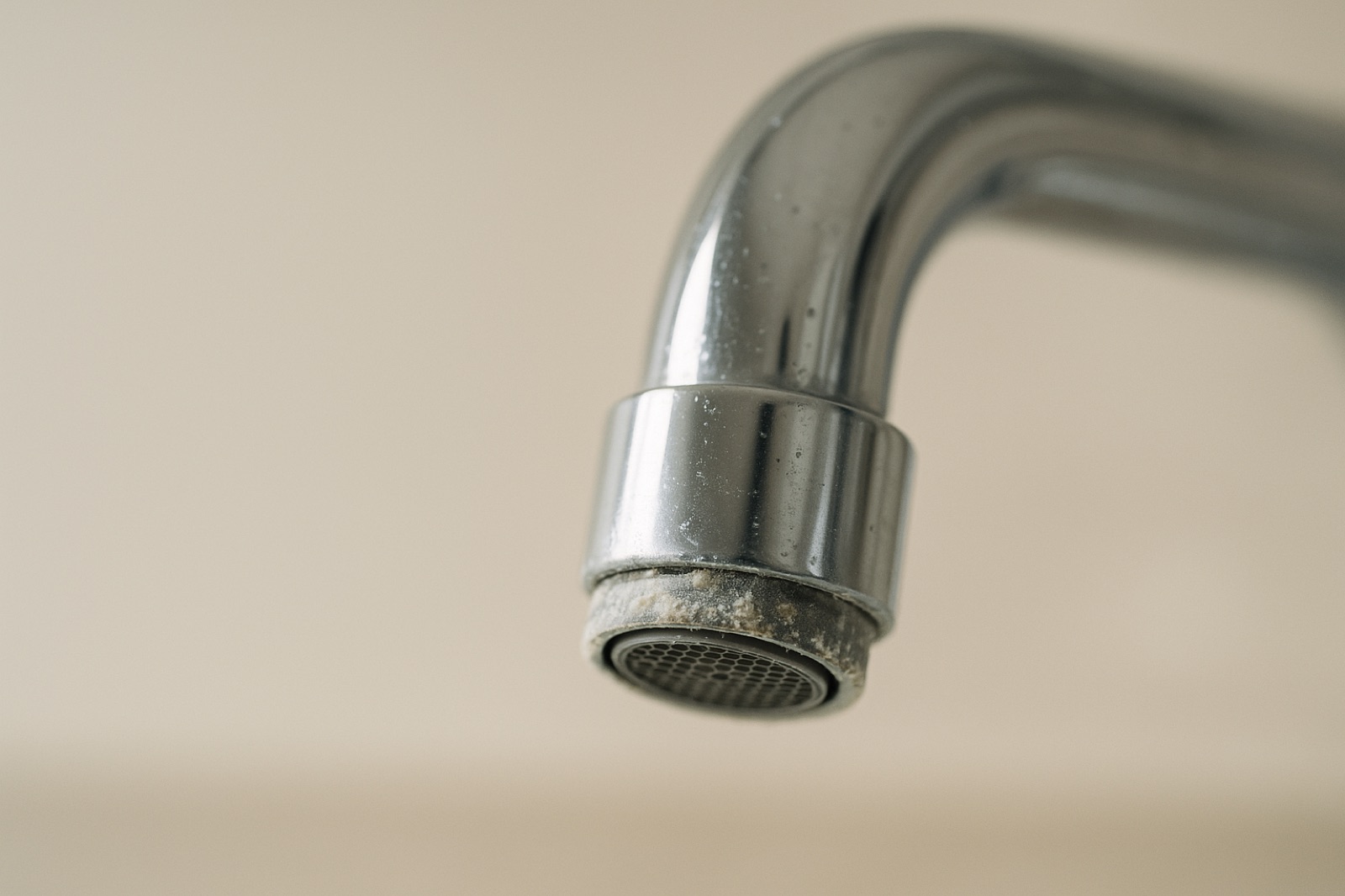
A crusty showerhead, cloudy glassware, and soap that refuses to lather can make a water softener seem like the obvious next purchase. But first, ask a more specific question: Do the symptoms appear equally in your hot and cold water?
That comparison can separate a whole-house hardness problem from trouble concentrated around the water heater. It can also keep you from asking a softener, filter, or repair to do a job it was not designed to do.
The need for a tailored answer has a useful parallel in current water policy. Water Finance and Management reports that the WateReuse Association released a guidebook for developing state-specific water reuse regulations. The guide is intended for utilities, regulators, and industry practitioners, not individual homeowners. Still, its central premise is relevant at home: water decisions work better when they fit the conditions involved.
Start with a hot-versus-cold comparison
Choose two nearby faucets, ideally in the same bathroom or kitchen. Run cold water at one, then hot water at the other. Look for differences in flow, visible particles, spotting after drying, and deposits around the aerator.
If both sides show similar white mineral buildup, hard water is a stronger possibility. Dissolved calcium and magnesium travel through the plumbing and can leave deposits wherever water evaporates. Heat often makes scale more noticeable, so the hot side may still look worse even when the incoming supply is the underlying issue.
If the trouble is almost entirely on the hot side, inspect the water heater and hot-water plumbing before treating the entire house. Sediment accumulation, a deteriorating component, or restricted hot-water piping may call for maintenance or repair. A softener cannot restore a failing heater or clear every existing obstruction.
Do not let spots make the diagnosis
White spots are evidence that something remained after water evaporated. They are not, by themselves, a hardness measurement. Detergent residue, dishwasher performance, rinse aid, and water left to air-dry can affect what you see.
Try wiping one spot with diluted white vinegar on a compatible surface. If it dissolves readily, mineral scale is plausible. That is still only a clue. It does not tell you the hardness level or prove that a softener is the right investment.
Soap behavior also produces false positives. Hardness can reduce lather and contribute to soap film, but product formulation, water temperature, the amount of soap used, and an overloaded washing machine or dishwasher can create similar complaints. Compare the same soap in measured hot and cold samples rather than relying on impressions from different rooms.
Put a number on hardness
Use a hardness test strip for screening or request a laboratory or water-treatment test when you need a more dependable result. Municipal customers may also find hardness information in a utility water-quality report, although the water at your address can vary from a systemwide figure.
Hardness is commonly reported in milligrams per liter, usually expressed as calcium carbonate, or in grains per gallon. To compare the units, divide milligrams per liter by about 17.1 to get grains per gallon. For example, 171 milligrams per liter is about 10 grains per gallon.
Sample cold water that has not passed through a softener. If you already own one, also test treated water. A hard untreated sample and a much lower treated reading suggest the unit is removing hardness. Similar readings may point to a bypass setting, depleted salt, a regeneration problem, incorrect programming, or a unit that needs service.
Match the response to the evidence
Choose repair when symptoms are limited to hot water, flow has changed, or equipment is malfunctioning. Choose filtration when testing identifies a different target, such as sediment, chlorine-related taste, or a specific contaminant that the selected filter is certified to reduce. Ordinary filters generally do not remove dissolved hardness.
Consider softening when testing confirms meaningful hardness and mineral scale or soap-related inconvenience affects the house broadly. Household water use, peak flow, hardness, iron, and maintenance expectations all influence equipment sizing. If you want local help, use a professional assessment to confirm hardness and size the right system.
The practical order is simple: compare hot and cold, test untreated water, verify the units, and identify where the symptom begins. That short investigation tells you whether you need a repair, filtration, softening, or merely a better cleaning and rinsing routine.