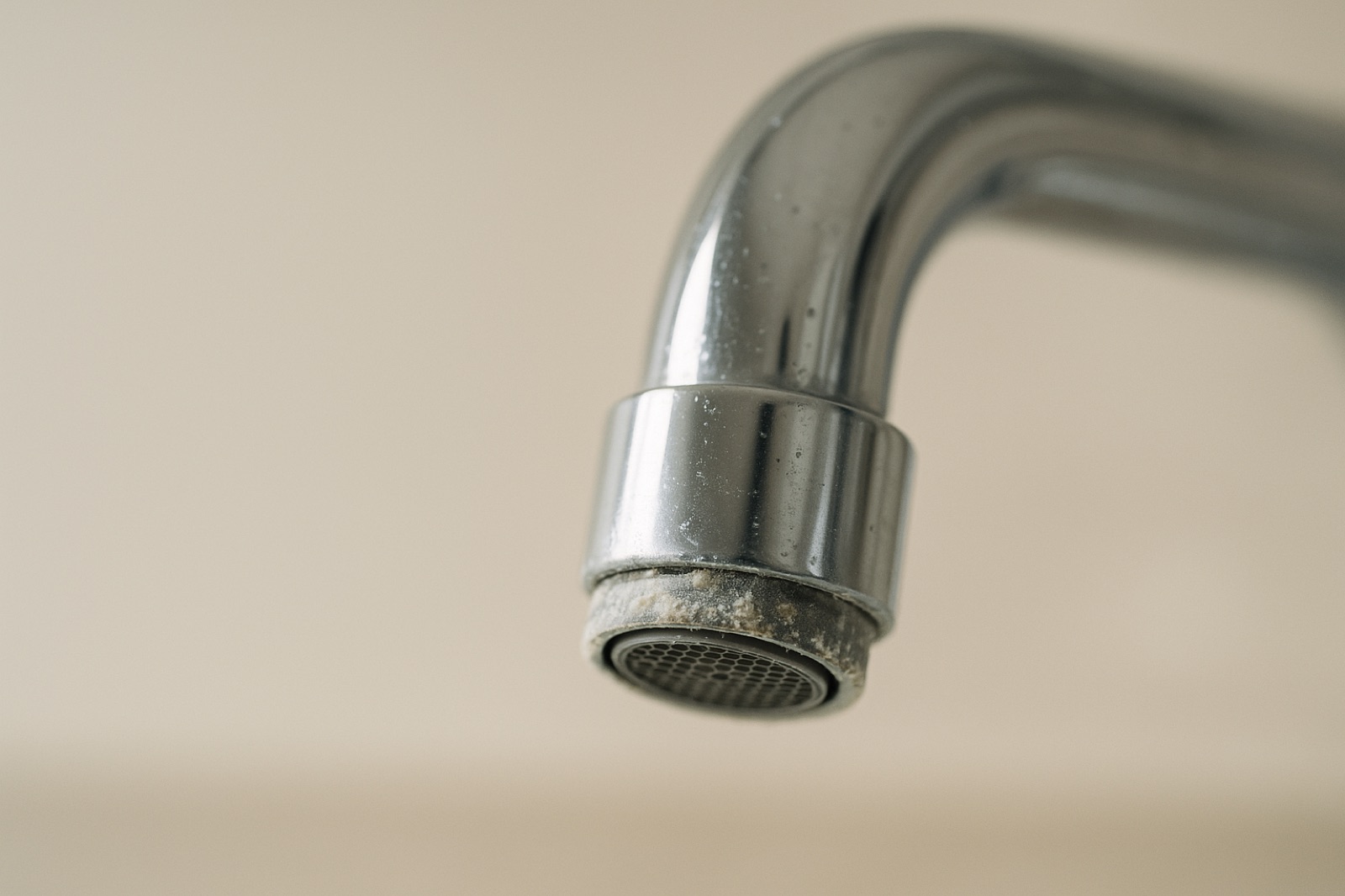
When your water leaves crust on a faucet or gives your coffee an odd taste, it is tempting to shop for equipment immediately. But a water softener and a water filter perform different jobs. Choosing from the appliance label alone can leave you with an expensive system that never addresses the original complaint.
Weather disruptions make careful diagnosis especially important. The Guardian's Gabrielle Canon reported that Hurricanes Lowell and Lala caused damage in Hawaii this year, including downed power lines, damaged roads, sunken boats, and destroyed piers. That report on Hawaii's storm damage does not establish that any particular home's water became unsafe. It does illustrate why a sudden water change following a major disruption deserves investigation instead of guesswork.
First, place your complaint in the right row
Use this matrix to build a shortlist. It is not a substitute for testing, but it can keep you from expecting one type of equipment to do another type's job.
| What you notice | Possible category | Likely starting point | What to confirm |
|---|---|---|---|
| White scale on fixtures, glassware, or heating elements | Hardness minerals | Water softener | Hardness level and household water demand |
| Unpleasant taste | Aesthetic issue or a water-quality change | Targeted filter after testing | Whether the taste occurs at one tap or throughout the home |
| Chlorine-like or musty odor | Treatment residual, plumbing condition, or another source | Filter only after the cause is narrowed down | Hot versus cold water, affected taps, and test findings |
| Orange, brown, blue-green, or black staining | Minerals, metals, corrosion, or plumbing materials | Testing before equipment selection | Stain color, location, water source, and relevant laboratory results |
| Concern about a specific contaminant | Health-related water-quality question | Certified treatment matched to the substance | Presence, concentration, and the device's certified reduction claim |
A softener primarily addresses hardness. It should not be treated as a general contaminant-removal device. A filter may address certain tastes, odors, particles, or specified contaminants, but its capabilities depend on the filter media and verified performance claims. If you have both confirmed hardness and a separate filtration need, the sensible answer may be two treatment stages rather than one oversized promise.
Use location and timing to refine the shortlist
Check whether the symptom appears at every fixture. A problem at one faucet may involve an aerator, a local supply line, or that fixture. A whole-home pattern points you toward the incoming water, shared plumbing, or a centralized treatment system.
Then record when the change began. Note plumbing work, filter replacement, a long vacancy, a power interruption, flooding near a private well, or a public notice. Timing does not prove the cause, but it helps you choose useful tests and explain the issue clearly to a water professional.
Odor deserves one extra comparison. Fill separate clean glasses from the hot and cold taps, then move away from the sink before smelling them. If only hot water is affected, the water heater becomes part of the investigation. If the odor is present throughout the house, broader testing may be more appropriate.
Bring this checklist to the testing conversation
Before buying equipment, write down:
- Your water source, either a public system or private well
- The exact symptom, affected fixtures, and date first noticed
- Whether hot water, cold water, or both are affected
- Any recent outage, storm damage, plumbing work, or public advisory
- Existing treatment equipment and its maintenance history
- Laboratory results, including units and collection date
- The specific result you want, such as less scale or reduction of a named contaminant
If the complaint is persistent, sudden, or tied to a contaminant concern, you can schedule a professional water assessment before comparing models. Ask which findings support each recommended treatment stage and how performance will be checked afterward.
Make every seller answer the same questions
Request the equipment's intended job, capacity, flow requirements, maintenance schedule, replacement costs, wastewater or drainage needs, and applicable third-party certifications. For contaminant reduction, look for certification covering the specific substance you need addressed. A broad claim such as cleaner water is not a useful substitute.
The Home Water Report recorded 3,226 page views, 1,068 visitors, 1,265 search crawls, and 2,891 AI crawls in the supplied reporting period. No assist or CRM data was supplied, so those figures show attention, not whether readers bought equipment or solved a water problem. For Erica and any homeowner facing the same decision, the practical measure of success is simpler: identify the complaint, confirm the cause, and buy only the treatment that matches the evidence.