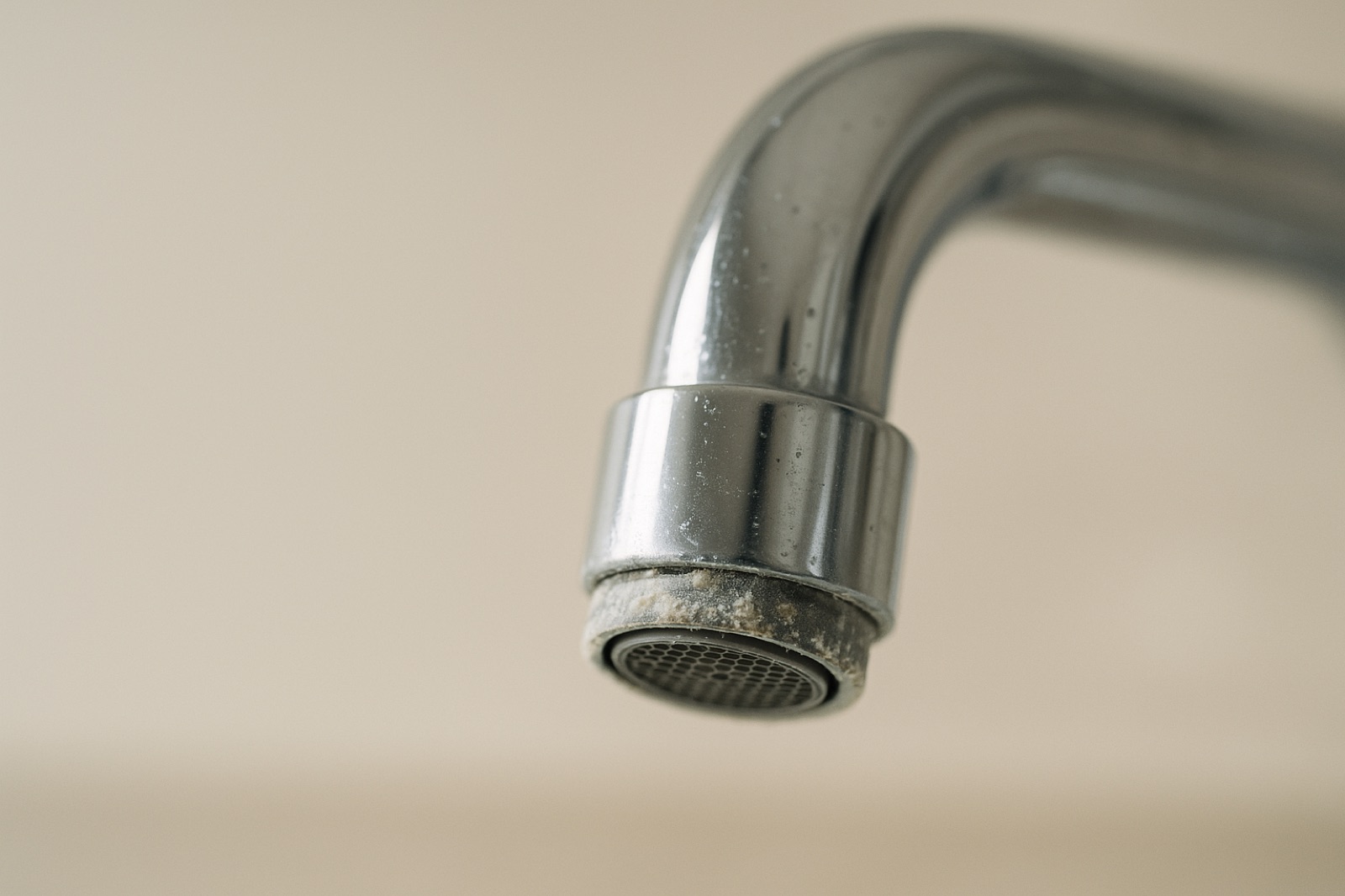
A water problem often announces itself through an everyday annoyance: chalky buildup on a faucet, an unpleasant taste at the kitchen sink, a sulfur-like odor, or orange stains in a toilet. Those clues matter, but they do not all call for the same treatment.
A softener primarily addresses hardness minerals. A filter targets particular substances, tastes, or odors, depending on its design. Some homes need both. The safest buying sequence is to identify the symptom, learn whether it affects one tap or the entire house, and test for the likely cause before comparing equipment.
That distinction is especially timely when a chemical name enters the news. Circle of Blue reports that federal officials are expanding a scientific review of glyphosate, a widely used weedkiller. The Circle of Blue report on the expanded glyphosate review, published September 30, 2026, provides a reason to pay attention. It does not tell you whether glyphosate is present in your household water.
Start with the clue, then choose the test
Scale and soap problems: White crust on fixtures, mineral deposits in a kettle, stiff laundry, and soap that performs poorly can point toward hard water. Ask for a hardness measurement reported in grains per gallon or milligrams per liter. If hardness is confirmed throughout the home, a water softener is the equipment category to evaluate.
Unpleasant taste: Taste alone cannot identify a contaminant. First compare cold water at the kitchen tap with water from another frequently used tap. Remove and clean the faucet aerator, and check whether the taste appears only in hot water. If it persists, test before choosing a filter. The correct filter depends on what the test identifies, not merely on whether a product promises better flavor.
Odor: Record whether the smell occurs in hot water, cold water, or both. Also note whether it fades after the tap runs. An odor isolated to hot water may direct attention toward the water heater, while an odor at every cold tap suggests a broader supply issue. Because several conditions can create similar smells, do not select media from an odor description alone.
Orange, brown, blue, or green staining: Color is useful evidence, but it is not a laboratory result. Orange or brown staining may justify testing for iron and manganese. Blue or green marks can warrant checking pH and corrosion-related factors. A softener may reduce certain forms of iron under suitable conditions, but significant or complicated staining can require dedicated filtration or another correction.
A named contaminant: If your concern is glyphosate or another specific substance, ask a certified laboratory whether it offers the appropriate analysis and how the sample must be collected. A standard mineral panel does not automatically include pesticides. Likewise, a general carbon filter, reverse osmosis unit, or whole-house system should not be assumed to address a substance unless its verified performance claim names that substance and the relevant conditions.
The softener-versus-filter matrix
Choose a softener evaluation when testing confirms hardness and the problem affects bathing, laundry, fixtures, and water-using appliances across the house.
Choose a filter evaluation when testing identifies a particular substance, or when a persistent taste or odor has been traced to the incoming water. Match the filter technology and certification claim to the actual result.
Consider both when you have confirmed hardness plus a separate taste, odor, staining, or contaminant issue. The equipment should perform distinct jobs, and its order in the treatment line should be planned as a system.
Choose neither yet when the symptom appears at one fixture, only on the hot side, or after water has sat in household plumbing. Investigate that location first.
Your pre-purchase testing checklist
Write down which taps show the problem, whether hot and cold water differ, when the symptom began, and whether your water comes from a public system or private well. Collect any utility water-quality report available to you, but remember that conditions inside your plumbing can still affect what reaches the glass.
Next, obtain results for the issue you actually observed. Confirm hardness for scale, relevant metals and basic water characteristics for stains, and a specifically ordered analysis for a named contaminant. Keep the laboratory report beside every treatment proposal so you can compare the measured result with the device's documented reduction claim.
If sampling requirements or equipment choices remain unclear, you can schedule a professional water assessment with a qualified local provider such as Reverse Osmosis STL. Ask the evaluator to separate confirmed findings from possibilities and to explain what each proposed treatment stage is intended to do.
This guide answers a visible reader need: The Home Water Report recorded 3,226 page views, 1,068 visitors, 1,265 search crawls, and 2,891 AI crawls in the supplied reporting period. No assist or CRM data was supplied, so those figures show content activity, not purchases or treatment outcomes. For you, the practical takeaway is simpler: let symptoms choose the questions, let testing identify the problem, and let the result determine whether you need a softener, a filter, both, or no new equipment at all.