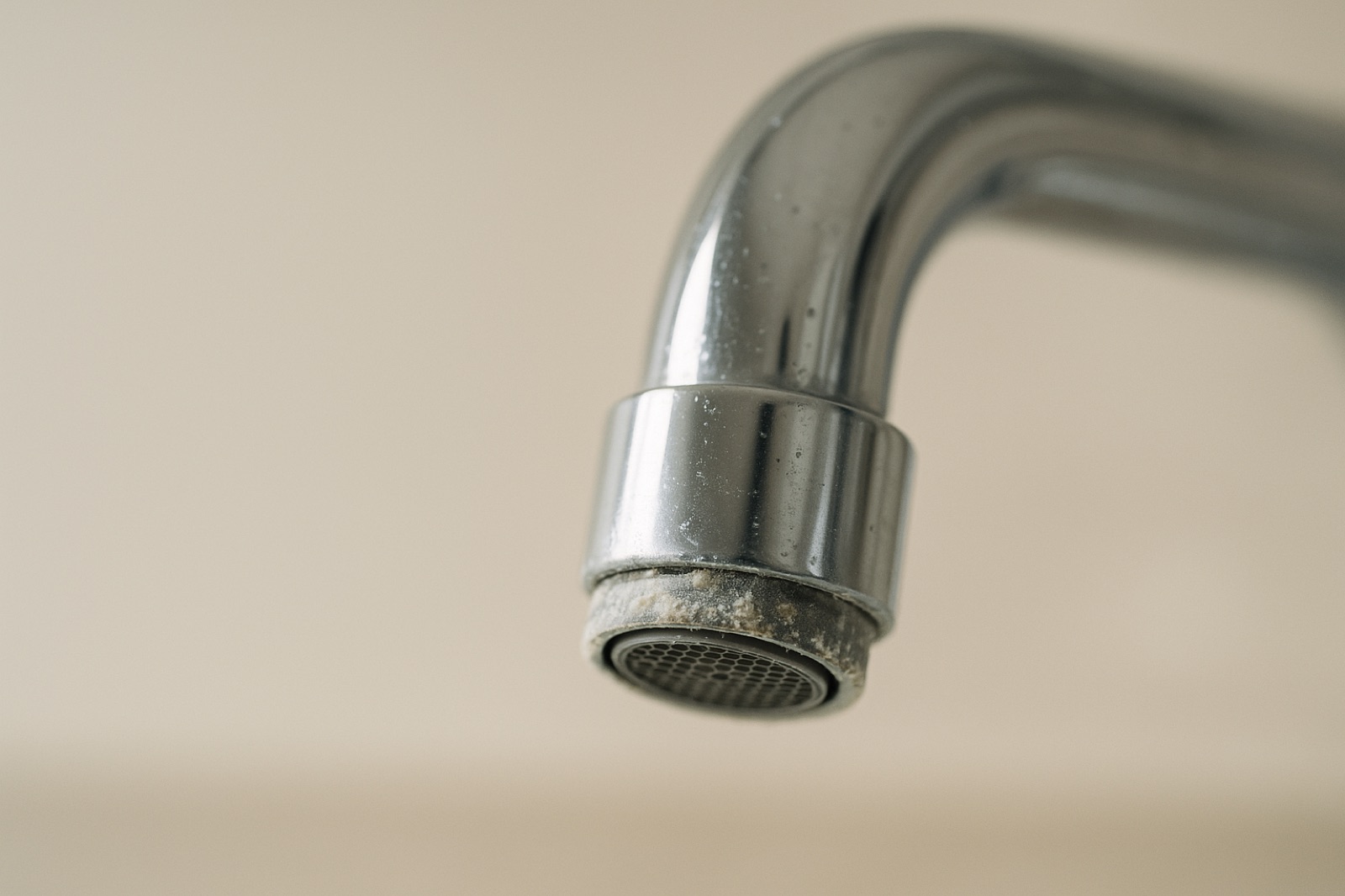
A water problem can arrive as a crusty faucet, a rusty stain, an unpleasant smell, or a worrying test result. Those clues feel equally urgent when they appear in your home, but they do not point to the same solution.
Before comparing equipment, ask two questions: Is the problem mainly affecting how your water behaves, or is there evidence of something in the water that must be reduced? The first question often leads toward softening or conditioning. The second leads toward filtration or another contaminant-specific treatment.
This distinction matters even when water itself is in the news. In an August 2026 story, Circle of Blue reported that an August 27 executive order changing Lake Ontario's name was disrupting cross-border management and overwriting Native history. The article's central concern is governance, not household treatment, but it offers a useful reminder: labels can change while the practical work of understanding and protecting water remains. Read Abigail Mihaly's Circle of Blue report on the Lake Ontario name change.
Question one: Is this a hardness problem?
Scale on showerheads, mineral film on glassware, and soap that seems difficult to rinse are common reasons to investigate hardness. A softener is designed primarily to address hardness minerals through ion exchange. It may make cleaning easier and reduce new scale, but it is not a general-purpose contaminant filter.
Do not rely on white residue alone. Water droplets can leave behind several dissolved materials when they evaporate. Test for hardness before selecting a softener, and ask for the result in grains per gallon or milligrams per liter. That number helps determine whether softening is appropriate and how a system should be sized.
Question two: Is there a taste, odor, stain, or contaminant to target?
Filtration is a broad category, not one machine with one outcome. Activated carbon may be considered for certain taste and odor concerns. Sediment filters capture particles. Reverse osmosis systems use a membrane and typically treat water at a specific tap. Other technologies are designed around particular substances or water conditions.
That means the symptom is a starting point, not a diagnosis. A rotten egg odor, metallic taste, orange stain, or cloudy glass can have more than one cause. Municipal-water customers can begin with their utility's water-quality report and then test at the tap when a household-specific issue remains. Private-well owners are responsible for arranging their own testing.
A quick softener-versus-filter matrix
Scale and soap performance: Test hardness. A softener may fit if the result confirms a meaningful hardness problem.
Chlorine-like taste or odor: Check the water supplier's information and identify whether the issue occurs at every cold-water tap. A suitable carbon filter may help, but its performance claim should name the substance being reduced.
Orange, brown, blue-green, or black staining: Test before buying. Color can reflect different minerals, plumbing conditions, or other causes. A softener should not be assumed to solve every stain.
Particles or grit: Inspect faucet aerators and determine whether the material appears throughout the home. Sediment filtration may be relevant, but the source of recurring particles still matters.
A confirmed contaminant: Choose equipment with a performance claim for that contaminant and concentration range. A softener is not a substitute unless the treatment has been specifically validated for the substance in question.
Hardness plus a separate contaminant: You may need both softening and filtration. System order, flow rate, pressure, maintenance, and wastewater requirements should be planned as one treatment train.
Your testing checklist before requesting quotes
Write down which taps are affected, whether the issue appears in hot water, cold water, or both, and whether it is constant or intermittent. Photograph stains and scale. Note whether you use municipal water or a private well. Gather any utility report or previous laboratory result.
Then request tests tied to the observed problem. At minimum, that may include hardness for scale, plus targeted analysis for staining, taste, odor, or suspected contaminants. Use an appropriate certified laboratory when results will guide a health-related treatment decision. If you want help connecting symptoms, testing, and equipment options, you can schedule a professional water assessment.
Finally, compare proposals by the problem each device is supposed to solve. Ask for the test result, treatment goal, rated flow, replacement schedule, ongoing cost, and applicable independent certification. If a seller cannot connect the recommended equipment to a measured condition or clearly defined nuisance, keep asking questions. The best purchase is not the system that promises the most. It is the one whose job matches your water.