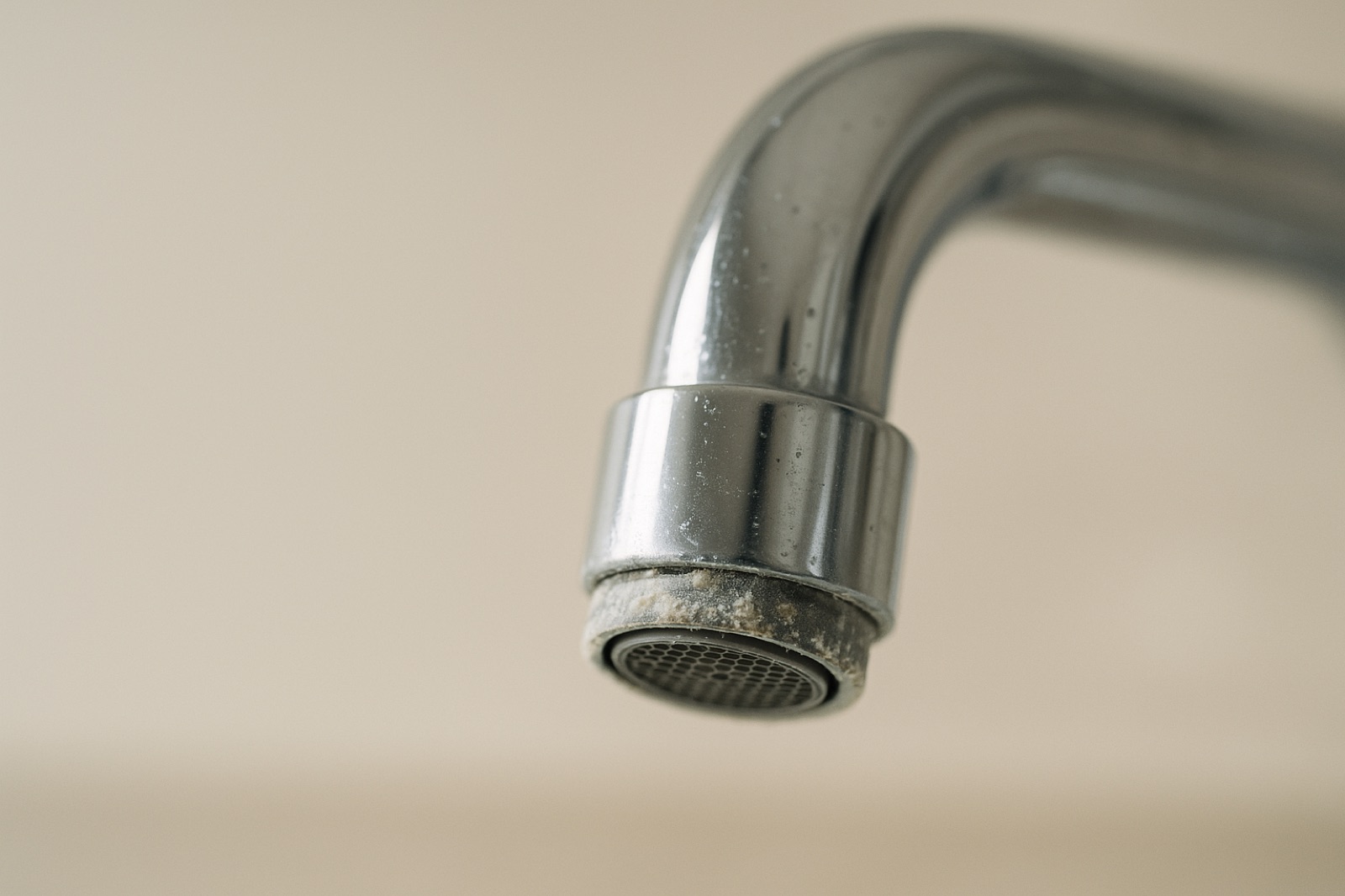
White spots on a faucet can make a water softener seem like the obvious next purchase. Sometimes it is. But spotting alone cannot tell you whether minerals are entering throughout the house, residue is coming from a cleaning product, or one fixture simply needs repair.
The distinction matters whenever households and businesses are being asked to think harder about water use. On September 14, 2026, The Guardian's Maya Yang reported that the Texas governor directed regulators to penalize data centers that do not follow state water-use disclosure laws. The report on water-use compliance in drought-prone Texas concerns large commercial users, not residential hardness. Still, it offers a useful homeowner reminder: good water decisions begin with measurements, not appearances.
Check three locations, not one faucet
Start at a frequently used hot-water fixture, such as a shower or kitchen faucet. Look for a rough, chalky deposit around the aerator, showerhead, or tile. Hardness scale often becomes easier to notice where water is heated or repeatedly evaporates.
Next, inspect a cold-water fixture that receives less splashing. If both hot and cold locations develop similar mineral crust, a whole-house water condition becomes more plausible. If the problem appears only on the hot side, the water heater, temperature setting, or accumulated sediment deserves attention before you blame every incoming gallon.
Finally, examine an appliance that heats water, such as a dishwasher, coffee maker, or kettle. Repeated crust in several unrelated places is stronger evidence than spots on one polished sink. Follow appliance cleaning instructions, and do not dismantle plumbing or heating equipment merely to look for scale.
Separate scale from its common look-alikes
A spot is simply material left after water dries. Hardness minerals can cause it, but soap, dishwasher detergent, rinse aid, cleaning spray, and other dissolved material can leave pale residue too. Silica may also produce stubborn spotting that a conventional ion-exchange softener is not designed to remove.
Texture provides a clue, although not a diagnosis. A hard, crusty deposit that returns after cleaning points more strongly toward scale. A hazy film that changes after you switch detergent, rinse aid, or cleaning method may be a product issue. Rust-colored staining suggests that iron testing may be more useful than buying a softener based on color alone.
Soap behavior is another clue with limits. Hard water can reduce lather and encourage soap residue, but product formula, dose, water temperature, and washing technique also affect performance. A single bottle-of-soap experiment can create a false positive, especially when you already expect hard water.
Get the hardness number in usable units
Ask for a test that reports total hardness, commonly expressed as milligrams per liter as calcium carbonate or grains per gallon. To compare the units, one grain per gallon is approximately 17.1 milligrams per liter. Confirm whether a result is a laboratory measurement, an onsite test, a utility figure, or an estimate for the wider service area.
Your utility's water-quality report can supply useful background, but the value at your tap may differ because of source blending, private wells, plumbing conditions, or changes over time. A properly performed household test is the better basis for equipment sizing. If you want local help, Lakeview readers can confirm hardness and size the right system before comparing models.
Choose the response that matches the evidence
Repair is appropriate when the symptom stays at one fixture, follows a plumbing change, or comes with low flow, leaking, or a damaged aerator. Cleaning may be enough when modest deposits return slowly and do not meaningfully interfere with your routines or appliances.
Filtration fits taste, odor, sediment, or a specifically identified contaminant, depending on the filter and test result. A standard water filter should not be assumed to soften water. Likewise, a softener should not be expected to make contaminated water safe or solve every taste complaint.
Softening becomes the logical option when testing confirms hardness and the symptoms are widespread enough to bother you, increase cleaning, or create recurring scale in water-using equipment. The decision is partly personal: a measurable hardness level does not automatically mean every household needs treatment.
This guide responds to demonstrated attention, but not proven buying intent. TheHomeWaterReport.com recorded 3,210 page views, 1,068 visitors, 1,258 search crawls, and 2,876 AI crawls in the available reporting. Because the feed contains neither query-level evidence nor conversions, those figures cannot show which symptom readers have or whether they need a softener. Your own three-location inspection and hardness test can.