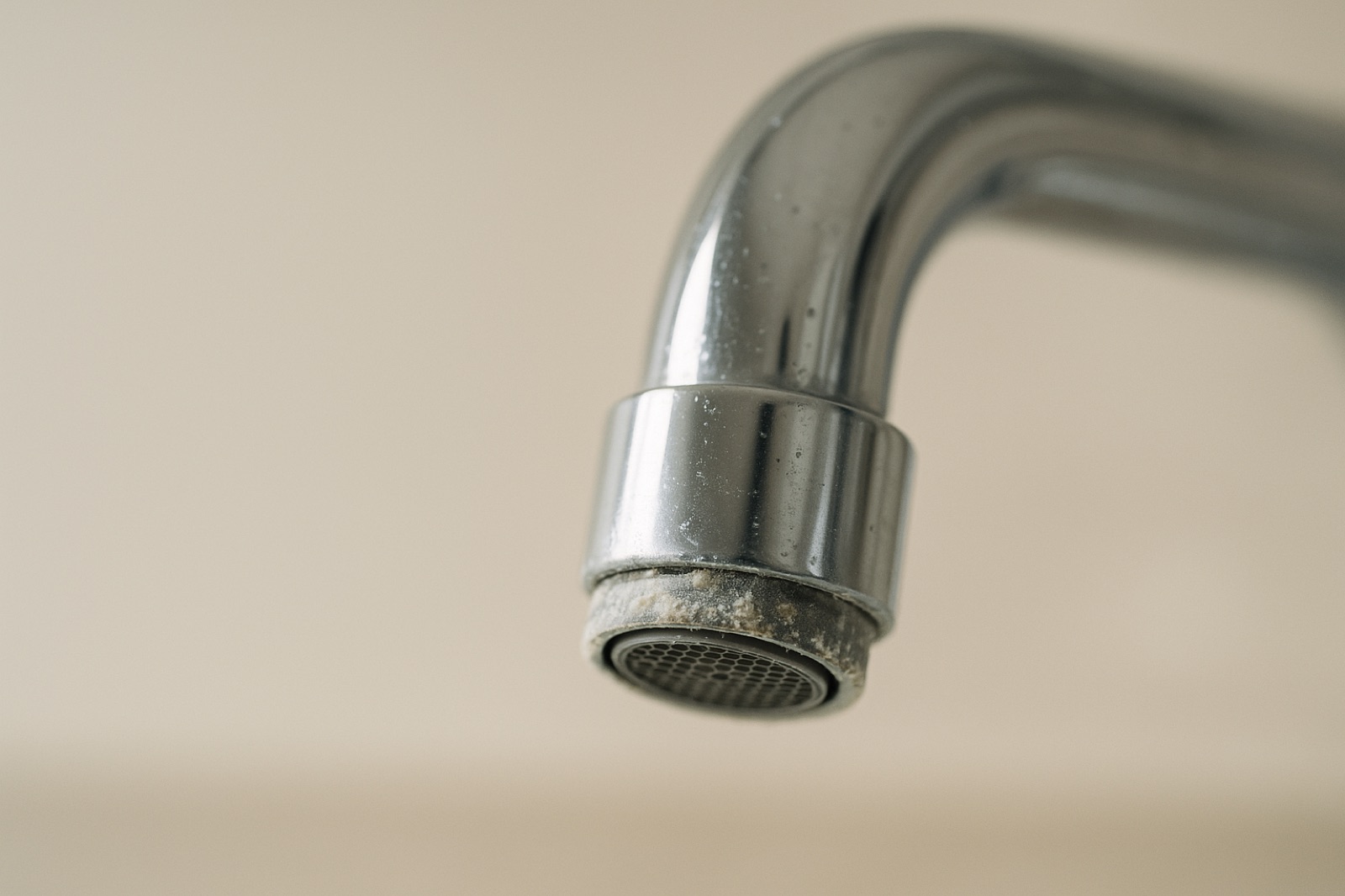
Water treatment is easiest when one device has one clear job. Scale points toward hardness control. An unpleasant taste may call for filtration. Orange staining may justify testing for iron. A detected contaminant requires a treatment method certified or otherwise documented for that specific substance.
The decision gets harder when your household has two or more complaints. You may need both a softener and a filter, but that does not mean you should buy a packaged system or let an installer choose the sequence without explaining it.
A useful reminder comes from a current story outside the equipment aisle. Keith Schneider reported for Circle of Blue on a Kansas prairie festival focused on agriculture that protects soil, water, and communities. The story describes The Land Institute, launched in 1976 to explore food production that respected nature and conserved water. For a homeowner, the practical parallel is simple: water is part of a system. Treatment choices work better when you understand what is entering the house, what must be removed, and where each device belongs.
Start with the job, not the installation order
A conventional ion exchange softener primarily addresses hardness minerals. It can reduce scale on fixtures and inside water-using appliances, and it often improves soap performance. It is not a general contaminant filter.
A filter is a much broader category. Sediment filters catch particles. Activated carbon can address certain tastes, odors, and chemicals, depending on the product. Specialized media or membrane systems may target particular contaminants. Those products are not interchangeable, even when their housings look similar.
Use this matrix to separate the jobs before deciding which device goes first.
| Your concern | Evidence to collect | Likely treatment category | Ordering question |
|---|---|---|---|
| Scale on heating elements or persistent mineral buildup | Laboratory or field hardness result | Softener or another documented scale-control method | Does the downstream filter benefit from softened water? |
| Chlorine-like taste or odor | Utility report, location check, and product-specific testing when appropriate | Carbon filtration designed for the identified issue | Does carbon need to protect softener resin, or does the manufacturer specify another order? |
| Orange, brown, or black staining | Tests for iron, manganese, pH, and hardness | Problem-specific filtration, sometimes combined with softening | Could untreated iron or sediment foul the softener? |
| Visible grit or cloudy particles that settle | Inspect samples and identify the source | Sediment filtration | Should particles be removed before any valve, resin, carbon, or membrane? |
| A confirmed contaminant | Accredited laboratory result with concentration | Treatment documented for that contaminant | What pretreatment and water conditions does the selected unit require? |
Why there is no universal first device
Sediment filtration commonly belongs upstream because particles can interfere with valves and treatment media. Beyond that, the correct sequence depends on the water and the equipment.
For example, a carbon filter may be placed before a softener when its documented role is to reduce a disinfectant that could affect resin life. In another design, a filter may go after the softener because its media performs better under the resulting water conditions. A membrane system may require its own sediment, carbon, pressure, and hardness limits.
This is why “filter first” and “softener first” are incomplete rules. The installer should be able to connect the proposed order to your test results and to written requirements for every component.
Run this checklist before requesting quotes
Record whether each symptom appears at every tap, only on hot water, or only at one fixture. Note whether staining returns after cleaning and whether particles settle in a clear glass. Obtain your utility water quality report if you receive public water, but test at the tap when you need to understand conditions inside your home. Private well owners should use appropriate laboratory testing rather than relying on appearance, taste, or odor.
Your test list should follow the complaint. Include hardness for scale, iron and manganese for characteristic staining, pH when corrosion or treatment performance is a concern, and specific contaminant tests when local conditions or prior results give you a reason to investigate. A broad sales demonstration is not a substitute for a result that identifies the substance and its concentration.
If the symptoms overlap or the proposed treatment train is expensive, schedule a professional water assessment before signing a contract.
Finally, ask for a simple plumbing diagram. It should show the main shutoff, bypasses, sample points, drain connections, and the order of every treatment stage. Ask what happens if one device is bypassed and which replacement schedule applies to each filter or media bed.
The best two-device system is not the one with the longest feature list. It is the one in which every stage has a defined problem, evidence supporting that problem, and a clear reason for its place in line.