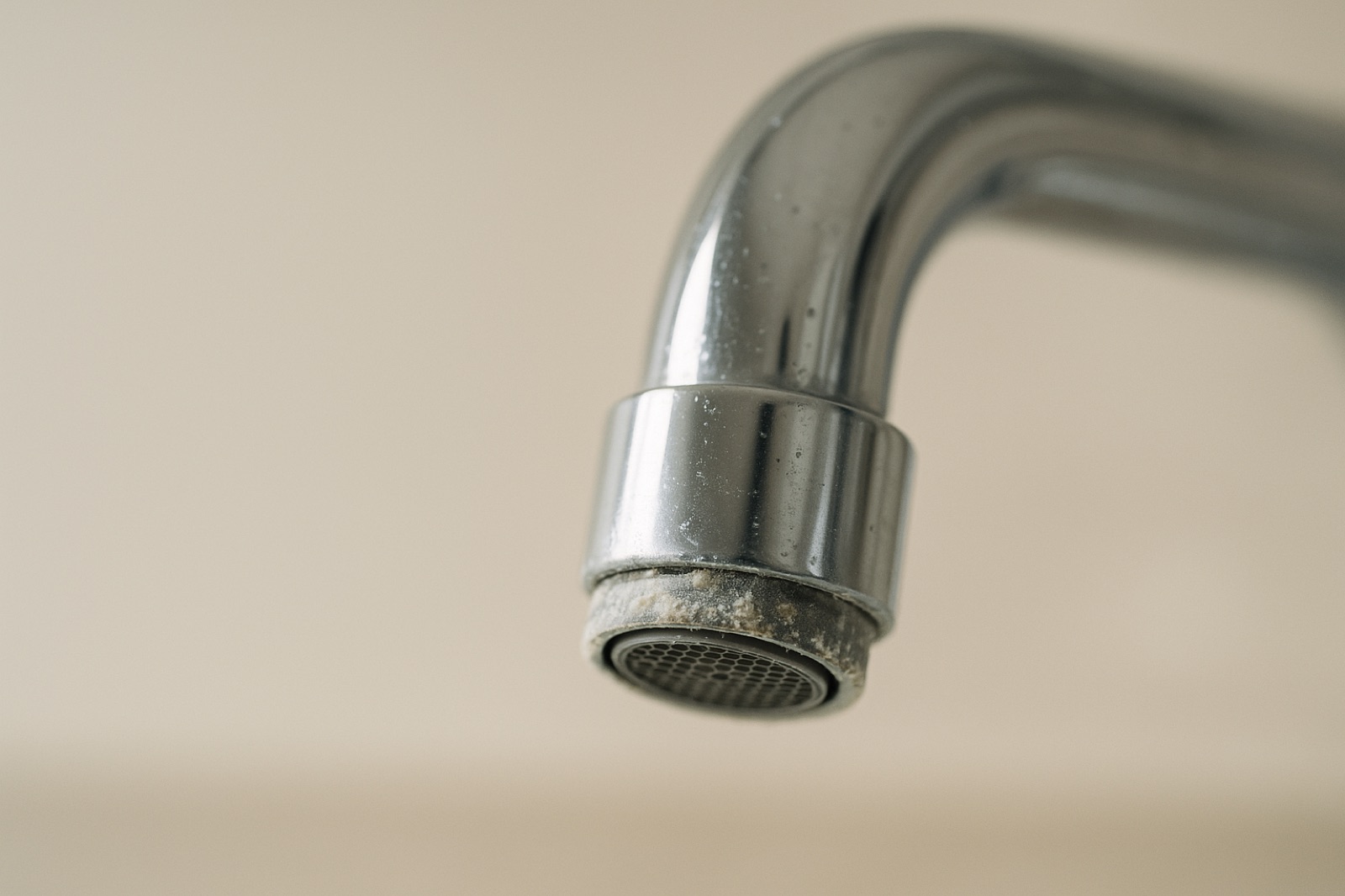
A water treatment decision gets easier when you stop asking which machine is best and start asking where the solution needs to work. Scale in every bathroom points toward a different treatment boundary than an unpleasant taste at one kitchen faucet. Staining may call for targeted testing before either a softener or filter enters the conversation.
This distinction matters when water quality enters the news. Carey Gillam reports for Circle of Blue that US officials are expanding a scientific review of glyphosate, a widely used agricultural weedkiller. The report on the expanded glyphosate review gives homeowners a reasonable prompt to examine their water information. It does not, by itself, show that glyphosate is present at your tap or identify the treatment your house needs.
Your practical job is to connect three things: the symptom, the places where it appears, and evidence from an appropriate water test.
Start by drawing the treatment boundary
Walk through the house and mark every location where you notice a problem. If white mineral buildup appears on showerheads, faucets, glassware, and water-using appliances, the issue crosses much of the plumbing system. Whole-house treatment may deserve consideration. If the concern is limited to drinking water taste at the kitchen sink, treating every gallon used for toilets, laundry, and outdoor watering may add unnecessary cost and upkeep.
Also compare hot and cold water. An odor found only in hot water can point your investigation toward the water heater rather than the incoming supply. A stain beneath one fixture may come from that fixture or its local plumbing. These observations do not replace testing, but they help you choose useful sample locations and avoid buying equipment for the wrong boundary.
Use this softener-versus-filter matrix
Scale on fixtures and appliances: Start with a hardness test. A softener is designed to reduce hardness minerals and usually works at the point where water enters the home. A conventional filter is not a substitute for softening unless its specifications clearly identify a hardness treatment process.
Unpleasant taste or chlorine-like odor: First determine whether the problem affects all taps or only drinking water. A suitable carbon-based filter may help with certain taste and odor concerns, but filter performance depends on the substance, flow rate, capacity, and replacement schedule. A softener is not primarily a taste-and-odor device.
Metallic taste or orange, brown, blue, or green staining: Test before choosing equipment. Color alone cannot reliably identify iron, manganese, copper, corrosion, or another cause. A softener may address some forms and concentrations of iron, while other conditions require different filtration or changes to plumbing or water chemistry.
A named contaminant: Begin with a laboratory result, not a general headline or a broad filter label. Then compare the result with a treatment unit certified or otherwise documented for that specific reduction claim. Depending on the contaminant, the appropriate boundary may be one drinking-water tap or the whole house.
More than one confirmed problem: You may need both technologies. Softening and filtration perform different jobs, and treatment order can affect performance. Ask the provider to explain what each stage removes, why it sits in that position, and what maintenance keeps it effective.
Take this checklist into testing
Before collecting samples, write down whether you use a private well or public water, which taps show symptoms, whether hot and cold water differ, when the issue began, and whether plumbing or appliances recently changed. Photograph stains and scale in neutral light. Record odors without trying to identify the chemical yourself.
For public water, review the utility's available water quality report, but remember that conditions inside your plumbing can still matter. For a private well, ask an accredited laboratory which tests fit your location, well conditions, and observed symptoms. If a news story raises concern about a particular substance, ask whether the laboratory offers an appropriate method for that substance and how the sample must be handled.
When you want help connecting the sample plan to equipment choices, you can schedule a professional water assessment with Reverse Osmosis STL. Bring the written results and your symptom map. The useful conversation is not simply, “Do I need a filter?” It is, “What confirmed problem are we treating, at which taps, and how will we verify that the system works?”
That final verification is part of the purchase. Get the treatment claim, capacity, maintenance schedule, replacement costs, and follow-up testing plan in writing. A well-matched system should have a defined job and a clear boundary. If those remain vague, keep testing and comparing before you buy.