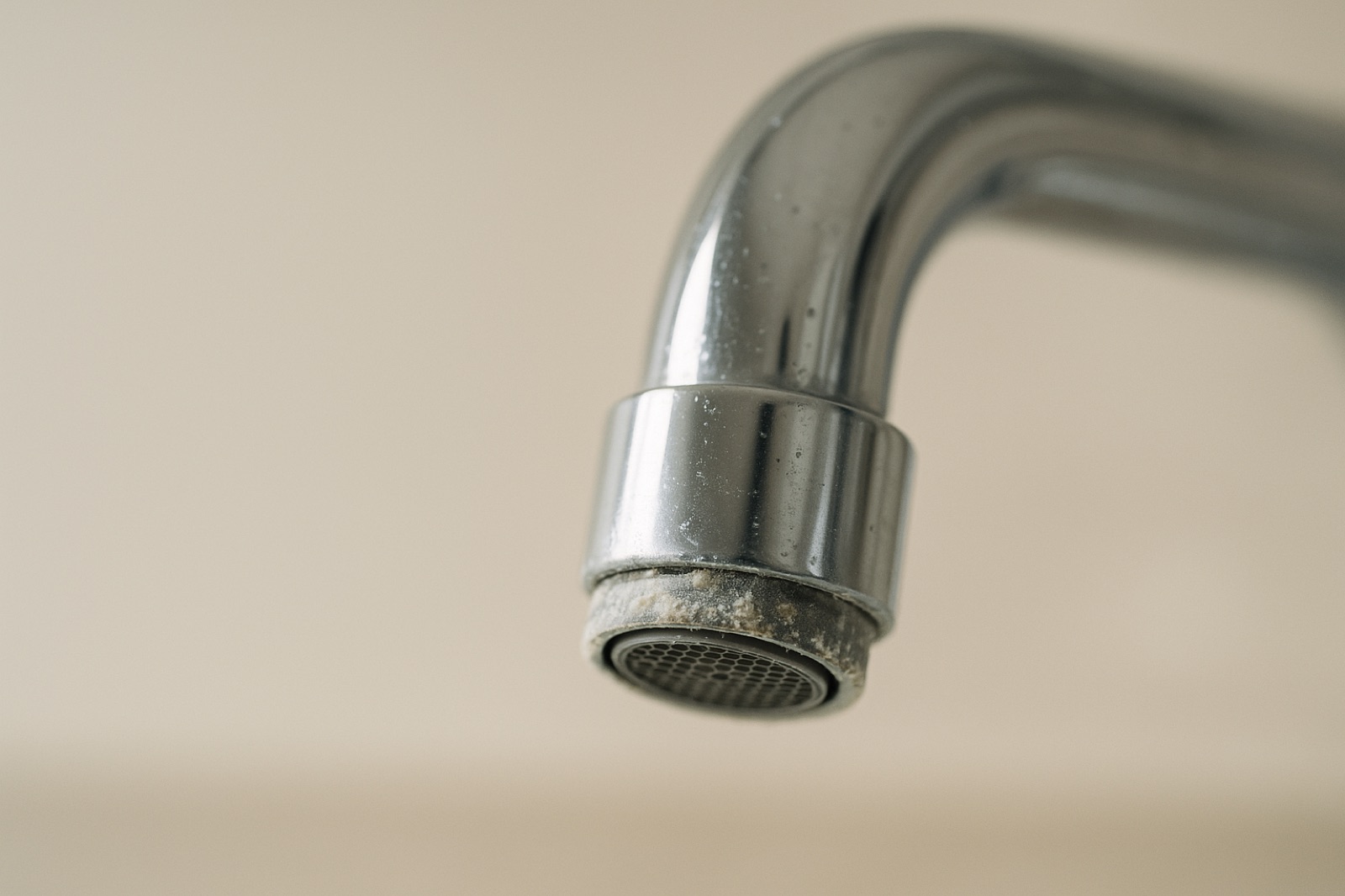
A water treatment purchase gets confusing when several household complaints are bundled into one vague problem called “bad water.” Scale on a showerhead, a chlorine-like taste, orange stains, and concern about a nearby land use do not point to the same solution. Some call for softening, some call for filtration, and some require testing before any equipment choice makes sense.
That distinction matters beyond your own plumbing. In an October 2026 story, Circle of Blue described how Fort Frances, a town of about 7,500 people in northwestern Ontario, is preparing for a possible major change to its water supply because of a proposed U.S. mine. The report on the town’s drinking-water concern is a reminder that a threat to a source is not the same thing as a result from your tap. A headline may justify questions and testing, but it cannot identify the treatment your house needs.
Start with the symptom, then define the treatment zone
For each complaint, ask two questions: What job must the equipment perform, and where must it perform that job? A softener usually serves the whole house because hardness affects water heaters, fixtures, laundry, and cleaning. A taste filter may be needed only at the kitchen sink. A contaminant finding could call for point-of-use treatment, whole-house treatment, or no household device at all, depending on what was found and how the water is used.
Use this matrix to build your first shortlist:
| What you notice | First thing to check | Likely equipment lane |
|---|---|---|
| Chalky scale, stubborn spots, poor soap performance | Hardness result and whether symptoms appear throughout the house | Softener |
| Unpleasant taste at drinking taps | Cold water versus hot water, one faucet versus every faucet, and an appropriate water test | Filter, often point-of-use |
| Odor | Hot only or hot and cold, one drain area or water from multiple taps | Diagnosis first, then possibly filtration or water-heater service |
| Orange, brown, blue-green, or black staining | Stain color, water source, plumbing materials, and targeted testing | Filter or corrective treatment chosen for the confirmed cause |
| Concern about a contaminant | Certified laboratory result naming the substance and concentration | Technology certified for that specific reduction claim |
The matrix is a sorting tool, not a diagnosis. For example, a softener exchanges hardness minerals, but that does not make it a general-purpose contaminant filter. A carbon filter may improve certain tastes and odors, but it does not automatically address hardness, metals, microbes, or every chemical. “Filter” describes a broad category, not one universal capability.
Run a testing checklist before requesting quotes
Write down where each symptom appears and whether it affects hot water, cold water, or both. Note when it began, whether neighbors report the same issue, and whether your home uses a public supply or private well. Photograph stains and deposits before cleaning them. If you already have treatment equipment, record its model, age, service history, and current settings.
Next, collect the documents that already exist. Public-water customers can review their utility’s available water-quality information, while private-well owners need a testing plan suited to the well and local conditions. If a news story or nearby activity raises concern about a particular substance, ask a qualified laboratory which sample and method are appropriate. Do not assume a basic hardness strip can answer a contaminant question.
When the symptoms conflict, or when safety concerns enter the decision, schedule a professional water assessment. Ask for the test results separately from the equipment proposal so you can see which finding supports each recommended device.
Make sellers connect every product to evidence
For each proposed unit, request four plain answers: Which measured problem does it address? Does it treat one tap or the whole house? What does it leave untreated? What maintenance and replacement schedule will you own? If the explanation depends only on a demonstration or a symptom, ask for the corresponding test.
The demand for this guidance is visible in The Home Water Report’s own audience numbers: 3,226 page views and 1,068 visitors, alongside 1,265 search crawls and 2,891 AI crawls. No assist or customer-management data was supplied, so those figures cannot show purchases or outcomes. They do show why the practical distinction between softening and filtration must remain clear wherever readers encounter it.
Your best decision may be a softener, a filter, both devices in separate treatment zones, or no purchase until testing resolves the question. The useful comparison is not which machine sounds most comprehensive. It is which one has a defined job supported by evidence from your water.