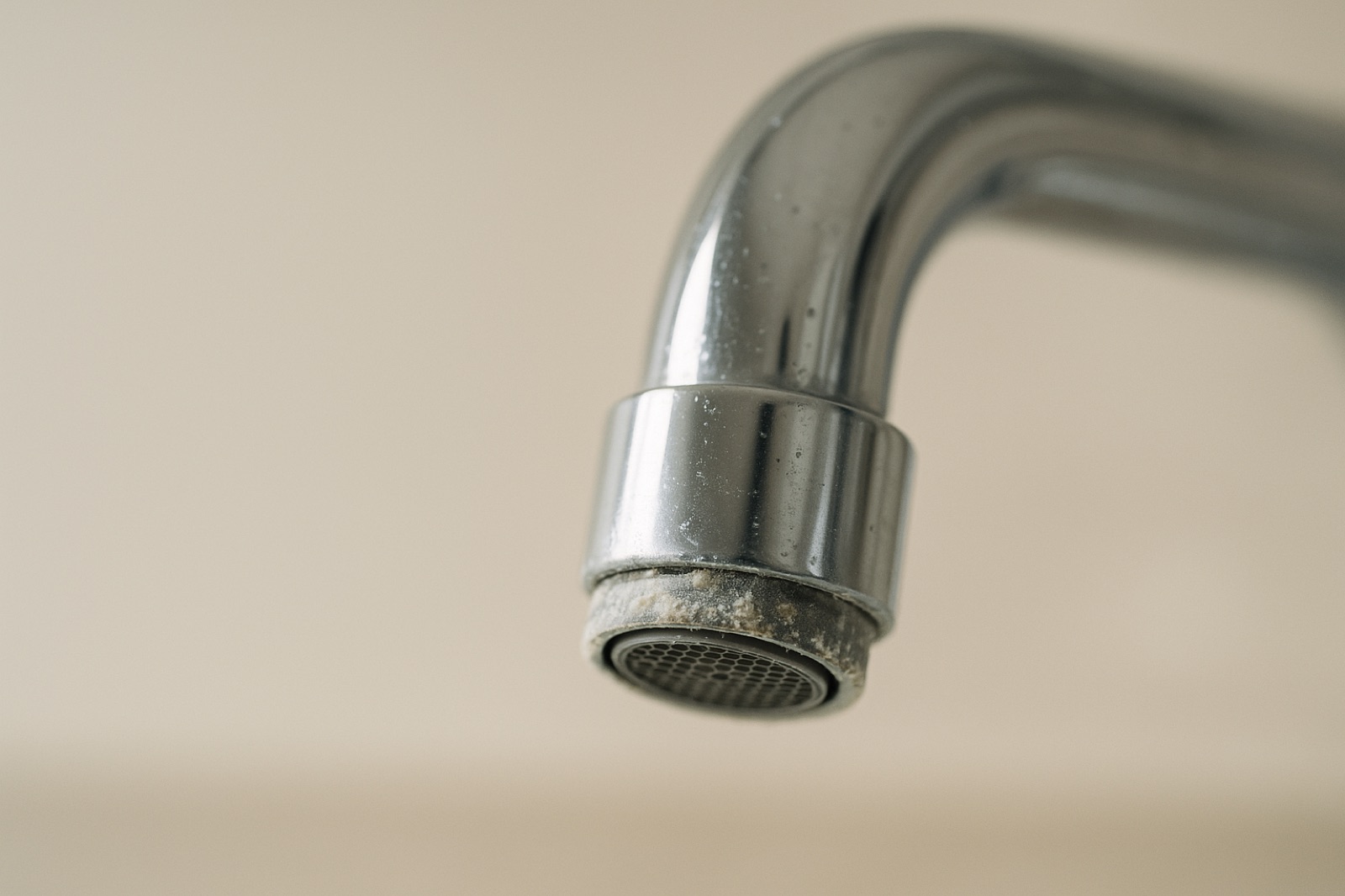
A dramatic water story can make any homeowner look at the kitchen faucet differently. On September 10, 2026, Circle of Blue published Keith Schneider's account of catastrophic flooding in Nepal, where warming and melting in the Himalayas contributed to a destructive rush of mud and boulders. The report on the Nepal flood is a reminder that water conditions can change quickly and visibly.
It does not, however, tell you what is in your own tap water. A distant flood is not evidence that you need a filter, just as white scale on a showerhead is not evidence of a dangerous contaminant. Your best buying decision starts by separating two questions: Are you trying to protect plumbing and appliances, or are you trying to change the water you consume?
Start with the job, not the machine
A water softener primarily addresses hardness minerals. If your recurring complaints are crusty deposits on fixtures, spotted glassware, scale inside a kettle, or poor soap performance, hardness testing is the logical first step. A softener exchanges hardness minerals for other ions. It is not a general-purpose contaminant remover, and it is not designed to correct every taste or odor.
A filter targets particular substances or sensory problems, depending on its media and certification. Activated carbon may improve certain tastes and odors. Sediment filtration can capture particles. Reverse osmosis systems are designed for a different and more specific range of dissolved substances. No filter should be judged simply by the word “filter” on its label. The relevant question is whether that particular system is certified or otherwise documented for the issue found in your water.
A two-job comparison
Scale on faucets and appliance heating elements: Test hardness. If the result confirms a meaningful hardness problem throughout the house, consider a softener.
Chlorine-like taste or odor: Compare cold water at several taps, then check your utility's water-quality information. A suitable carbon filter may help, but a softener is not the usual answer.
Orange, brown, blue-green, or black staining: Do not select equipment by color alone. Test for likely causes and inspect the plumbing, because metals, minerals, corrosion, and treatment equipment can produce overlapping clues.
Visible particles: Determine whether they appear at one fixture or throughout the house. Clean the faucet aerator and inspect the water heater when appropriate. A sediment filter may help only after you identify where the material enters the system.
A named contaminant: Use a laboratory result or an official water report, then choose treatment that addresses that substance at the measured concentration. A softener may be irrelevant. A specialist such as Reverse Osmosis STL can help you understand whether point-of-use treatment fits the tested concern, but the test result should lead the conversation.
Use this testing checklist
Before requesting proposals, write down where each symptom appears, when it started, and whether it affects hot water, cold water, or both. Record whether your home uses a private well or a public supply. Photograph stains and deposits before cleaning them. Ask your utility for its latest water-quality report if you receive public water.
For suspected hardness, obtain a numerical hardness result. For unexplained staining, taste, odor, or a contaminant concern, choose tests based on the symptom and water source instead of ordering the largest available panel automatically. If your water changed suddenly, contact the appropriate utility or local authority before assuming a household device is the solution.
Bring those results when you schedule a professional water assessment. Ask each provider to identify the exact problem, the treatment method proposed, the installation location, expected maintenance, replacement costs, wastewater or salt use, and the performance documentation supporting the recommendation.
Popularity is not proof
The Home Water Report currently records 3,226 page views, 1,068 visitors, 1,265 search crawls, and 2,891 AI crawls. Those figures show that water information is being discovered, but they provide no assist or customer-relationship data and say nothing about which treatment works in your house. Search visibility cannot replace a sample from your tap.
Your final answer may be a softener, a filter, both, or neither. The cleanest decision comes from assigning each symptom to a job, confirming the suspected cause, and buying only the equipment that can document how it performs that job.