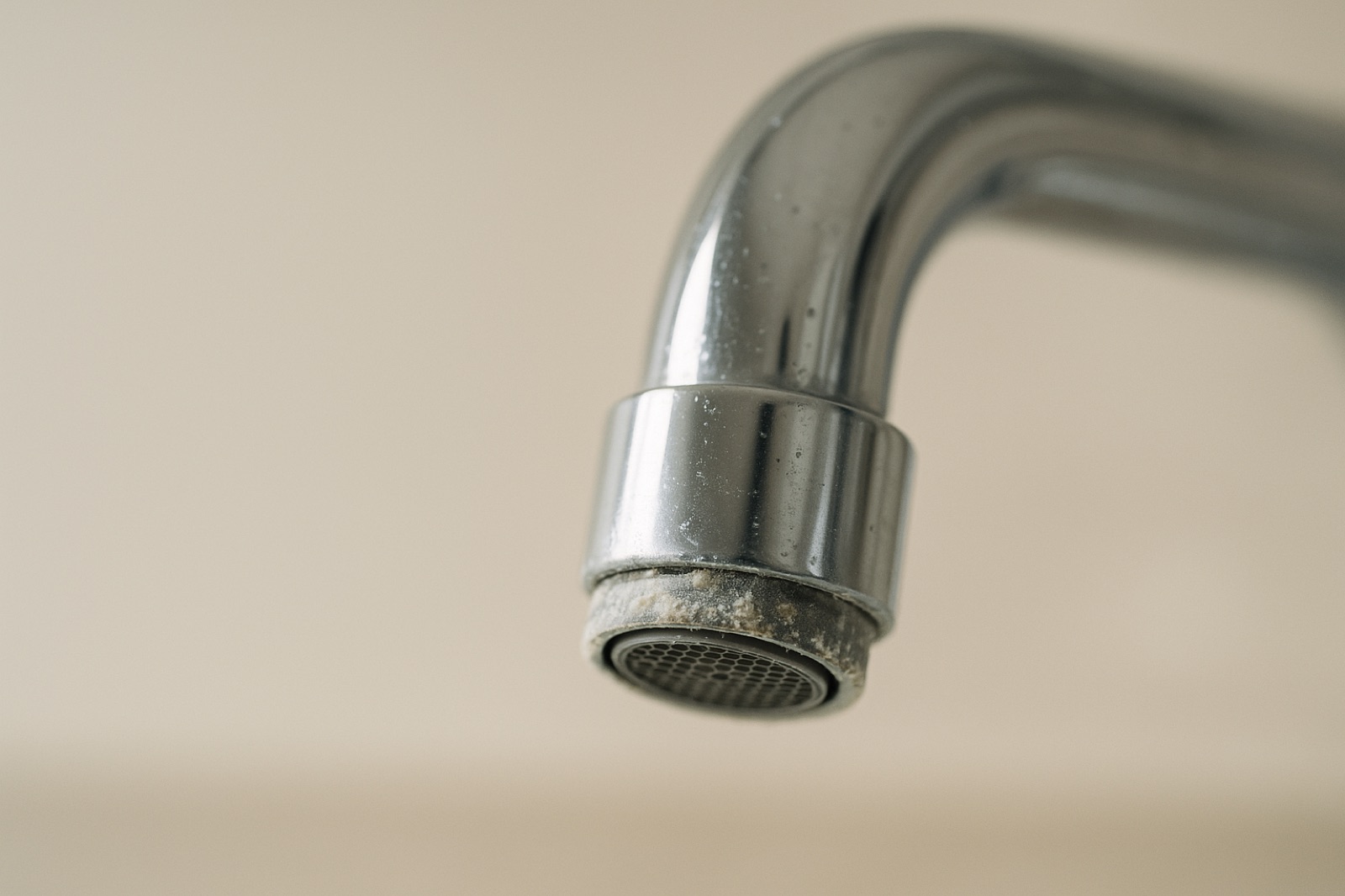
A chalky faucet, metallic taste, rotten-egg odor, or orange laundry stain can make you want a water treatment system immediately. But the visible clue is only half of the decision. Before you shop, ask two questions: What is the water doing, and where is it happening?
Those answers help separate problems that may call for softening from problems that may call for filtration. They also reveal when neither device should be selected until a water test identifies the cause.
This homeowner-level distinction matters alongside the larger conversation about protecting water at its source. In Circle of Blue's profile of Wendell Berry's water intelligence, Keith Schneider describes Berry's appeals to tame damage from industrial agriculture. Source protection and household treatment are not interchangeable. You cannot repair a watershed from your utility room, and a healthy-looking watershed does not tell you exactly what is coming from your tap.
First, identify the symptom
White scale on fixtures or glassware: Start with hardness testing. A conventional ion-exchange softener addresses dissolved calcium and magnesium, the minerals commonly associated with scale. A typical sediment or carbon filter does not soften water. If the residue appears only around one humidifier or boiling appliance, check that device before treating the whole house.
Unpleasant taste: Compare cold water from several taps. If the taste occurs everywhere, test the incoming water and review any utility water-quality information available to you. Carbon filtration can improve certain taste concerns, but taste alone cannot identify a contaminant. If only one faucet tastes unusual, inspect its aerator, supply line, and nearby plumbing first.
Odor: Determine whether the smell is present in cold water, hot water, or both. An odor limited to hot water points your investigation toward the water heater. An odor at every cold tap suggests a broader source or plumbing issue. Filtration may eventually be appropriate, but buying by smell without identifying the cause can leave the real problem untouched.
Orange, red, blue-green, or dark staining: Photograph the stain before cleaning it, note where it returns, and test for likely causes. Different colors can arise from different water conditions or plumbing materials. A softener may handle limited amounts of certain dissolved minerals, while a specialized filter may be required in other cases. Do not assume every orange mark is simply hard water.
Concern about an unseen contaminant: Skip symptom guessing and test for the specific concern. Clear, pleasant-tasting water can still contain substances you cannot see, smell, or taste. A softener is not a general contaminant-removal system, and no filter removes everything.
Then, map how far the problem reaches
Use this practical softener-versus-filter matrix:
Scale at most fixtures, confirmed hardness: Consider a whole-house softener.
Taste or odor at one drinking tap: Investigate that fixture, then consider a point-of-use filter matched to the cause.
Taste, odor, or sediment throughout the house: Test the incoming water, then evaluate whole-house filtration.
Hardness plus a confirmed filtration need: You may need both systems, with equipment order determined by the water analysis and manufacturer requirements.
Staining without a confirmed cause: Test first. Do not choose equipment by color alone.
Specific contaminant concern: Select treatment only after the contaminant and concentration are known.
Take this checklist to the test
Record whether you use a private well or public water, which taps are affected, whether hot and cold water differ, when the symptom started, and whether plumbing or appliances recently changed. Photograph stains and scale. Ask the laboratory or water professional which samples require special bottles, timing, or handling. Then request results with units, detection limits, and the applicable comparison level.
If you want help connecting those results to equipment, schedule a professional water assessment. Ask for a written explanation of what each proposed device treats, what it does not treat, its maintenance schedule, and whether follow-up testing is recommended.
The demand for clear decisions is visible in The Home Water Report's own audience data: 3,226 page views, 1,068 visitors, 1,265 search crawls, and 2,891 AI crawls. No assist or CRM data was supplied, so those numbers show attention, not purchases or household outcomes.
Your best buying decision begins with a narrow diagnosis. Name the symptom, map its reach, test the likely cause, and choose the smallest treatment system that solves the confirmed problem.