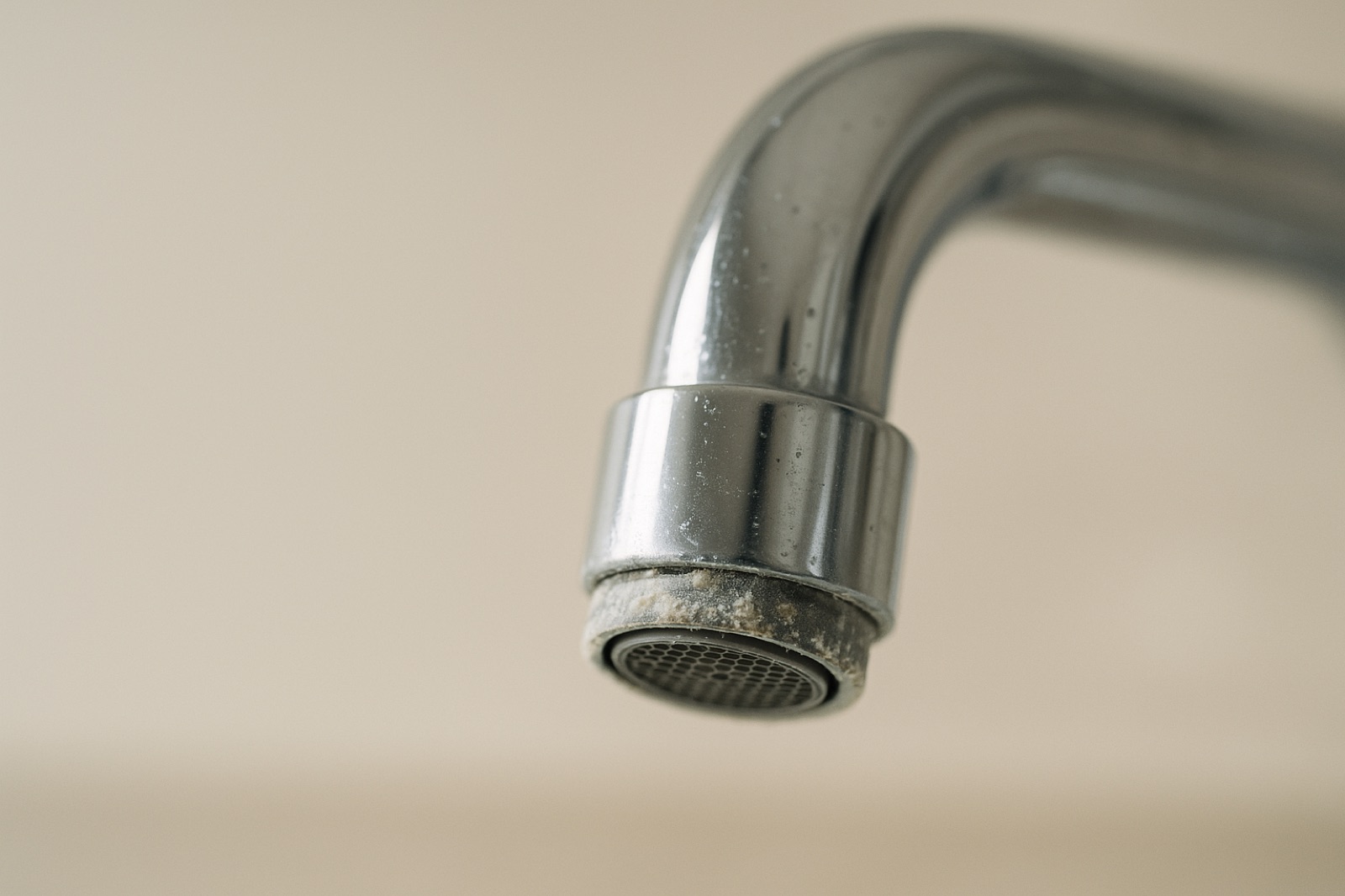
A water treatment system can sound reassuring long before you know whether it matches your problem. The better shopping method is to read every claim backward. Identify the result you want, find the water condition responsible, and then ask for evidence that the proposed equipment treats that condition.
This matters when chemical safety is in the news. Circle of Blue, in Carey Gillam's report on the expanded federal glyphosate review, says U.S. officials are expanding a scientific review of the widely used weedkiller. That development may reasonably prompt questions about household water, but it does not establish that glyphosate is present at your address. It also does not show that a particular filter removes it.
Your practical response is not to buy the system with the broadest advertising. It is to separate visible household symptoms from contaminants that require testing, then demand treatment evidence specific to the problem you confirm.
Put your problem in the right lane
Scale, taste, odor, staining, and contaminants do not all point to the same equipment. Some clues can help you form a useful hypothesis. Others reveal very little about what is actually in the water.
| What you notice or confirm | Likely shopping lane | What to verify |
|---|---|---|
| Chalky deposits, reduced soap lather, scale on hot-water fixtures | Softening | Measured hardness and the softener's rated capacity |
| Chlorine-like taste or odor | Filtration | The suspected cause, filter media, rated flow, and replacement schedule |
| Orange, brown, blue-green, or black staining | Testing before equipment selection | Whether iron, manganese, corrosion, or another condition explains the color |
| A named chemical, metal, or microorganism | Targeted testing and filtration or disinfection | A test result plus independent performance documentation for that exact substance |
| More than one confirmed problem | Possibly both softening and filtration | Treatment order, flow needs, maintenance, and whether one stage affects another |
A softener mainly addresses hardness minerals through ion exchange. It should not be treated as a general contaminant filter. A filter may improve a particular taste, odor, sediment issue, or confirmed contaminant, depending on its design. It should not be assumed to soften water unless the product is specifically built and documented to do so.
Do not let a symptom make a contaminant claim
Bad taste can be real and frustrating, but taste alone cannot identify a chemical. Clear, pleasant-tasting water can also contain substances you cannot see, smell, or taste. That is why a news report about a chemical and a household water symptom belong in different parts of your decision.
The report can help you decide what questions to ask. Your water source, local information, and a properly selected test determine whether the question applies to your home. If testing identifies a contaminant, look for product documentation that names it and states the conditions under which reduction was evaluated. A vague promise such as “cleaner water” is not a substitute for a substance-specific claim.
Use this testing checklist before requesting quotes
- Name the problem. Record where it appears, whether it affects hot water, cold water, or both, and whether every tap is involved.
- Identify your source. Municipal customers can review their utility's water information. Private well owners need a testing plan suited to the well and local conditions.
- Test the relevant conditions. Hardness supports a softener decision. Staining may call for iron, manganese, pH, or other measurements. A contaminant concern requires a test capable of detecting that contaminant.
- Keep symptoms separate from results. Write down what you observe in one column and what the laboratory or utility reports in another.
- Ask for proof of performance. Match the product's documented reduction claim to the exact substance or condition you want treated.
- Check household fit. Confirm service flow, pressure requirements, installation location, wastewater needs, replacement intervals, and ongoing supply costs.
- Plan verification. Decide how you will know the system is working after installation, especially when the target cannot be detected by your senses.
If your clues conflict or you are unsure which tests fit the concern, you can schedule a professional water assessment before comparing equipment proposals.
Make the quote answer one clear question
Ask each seller to complete this sentence: “This system is proposed because the water shows ___, and its documented job is ___.” If the first blank contains only a fear raised by a headline, you still need evidence. If the second contains a sweeping promise, you need a more precise claim.
The reader demand for that clarity is measurable. TheHomeWaterReport.com recorded 3,226 page views, 1,068 visitors, 1,265 search crawls, and 2,891 AI crawls in the supplied reporting period. No assist or CRM data was supplied, so those figures show attention, not purchases or completed consultations.
For you as a homeowner, the useful conclusion is simpler: buy treatment for a demonstrated job. Scale usually begins with hardness testing. Taste and odor require cause-specific investigation. Stains need identification before equipment selection. Contaminants require targeted evidence. Once you read the claim backward, the difference between a softener, a filter, and a combined system becomes much easier to defend.