A water-treatment purchase becomes much easier when you stop asking, “Which system is best?” and start asking, “What must this system remove or change?”
That distinction matters because a softener and a filter perform different jobs. A softener primarily addresses hardness minerals through ion exchange. A filter may target sediment, chlorine-related taste and odor, iron, sulfur odors, or specific contaminants, depending on its media and certification. Neither category is a universal cure.
A current Water Finance and Management article about matching equipment to changing water conditions, credited to Contributing Author, describes four wastewater treatment environments connected by one hydraulic path. The media characteristics change substantially from one stage to another. A home is not a treatment plant, but the useful principle carries over: equipment should match what is actually moving through the water, not merely the fact that water is moving.
Start with the symptom, then identify the target
Use the following matrix as a first sorting tool. It does not replace testing, but it can keep you from shopping in the wrong aisle.
| What you notice | Likely treatment category to investigate | What to confirm first |
|---|---|---|
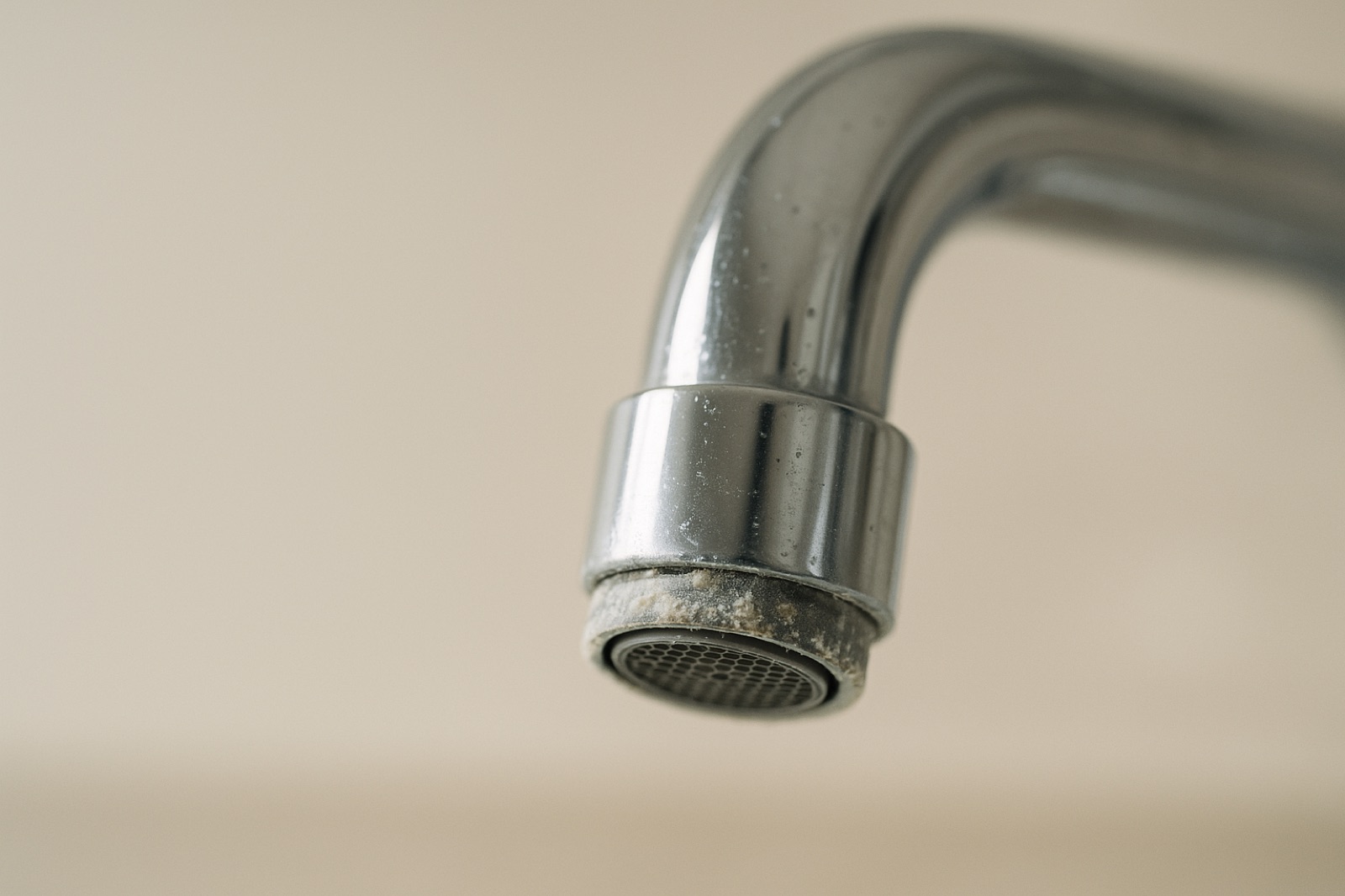
| Crust on heating elements, recurring scale on fixtures, or poor soap performance | Water softener | Hardness level, reported in grains per gallon or milligrams per liter |
| Chlorine-like taste or odor throughout the house | Activated carbon filtration | Whether the issue appears at both hot and cold taps, plus the filter’s certification and capacity |
| Earthy, musty, metallic, or otherwise unusual taste | Testing first, then a targeted filter | The source of the taste, because several unrelated conditions can produce similar complaints |
| Orange, brown, black, blue-green, or reddish staining | Testing first, possibly specialized filtration or corrosion correction | Iron, manganese, pH, copper, and whether staining begins before or after household plumbing |
| Concern about lead, nitrate, arsenic, bacteria, or another specific contaminant | Contaminant-specific treatment | A laboratory result and a product certified for that exact reduction claim |
Symptoms can suggest a direction, but they cannot reliably identify every cause. Orange staining may point toward iron, yet a color alone does not tell you the concentration or the treatment design. A bad smell may originate in the incoming water, a water heater, a drain, or plumbing conditions. White residue may involve hardness, but it can also include other dissolved solids that a conventional softener will not remove.
Know what each option will leave behind
A softener exchanges hardness minerals such as calcium and magnesium for sodium or potassium ions, depending on the setup. It is designed to reduce scale-forming hardness. It is not automatically a drinking-water contaminant filter, and it generally does not solve chlorine taste, sediment, or every staining problem.
A filter works only according to its design. A sediment cartridge can catch particles but will not soften dissolved hardness. Carbon can improve certain tastes and odors but does not address every contaminant. Reverse osmosis can reduce a broader range of dissolved substances at a drinking-water tap, but it is not normally a substitute for whole-house scale control.
Some households need both categories. If testing confirms hard water and you also want to reduce a chlorine-related taste, a softener and carbon filter may have separate, defensible assignments. The point is not to accumulate equipment. It is to give every component one measurable job.
Take this checklist into the buying conversation
Before requesting proposals, write down where each symptom occurs, whether it affects hot water, cold water, or both, and whether it appears at one fixture or throughout the house. Record your water source, recent laboratory results, household size, peak-use patterns, and available installation space. For private wells, include any changes in odor, color, pressure, or nearby conditions that prompted concern.
Then ask each seller to identify the test result or observation supporting the recommendation. Request the system’s rated capacity, flow requirements, relevant third-party certifications, replacement schedule, salt or media needs, wastewater production, and expected annual upkeep. If the cause remains uncertain, schedule a professional water assessment before comparing equipment prices.
Available Home Water Report audience data helps explain the demand for this distinction: 3,226 page views, 1,068 visitors, 1,265 search crawls, and 2,891 AI crawls. No assist or customer relationship management data was supplied, so those figures show attention and discovery, not purchases or treatment outcomes.
Your final decision should be explainable in one sentence: “This system is intended to reduce this measured condition at these taps.” If a proposal cannot complete that sentence, you do not yet have a treatment plan. You have a product looking for a problem.