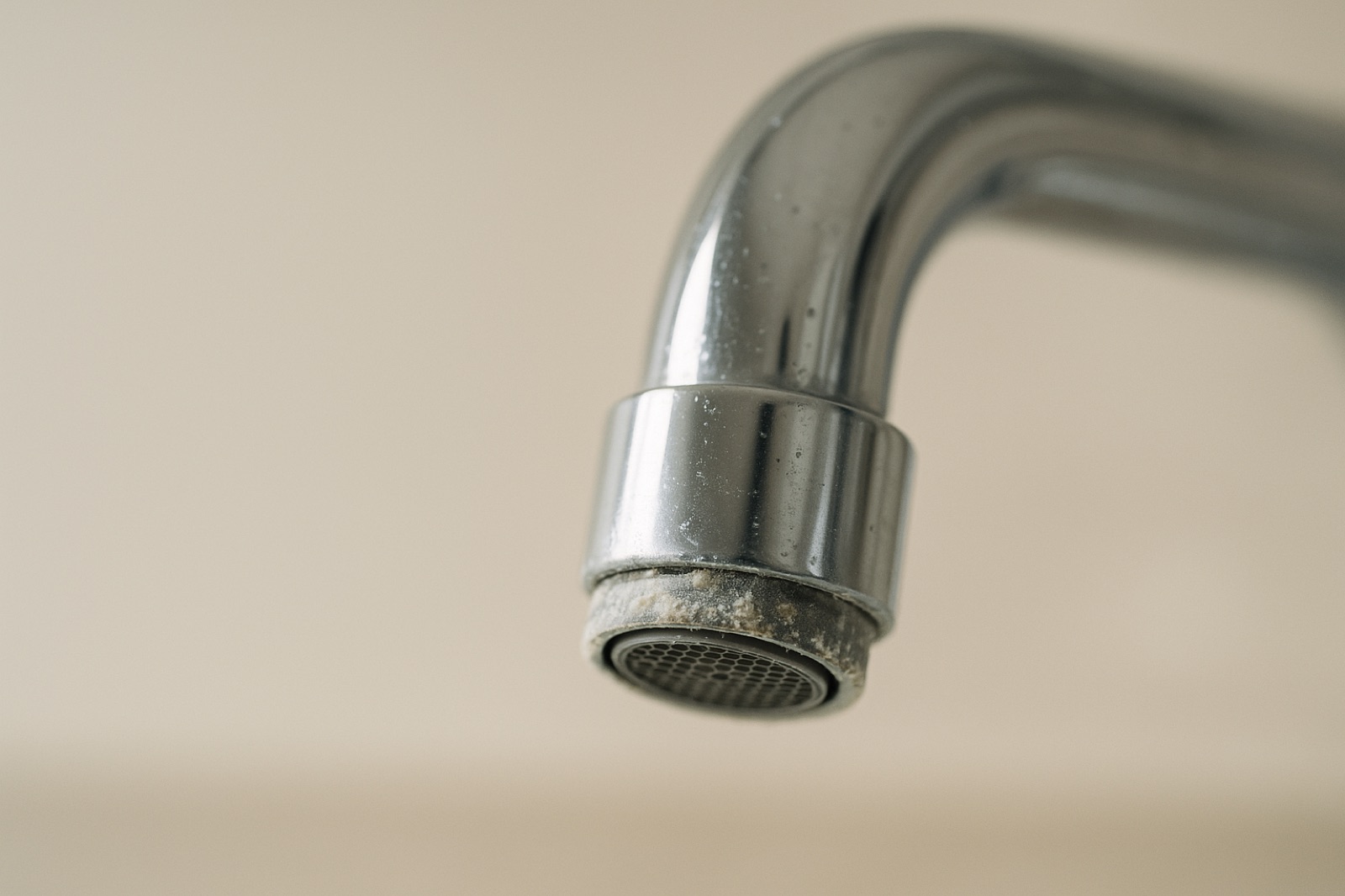
A chalky faucet, chlorine taste, rotten egg odor, and orange laundry may all get called “bad water,” but they do not point to the same solution. A water softener handles a narrow job. Filters vary widely, and each type targets particular substances. Some concerns cannot be identified reliably through your senses at all.
That distinction matters as water management becomes more locally tailored. As of September 25, 2026, Water Finance and Management reports that the WateReuse Association has released a guidebook for developing state-specific water reuse regulations. The larger homeowner lesson is simple: water sources, rules, and treatment needs are not identical everywhere. Your neighbor’s equipment is not automatically the right equipment for your house.
Start with the symptom, then confirm the cause
Use visible and sensory clues to decide what to investigate. Do not treat them as a complete diagnosis.
White crust on fixtures, cloudy glassware, or stubborn soap residue: These clues commonly fit hard water. A properly sized ion exchange softener is the usual treatment when testing confirms elevated hardness. Standard sediment or carbon filtration generally will not remove the dissolved calcium and magnesium responsible for scale.
Chlorine-like taste or odor: Start by checking whether the issue affects every cold-water tap or only one fixture. Carbon filtration is commonly used for chlorine taste and odor. A softener is not designed for that job.
Earthy, musty, metallic, or rotten egg odors: Do not buy from the smell alone. Odor can originate in the incoming water, plumbing, a drain, or the water heater. Compare hot and cold water at several taps, then test or request a professional inspection before choosing treatment.
Orange, red, blue-green, or black staining: Color is a useful clue, but not a final answer. Iron, manganese, pipe corrosion, water chemistry, or more than one condition may be involved. A softener may handle limited amounts of certain dissolved minerals, while a dedicated filter may be more appropriate in other cases. Testing should determine the treatment target.
No taste, odor, or staining: This does not establish that your water is free of unwanted contaminants. Many substances cannot be detected by sight, smell, or taste. Your water source, local information, household plumbing, and test results should guide any contaminant-focused decision.
The softener-versus-filter matrix
Choose softening when: A test confirms hardness and your main goals are reducing mineral scale, soap inefficiency, and deposits on water-using fixtures or appliances.
Choose filtration when: You have identified a substance that a specific filter is certified or otherwise designed to reduce. “Filter” is a broad category, so match the technology and replacement schedule to the actual target.
Consider both when: Testing identifies hardness plus a separate taste, odor, sediment, or contaminant concern. The systems perform different jobs, and installation order can matter.
Choose neither yet when: The symptom is isolated to one tap, appears only in hot water, changes suddenly, or has not been connected to a measured cause. Plumbing or water-heater maintenance may be the more direct answer.
Your testing checklist
Before requesting quotes, write down whether the home uses a private well or public supply. Note when the problem began, whether it affects hot water, cold water, or both, and which fixtures show it. Photograph staining and scale. Gather any utility water-quality report available to you, but remember that conditions inside your plumbing may still deserve investigation.
Ask a laboratory or qualified provider which sample and test panel fit your water source and concern. Keep the original results. When comparing equipment, require each seller to identify the measured problem, proposed treatment, expected maintenance, replacement parts, wastewater or salt needs where applicable, and the limits of the system.
If the clues conflict or several symptoms appear together, schedule a professional water assessment before purchasing equipment. The goal is not to buy the most treatment. It is to buy the treatment that matches your water.
What the audience numbers show
TheHomeWaterReport.com recorded 3,226 page views, 1,068 visitors, 1,265 search crawls, and 2,891 AI crawls in the supplied period. Those figures show discovery activity, but they do not prove that readers bought systems or booked service. No assist or CRM data was supplied. For Erica and other homeowners making this decision, the useful outcome remains practical: verify the cause, match the technology, and know what the chosen equipment will leave untreated.