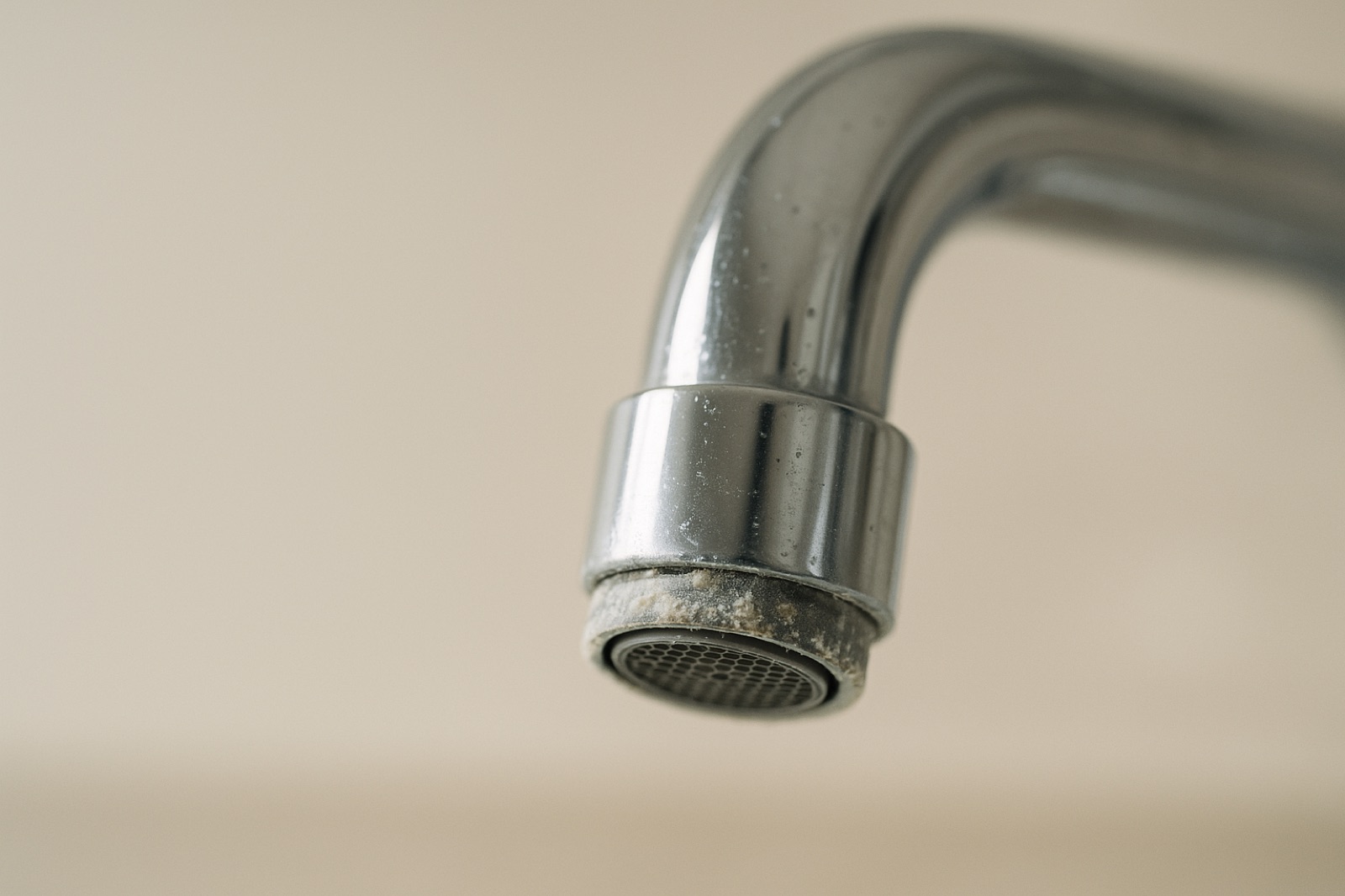
A crusty faucet, metallic stain, or glass of unpleasant-tasting water can make you want one appliance that fixes everything. Water treatment rarely works that neatly. A softener handles a different job from a sediment filter, carbon filter, iron treatment system, or contaminant-specific device.
That distinction matters as water systems receive major investment. Water Finance and Management, in a report credited to Contributing Author, says more than $50 billion from the Infrastructure Investment and Jobs Act is helping communities modernize pipes, treatment facilities, and distribution systems. Its coverage of the water infrastructure data gap also points to a practical issue that reaches your house: construction is only part of understanding a water system. Good decisions depend on useful information.
For a homeowner, that means treating symptoms as starting clues, then collecting enough evidence to choose the right equipment.
First, identify what is bothering you
Scale and stubborn white deposits: Check shower glass, faucet aerators, the kettle, and fixtures that regularly receive hot water. Widespread mineral buildup supports a hardness investigation. A softener exchanges hardness minerals and is designed for this job. A standard carbon filter is not.
Unpleasant taste: Compare cold water from several taps. If the problem appears only at one faucet, inspect that faucet's aerator and any point-of-use filter before planning whole-house treatment. If it appears throughout the home, record whether the taste is earthy, metallic, salty, or chlorine-like. Those descriptions help define the next test, but they do not identify a contaminant by themselves.
Odor: Compare hot and cold water. An odor limited to hot water can point your investigation toward the water heater or hot-water plumbing. An odor at every tap calls for a broader look at the incoming supply and household plumbing. Do not assume that carbon filtration is automatically the answer. The odor's source determines whether carbon, disinfection, plumbing service, or another response makes sense.
Staining: Note the color and location. Orange or brown marks, blue-green discoloration, and dark staining are different clues. Photograph them before cleaning, then see how quickly they return. Stains can involve dissolved minerals, corrosion, fixtures, or plumbing conditions. A softener may help with some mineral-related problems, but it is not a universal stain remover.
Possible contaminants: Treat health-related concerns as a testing question, not a taste test. Many substances cannot be confirmed by appearance, smell, or flavor. Choose testing based on your water source, local information, household plumbing, and the specific concern you need to evaluate.
The softener-versus-filter matrix
| Your main evidence | Likely category to investigate | What to verify first |
|---|---|---|
| Scale throughout the house, especially on heated surfaces | Water softener | Measured hardness and household water demand |
| Chlorine-like taste or odor across cold taps | Carbon filtration | Whether the complaint exists at the incoming supply |
| Visible grit or particles | Sediment filtration | Particle type, size, and where it enters the plumbing |
| Colored stains or metallic taste | Targeted testing and treatment | Iron, manganese, corrosion, or other relevant conditions |
| A named contaminant found in a reliable test | Contaminant-specific filtration | Certified reduction claim, capacity, and maintenance needs |
| Hardness plus a separate taste or contaminant problem | Softener and filter, each with a defined job | Test results and correct treatment order |
Use a testing checklist before requesting prices
Write down whether each symptom affects hot water, cold water, one fixture, or the entire house. Record when it began and whether it changes after plumbing work, filter replacement, or periods when the home sits unused. Identify whether you use a private well or a public supply. Gather any available water-quality report, laboratory result, and equipment service record.
When arranging a test, name the question you want answered. Ask for hardness if scale is the issue. Ask which analyses fit a particular stain, odor, plumbing concern, or contaminant risk. Keep the actual results, units, collection date, and sampling location. If you want help connecting those findings to equipment choices, schedule a professional water assessment.
The Home Water Report's available audience snapshot shows 3,226 page views, 1,068 visitors, 1,265 search crawls, and 2,891 AI crawls. Those numbers show that water guidance is being discovered, but they do not reveal which treatment solved a household problem. No assist or customer relationship management data was supplied. For you, the useful measure is simpler: did the test identify the problem, and does the proposed device have one clear job tied to that evidence?
Start with the symptom, but do not shop from the symptom alone. Map where it occurs, test the relevant condition, and make each piece of equipment earn its place.