When your glasses look cloudy, the shower smells strange, or the sink develops orange stains, it is tempting to start shopping for equipment. Pause before you compare tanks, cartridges, or prices. The same visible symptom can have several causes, and a system that solves one problem may leave another untouched.
This matters beyond any single household. On August 27, 2026, Circle of Blue and True Elements launched a live source of data, information, and context about the Colorado River water crisis during Stockholm World Water Week. The Circle of Blue report on the Colorado River initiative is a useful reminder that water conditions deserve close attention. For you, that attention begins at the tap, with careful observation and appropriate testing.
Start with a seven-day symptom ledger
For one week, record what you notice, where it happens, and whether it involves hot water, cold water, or both. This separates a whole-home issue from a problem involving one fixture, an aging appliance, or the water heater.
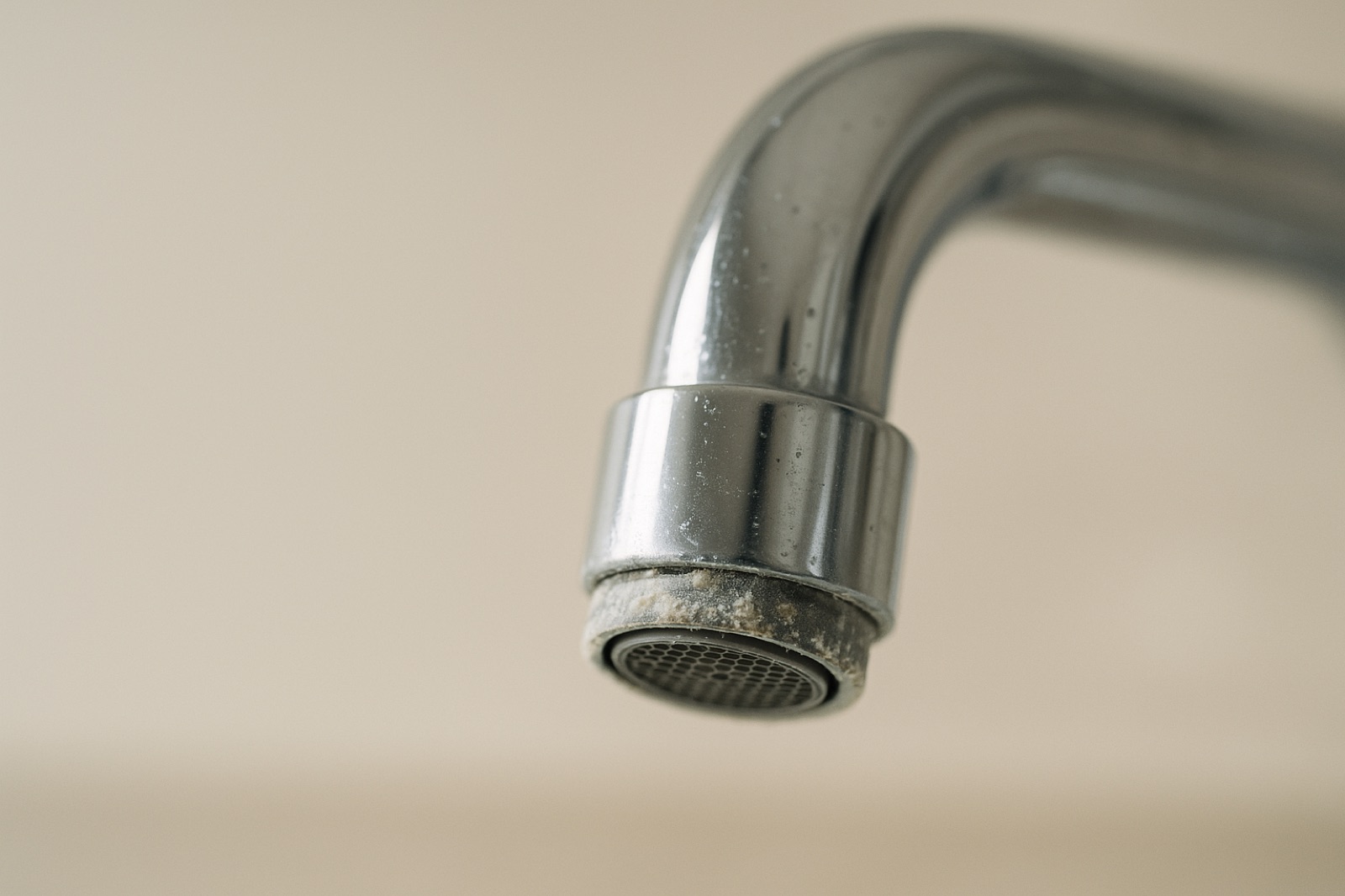
Scale: Note chalky deposits on faucets, shower glass, kettles, and heating elements. Scale commonly points toward hardness minerals. A laboratory or professional test can confirm hardness and show its severity.
Taste: Compare cold water from several taps. If the unwanted taste occurs only at one faucet, inspect its aerator and plumbing before considering whole-home treatment. Avoid using taste alone to judge safety because some contaminants have no noticeable flavor.
Odor: Record whether the smell appears in cold water, hot water, or water that has sat overnight. A hot-water-only odor may lead the investigation toward the water heater. An odor throughout the house calls for broader testing and inspection.
Staining: Photograph stains before cleaning them. Orange or brown, blue-green, and dark stains can point the investigation in different directions, but color is not a final diagnosis. Your water source and test results should guide the next step.
Contaminant concern: Write down why you are concerned. Reasons might include a notice from your water utility, a change in a private well, nearby work, flooding, or an unusual test result. Do not expect a standard softener or basic taste filter to address every possible contaminant.
Use the softener-versus-filter matrix
| Your main problem | Likely starting point | What to verify |
|---|---|---|
| Scale and soap performance | Water softener | Hardness level, household water use, and available drainage |
| Chlorine-like taste or odor | Carbon filtration | Whether the issue affects every tap and whether the filter is certified for the intended reduction |
| Sediment or visible particles | Sediment filtration | Particle size, source, flow rate, and pressure impact |
| Iron or manganese staining | Test first, then targeted treatment | Concentration, water chemistry, and whether multiple treatment stages are needed |
| A named contaminant | Contaminant-specific filter | Certified reduction claim, capacity, replacement schedule, and test results |
| Several problems at once | Combination approach | Correct treatment order and whether each stage has a defined job |
A softener primarily handles hardness through ion exchange. It is not a universal purifier. A filter captures or reduces specific substances according to its design and media. Some homes need both, but buying both without test results can add maintenance without resolving the actual complaint.
Bring this checklist to testing
- Your water source, either a public system or private well
- The seven-day symptom ledger and stain photographs
- Whether symptoms affect hot water, cold water, or both
- Any utility notices or previous laboratory reports
- The age and service history of existing treatment equipment
- Household size and periods of highest water use
- Available installation space, drain access, and electrical supply
If the cause remains unclear, schedule a professional water assessment. Ask what will be tested, which laboratory or field methods will be used, and how each recommended treatment component connects to a measured result.
Turn evidence into a buying brief
Your final brief can be one page. List the confirmed water conditions, the symptoms you want corrected, the fixtures that need treatment, and the maintenance you are willing to handle. Then require each proposal to explain what the system treats, what it does not treat, and how you will verify performance afterward.
The demand for this kind of practical decision help is visible in The Home Water Report's own activity: 3,226 page views, 1,068 visitors, 1,265 search crawls, and 2,891 AI crawls. No assist or CRM data was supplied, so those figures show attention, not purchases or outcomes. For a homeowner like Erica, the useful takeaway is simpler: begin with the symptom, confirm the cause, and buy only the treatment that matches the evidence.