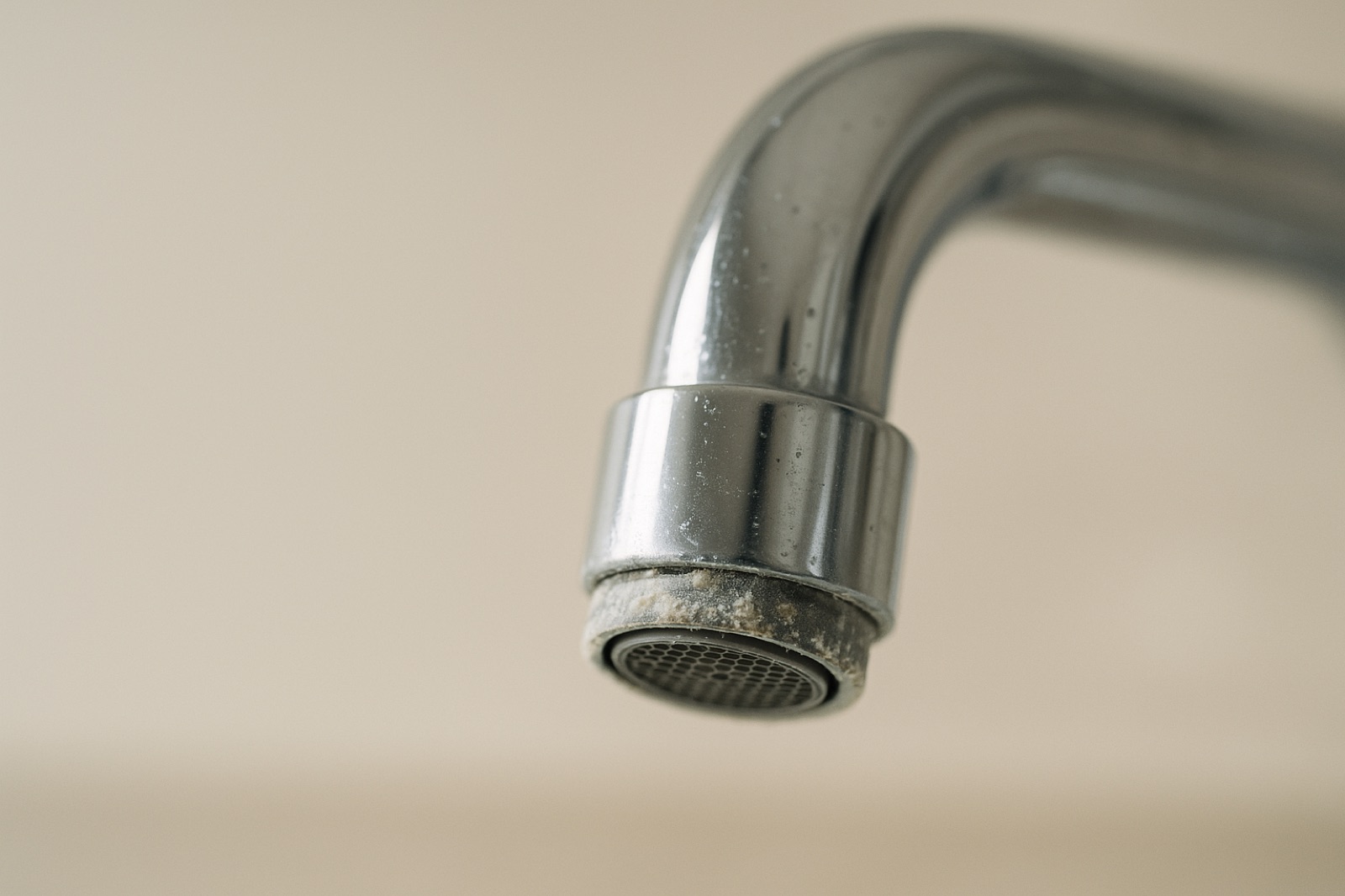
A chalky faucet and a strange glass of water may arrive on the same day, but they do not point to the same treatment. Scale usually raises a hardness question. Taste and odor may involve plumbing, disinfectants, minerals, or other water characteristics. Stains can suggest metals or sediment. A contaminant concern requires a test for the specific substance, not a guess based on appearance.
The practical way to sort these problems is to ask which mistake would be hardest to undo. Buying a softener for water that is not meaningfully hard wastes money and maintenance. Buying a general filter for an unverified contaminant can create false reassurance. Testing first gives you a treatment target.
Why changing source conditions matter
Water conditions can reflect more than what happens inside your house. In a 2026 report, Circle of Blue described scientists studying what wildfires mean for lakes after fires swept through a California mountain research area in the summer of 2020. The report on wildfire effects in lakes is a useful reminder that source water can be influenced by environmental change.
That does not mean a distant wildfire explains your water symptom. It means visible clues alone cannot identify every cause. If your water suddenly changes after a fire, flood, plumbing repair, utility notice, or well disturbance, document when the change began and ask the appropriate utility or laboratory which tests fit the situation.
The softener versus filter matrix
Scale on fixtures or inside appliances: Start with a hardness test. A softener is designed to reduce hardness minerals through ion exchange. A sediment or carbon filter is not a substitute for softening. Before treating the entire house, compare hot and cold fixtures and check whether the buildup returns after cleaning.
Unpleasant taste: Compare water from multiple cold taps. Remove and clean one faucet aerator, then taste again. If only one tap is affected, investigate that fixture or branch of plumbing. If the issue is throughout the house, identify the likely cause before selecting a filter. A softener is not a general taste treatment.
Odor: Determine whether the smell comes from hot water, cold water, or both. An odor limited to hot water can direct attention toward the water heater. An odor at every tap deserves broader investigation. Do not choose treatment from a descriptive word such as sulfurous or musty alone.
Orange, brown, blue-green, or black staining: Note the color, location, and whether it appears on hot water, cold water, or both. Testing may need to cover iron, manganese, copper, pH, or other relevant characteristics. A softener can address certain dissolved minerals under suitable conditions, while specialized filtration may be needed for others. The result should choose the equipment.
A named contaminant: Use a certified laboratory and request the correct analysis for that contaminant. Then compare the measured result with the applicable drinking-water guidance for your water source. Treatment claims should name the contaminant and specify the conditions under which reduction was verified.
Your before-you-buy testing checklist
Write down where the symptom appears, when it started, whether it affects hot or cold water, and whether neighbors notice it too. Record your water source, public supply or private well. Photograph recurring scale or staining after cleaning. Keep any utility notices and recent laboratory reports.
For hardness, use a numerical result rather than relying only on spots or soap behavior. For taste and odor, first eliminate a dirty aerator, neglected filter cartridge, or single-fixture problem. For staining, test the likely contributors instead of ordering a generic panel without understanding what it covers. For a safety concern, ask the laboratory about sampling containers, preparation, and transport before collecting water.
If the symptoms overlap or the test results are difficult to interpret, you can schedule a professional water assessment. Bring your notes and reports so the conversation begins with evidence rather than a product.
What the audience numbers can and cannot tell you
The Home Water Report recorded 3,226 page views, 1,068 visitors, 1,265 search crawls, and 2,891 AI crawls in the supplied period. No assist or customer relationship management data was supplied. Those figures show attention and automated discovery, but they do not prove that readers purchased equipment or preferred softening over filtration.
Your household decision needs the same discipline. Interest is not evidence, and a symptom is not a diagnosis. Confirm the problem, define the treatment job, and only then compare systems that claim to perform it.