Water utilities are becoming more data driven. Water Finance and Management reports in its look at the next phase of utility technology that tools including smart metering, asset management systems, GIS, and SCADA are now standard in many operations.
That shift offers a useful lesson inside your home: visible clues matter, but measurements help you decide what those clues actually mean. If you are wondering whether hard-water symptoms justify a softener, look for agreement among three things: mineral deposits, soap performance, and a hardness test.
Start with the deposits, but inspect them closely
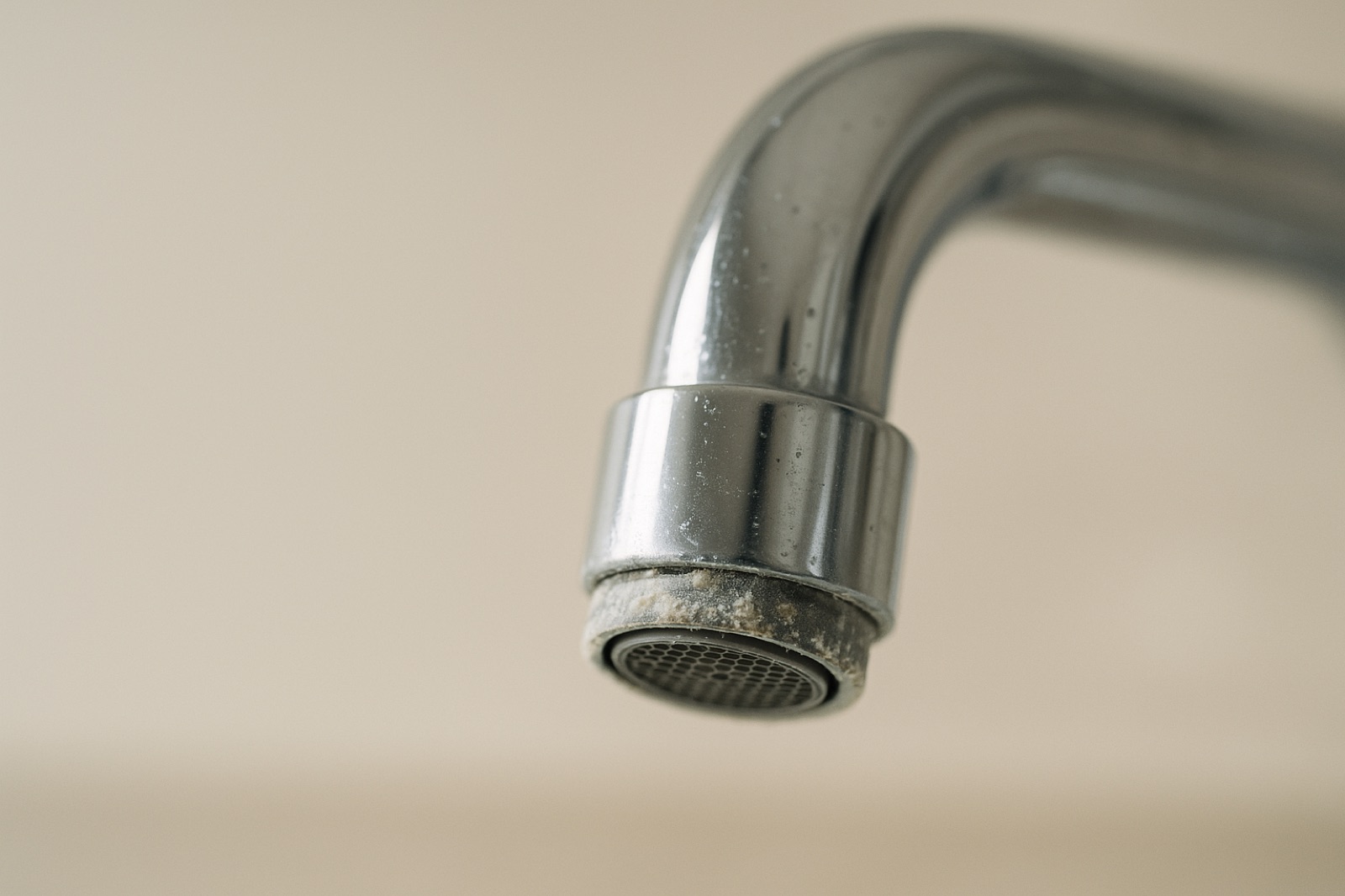
Hard water can leave chalky buildup around faucets, showerheads, kettle interiors, and heating elements. The deposits may feel rough and can return after cleaning because dissolved calcium and magnesium arrive with each new supply of water.
White spotting alone is weaker evidence. A drinking glass can show residue from dishwasher detergent, rinse aid, incomplete drying, or minerals left behind as droplets evaporate. Salt from an existing softener can also remain after water dries, even when the hardness minerals have been removed.
Try wiping a fresh spot with diluted white vinegar on a compatible surface. If it dissolves readily, mineral residue is a reasonable possibility. That still does not reveal how hard the water is or prove that a particular appliance needs repair.
Use soap performance as a supporting clue
Hardness minerals react with traditional soap, so you may notice weak lather, a film on tubs, or laundry that requires more product to feel clean. Those symptoms become more persuasive when they appear across several fixtures.
But the soap test produces false positives. Detergent formulation, product quantity, water temperature, and personal preference can all change how suds look and how rinsed skin feels. Modern detergents may lather in hard water, while low-sudsing products may appear ineffective in soft water.
A sudden change at only one sink points more strongly toward a local aerator, fixture, or hot-water issue than a whole-house hardness problem. Hardness entering from the water supply usually creates a broader pattern.
Put a number beside the symptoms
A basic hardness test reports results in milligrams per liter, parts per million, or grains per gallon. For calcium carbonate measurements, 1 grain per gallon is approximately 17.1 milligrams per liter. Confirm the unit before comparing a result with equipment settings or proposals.
Test untreated cold water, ideally from a tap that bypasses any existing treatment. If you already own a softener, compare that sample with cold water downstream of the unit. Testing only softened water cannot tell you the hardness entering the home.
One strip can be useful for screening, but color matching and expired supplies can distort the result. If the number conflicts with what you see, repeat the test or use a laboratory or water-treatment professional who can report the method and units clearly.
Match the response to the evidence
Choose repair when hardness is confirmed at the inlet but remains high after an existing softener. Check for an empty salt tank, a bypass valve left open, a clogged injector, a failed regeneration cycle, or settings that no longer match household use.
Choose softening when testing confirms meaningful hardness and the same mineral-related problems appear throughout the home. Before selecting equipment, account for peak water use, measured hardness, plumbing size, available drain access, and any iron or manganese that could affect performance. A local assessment can help you confirm hardness and size the right system.
Choose filtration when the actual complaint is sediment, chlorine taste, odor, or a specific tested contaminant. A conventional softener is designed primarily to exchange hardness minerals. It is not a universal contaminant filter, and a filter intended for taste or particles generally will not stop scale.
If deposits appear only on dishes, adjust the dishwasher process before buying whole-house equipment. If only hot fixtures collect scale quickly, inspect the water heater and temperature setting. If test results are low but residue persists, investigate detergents, cleaning products, and evaporation.
The practical standard is agreement. Repeated scale, broad changes in soap performance, and a properly collected hardness result make a coherent case for softening. One clue by itself is an invitation to check, not a purchase order.