Water scarcity is back in focus. On October 1, 2026, The Guardian reported that Lake Mead is at its lowest level since it was filled nearly 90 years ago, while Lake Powell is also at a historic low. The story by Ben Tracy of Climate Central, about what happens as the Colorado River shrinks, is a regional account, not evidence about the water at your house. Still, it offers a useful reason to diagnose carefully before installing equipment that uses water during operation.
A softener can be the right answer when hardness is causing scale and poor soap performance. It is not the right answer for every white mark, cloudy glass, stiff towel, or disappointing shower. Before you buy one, give the clues in your home a fair test.
Start with the deposit, not the equipment
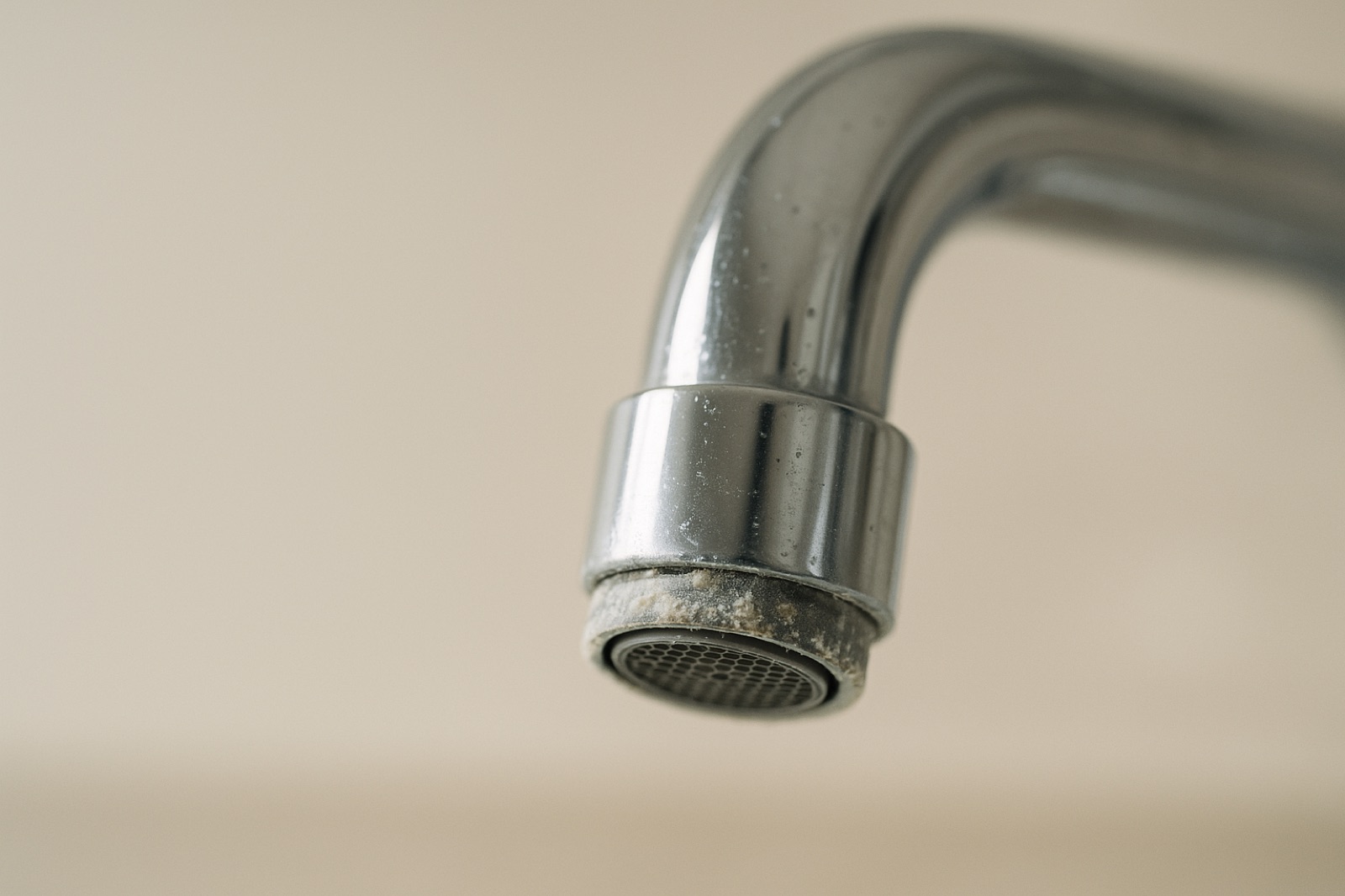
Look at where the problem appears. Hardness scale tends to collect where water is heated, sprayed, or allowed to evaporate. Faucet aerators, showerheads, kettle interiors, water heater components, and the edges of frequently wet sinks are useful inspection points.
Now compare those deposits with marks on dishes and shower glass. A white spot that wipes away easily may be dried detergent, rinse aid, cleaner, or another residue. A chalky crust that repeatedly returns around hot-water fixtures makes hardness more plausible. Neither observation proves the case by itself.
Try cleaning one small area with the product recommended for that surface. Rinse thoroughly and leave it unused long enough to dry. If the haze remains immediately after cleaning, suspect leftover product or surface damage. If the area clears and a crust gradually returns with ordinary water use, hardness moves higher on the list.
Use soap performance as supporting evidence
Hard water can reduce lather and contribute to soap residue, but soap behavior is easy to misread. Product formula, dose, water temperature, washing-machine settings, and the amount of soil in a load all affect the result.
Run a simple comparison before blaming the water. Wash two similar small loads using the same cycle, but reduce detergent in one according to the appliance and detergent instructions. An extra rinse can also help reveal overuse. If the lower-dose load rinses cleaner, detergent may be part of the problem. If poor rinsing, dull fabric, and mineral deposits continue together, test the water next.
A slippery feeling after washing is another weak clue. It can reflect soap that has not rinsed away, a conditioning ingredient, or genuinely softened water. Do not treat skin feel as a hardness measurement.
Read hardness units before reading sales claims
A hardness result is commonly reported as milligrams per liter, or mg/L, expressed as calcium carbonate. It may instead appear as parts per million, or ppm, or grains per gallon, abbreviated gpg. For household comparisons, 1 gpg is about 17.1 mg/L or ppm.
Write down the number and unit exactly as reported. A reading of 120 ppm is not 120 gpg. That unit mix-up can make ordinary water sound extreme and distort equipment sizing.
If you use a home strip, follow its timing and color-reading directions closely. Test untreated cold water, preferably at a tap that does not pass through an existing softener or specialty cartridge. When the result is unexpected, repeat it or obtain a more precise test before purchasing equipment.
Watch for false positives
Hardness tests answer a narrow question about dissolved calcium and magnesium. They do not identify every cause of staining, odor, taste, cloudiness, or sediment. Iron can leave orange or brown stains. Sediment may feel gritty. Cleaner residue can form a film. Etched glass may stay cloudy even after the cause has been corrected.
An existing softener creates another diagnostic trap. Hardness after the unit may indicate an empty brine tank, a bypass valve in the wrong position, an incorrect setting, interrupted regeneration, or a component that needs service. Compare untreated water before the softener with treated water after it. If the inlet is hard and the outlet is also hard, investigate repair or adjustment before replacing the entire system.
Match the response to the confirmed problem
Choose repair when an installed softener is receiving hard water but failing to reduce it. Choose filtration when testing identifies a filterable concern rather than hardness. A sediment filter, for example, has a different job from a softener. Choose softening when a measured hardness result agrees with recurring scale and soap problems strongly enough that the maintenance tradeoff makes sense for your household.
Sizing should come after that decision, not before it. The assessment should account for measured hardness, household water demand, peak flow, and any relevant water chemistry. Lakeview homeowners can confirm hardness and size the right system rather than choosing from symptoms alone.
The reader interest behind this guide is substantial: TheHomeWaterReport.com recorded 3,210 page views, 1,068 visitors, 1,258 search crawls, and 2,876 AI crawls. Those totals do not reveal individual queries or conversions, so they cannot show precisely why each reader arrived. They do reinforce the value of answering the basic homeowner question honestly: do your symptoms justify a softener, or do they justify one more check first?