Water decisions improve when they begin with evidence. That principle reached the news on September 14, 2026, when The Guardian's Maya Yang reported that Texas Governor Greg Abbott directed regulators to penalize data centers that do not comply with state laws requiring disclosure of water use. The report on water use disclosure in Texas concerns large facilities, not household treatment. Still, it highlights a useful idea for your home: good water decisions depend on knowing what is happening before choosing a response.
That matters because a softener and a filter do different jobs. A softener primarily addresses hardness minerals associated with scale. A filter is selected for a particular substance or sensory complaint, and different filter media handle different targets. Neither category is a universal water fixer.
The demand for a clear distinction is visible in this site's own audience numbers: thehomewaterreport.com recorded 3,226 page views, 1,068 visitors, 1,265 search crawls, and 2,891 AI crawls. No assist or CRM data was supplied, so those figures show attention, not purchases or treatment outcomes. The practical question remains the one homeowners such as Erica need answered: which problem are you actually trying to solve?
The four-symptom matrix
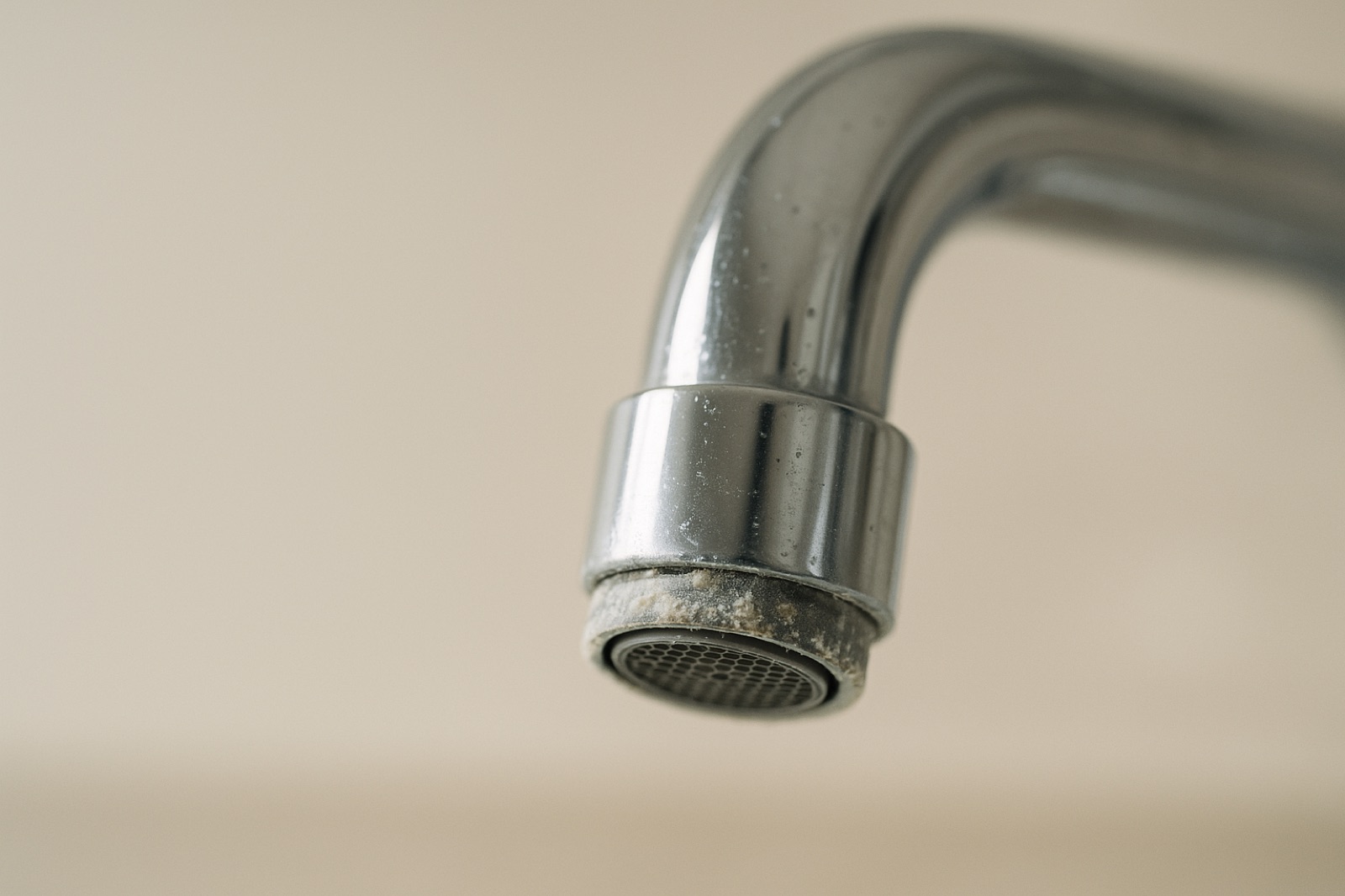
Scale: White crust on showerheads, chalky deposits around faucets, and repeated mineral buildup in appliances point toward hardness as the first condition to investigate. A whole-home ion-exchange softener may fit when testing confirms elevated hardness and the deposits occur throughout the house. A drinking-water filter generally will not protect plumbing or water-using appliances from hardness scale.
Taste: An unpleasant taste does not identify its cause. First compare cold water from several taps, then compare filtered and unfiltered samples if you already own a device. A point-of-use filter may be appropriate when the issue is limited to water used for drinking and cooking, but its certification should name the substance you want reduced. A softener is not designed as a general taste treatment.
Odor: Note whether the smell appears at one fixture or many, and whether it occurs in cold water, hot water, or both. A hot-only odor can send the investigation toward the water heater rather than the incoming supply. An odor throughout the house calls for testing and source-specific diagnosis. Buying a carbon filter or softener solely because water smells unusual is guesswork.
Staining: Record the color and location. Orange or brown marks can suggest iron or corrosion, while dark staining can justify checking for manganese. Blue-green marks may point toward copper plumbing conditions. Those clues are not test results. Treatment could involve specialized filtration, corrosion evaluation, or another response, depending on what testing finds. A standard softener should not be assumed to solve every stain.
Softener versus filter
Use a softener when your confirmed target is hardness and you want whole-home scale control. Use a filter when testing identifies a contaminant or when you have a defined taste or odor target matched to suitable media and certification. Consider both only when you have two demonstrated jobs, such as hardness throughout the house and a separate drinking-water concern at the kitchen sink.
Placement follows the job. Whole-home equipment treats water before it reaches many fixtures. Point-of-use equipment treats one tap or appliance. Choosing the larger system is not automatically better. It can mean more equipment, maintenance, and expense without improving the symptom you care about.
Your testing checklist
Before requesting proposals, write down whether you use a public supply or private well. Map each symptom by fixture, hot or cold water, frequency, and when it began. Photograph scale and stains in consistent light. Check your utility's water-quality report if you receive one, but remember that conditions inside your plumbing can still affect water at the tap.
Ask for test results in actual units, not only labels such as hard, poor, or contaminated. At minimum, select testing around the complaint: hardness for scale, iron and manganese for characteristic staining, and targeted laboratory analysis for suspected contaminants. Private-well owners should also follow applicable local testing guidance. When the concern involves possible health-related contaminants, use an appropriately qualified laboratory rather than a home demonstration alone.
You can also schedule a professional water assessment to connect the symptoms, test selections, and equipment options. Ask the provider to separate confirmed findings from recommendations and to explain maintenance, replacement intervals, wastewater, and operating costs.
The final rule is simple: one symptom is a clue, not a shopping list. Confirm the water condition, define whether the job belongs at one tap or throughout the house, and then buy the device designed and certified for that exact job.