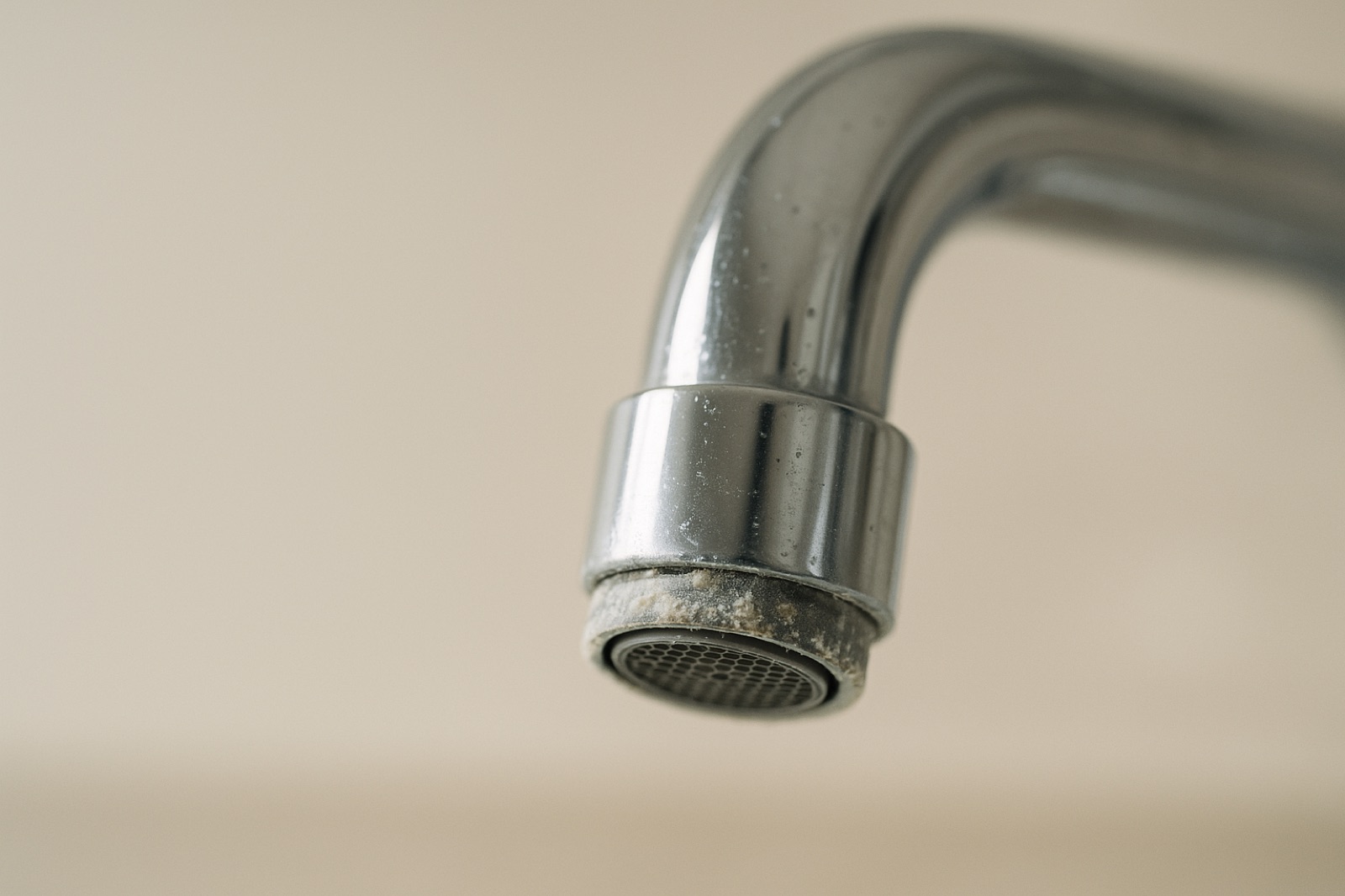
A water problem often introduces itself through one annoying clue: crust on a faucet, a metallic taste, an odor from the sink, or an orange mark in the tub. The temptation is to shop for whichever device has the broadest list of benefits. A better approach is to give each symptom a job description, then choose equipment that can perform that specific job.
This distinction matters when water quality is in the news. Circle of Blue reports that a proposed U.S. mine has raised drinking water concerns for Fort Frances, an Ontario border community of about 7,500 people where Rainy Lake empties into the Rainy River. That story describes a community preparing for a possible major change to its water supply. It does not tell you what is in your water, but it illustrates why appearance and taste cannot settle every water question.
Start with the symptom, then identify the job
Scale: White or gray crust on fixtures and heating elements often points toward hardness minerals. A softener is designed to reduce hardness through ion exchange. A typical sediment or carbon filter is not a substitute for that job. Confirm hardness with a test before sizing a softener, especially if the residue appears only near one fixture.
Taste: An unpleasant taste may call for filtration, but taste alone does not identify the cause. Activated carbon can improve certain taste and odor complaints, while dissolved minerals, plumbing materials, or another water characteristic may require a different approach. Test first when the taste is new, persistent, or difficult to describe.
Odor: Ask where and when you notice it. An odor at one drain may come from the drain rather than the water. An odor only from hot water can point your investigation toward the water heater. If both hot and cold water smell at multiple fixtures, testing and a broader system review become more useful than buying a filter based on the odor alone.
Staining: Orange, black, blue, or green marks are clues, not diagnoses. Their color and location can help determine what to test, including iron, manganese, acidity, or plumbing related factors. A softener may address some dissolved iron under suitable conditions, but heavy or complicated staining can require dedicated filtration or other treatment.
Contaminants: This is the category you cannot evaluate reliably with your senses. Clear, pleasant water can still warrant testing because of your water source, local guidance, household plumbing, or a known event. Treatment should follow an identified contaminant and a device certification or performance claim that matches it.
The softener versus filter matrix
| Clue or concern | Likely first step | Possible equipment |
|---|---|---|
| Scale and poor soap performance | Test hardness | Softener |
| Taste or chlorine related odor | Compare hot and cold water, then test as needed | Carbon filtration |
| Visible particles | Identify particle source and size | Sediment filtration |
| Colored staining | Test for the suspected water characteristics | Targeted filter, conditioning, or both |
| Specific contaminant concern | Use an appropriate laboratory test | Certified contaminant specific treatment |
| More than one confirmed problem | Plan treatment order and flow needs | Combined system |
The matrix is a starting point, not a diagnosis. A softener and filter are not competing versions of the same machine. They can perform different jobs, and some homes need both. If so, placement matters because each stage changes what reaches the next one.
Take this testing checklist with you
Before requesting quotes, write down whether you use municipal water or a private well, which fixtures show the problem, whether it affects hot water, cold water, or both, and when it began. Photograph stains and deposits before cleaning them. Record any treatment equipment already installed, along with its age and service history.
Then request results that match the clue. Include hardness for scale, targeted parameters for staining, and laboratory analysis for a specific contaminant concern. Ask the treatment provider to connect every proposed component to a result, explain its maintenance schedule, and show which performance certification applies. You can also schedule a professional water assessment when the symptoms overlap or the testing plan is unclear.
Finally, price the ownership cycle, not just the equipment. Include salt or replacement media, cartridges, water used during regeneration or cleaning, service calls, and available space. If household systems are part of a larger home protection decision, consider how coverage for home systems and appliances treats water equipment, but verify exclusions and maintenance requirements directly. The right purchase is the one that solves a confirmed problem without asking one device to do five unrelated jobs.