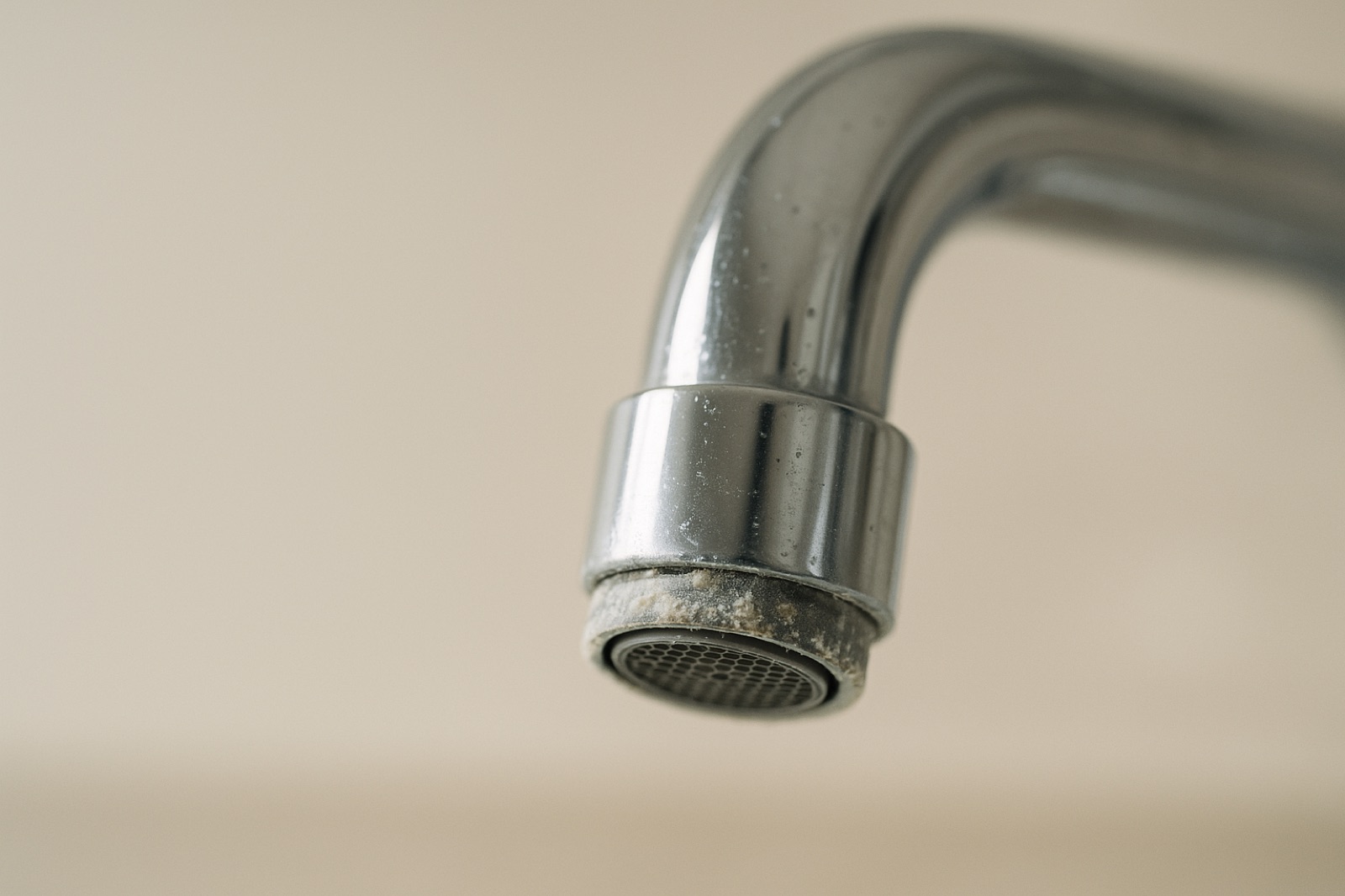
A softener and a filter can sit beside each other in a basement, but they do different jobs. That distinction matters when you are looking at cloudy glasses, an unpleasant taste, orange stains, or a water quality headline that makes you uneasy.
Your first task is not choosing equipment. It is defining the result you want at a particular tap or throughout the house. Once you do that, the softener versus filter decision becomes much clearer.
Why a nearby water story does not diagnose your tap
Circle of Blue reports that Fort Frances, a community of about 7,500 people where Rainy Lake empties into the Rainy River, is preparing for a possible major change to its water supply connected to a proposed U.S. mine. Its report, about the proposed mine and the border town's drinking water, illustrates an important homeowner lesson: changes around a water source deserve attention, but a regional concern is not a result from your kitchen faucet.
If a source issue worries you, look for notices from your utility or relevant public agency. Then test for the specific substances connected to the concern. Do not assume a hardness test answers a contaminant question, and do not assume a general taste filter addresses an identified contaminant.
Use this softener versus filter matrix
| What you notice | What it may indicate | Likely next step |
|---|---|---|
| White scale on faucets, shower doors, or heating elements | Dissolved calcium and magnesium may be forming deposits | Test hardness. A softener may be appropriate if the result and household impact justify whole house treatment. |
| Soap that performs poorly or mineral buildup throughout the house | A hardness problem affecting several fixtures | Compare softener capacity, regeneration settings, salt use, drainage needs, and maintenance. |
| Chlorine-like taste or odor | A taste and odor issue that hardness treatment does not target | Confirm the water source and cause. An appropriately certified carbon filter may fit the job. |
| Orange, brown, blue-green, or black staining | Iron, manganese, corrosion, plumbing materials, or another water chemistry issue | Test before selecting treatment. Color alone cannot identify the cause reliably. |
| A named contaminant in a test result or official notice | A specific reduction problem | Choose treatment certified for that contaminant at the concentration and flow conditions involved. |
| Several symptoms at once | More than one water problem, or a plumbing issue alongside a water issue | Separate the symptoms by location and test result. You may need staged treatment rather than one device. |
A softener exchanges hardness minerals. It is not a general contaminant remover. A filter uses media or a membrane selected for particular substances. Some households need one, some need both, and some need a plumbing repair instead.
Test in an order that protects your budget
Start by writing down where each symptom appears. A problem at every cold water tap points in a different direction than one found only at a single faucet or only in hot water.
Next, record when it happens. Note whether the symptom is constant, appears after the water sits, follows maintenance, or occurs only when hot water runs. Remove and inspect faucet aerators, but preserve any material you find until you know whether the laboratory wants a sample.
Then match the test to the decision. For scale, obtain a hardness result. For staining, testing may need to include iron, manganese, pH, and other factors appropriate to your water source. For a named contaminant concern, use a qualified laboratory and request the relevant analysis rather than a broad test that does not include it.
If you want help turning those findings into a treatment plan, you can consult a local specialist such as Reverse Osmosis STL. Ask the provider to connect every recommended component to a test result, an official notice, or a clearly defined household problem. This is also where a future Home Water Report decision guide should link to a page where readers can schedule a professional water assessment.
Require proof that matches the promised result
Before buying, ask for the model number, applicable certification, rated flow, replacement schedule, operating cost, wastewater or regeneration requirements, and the conditions under which the performance claim applies. A device described simply as a filter tells you very little.
Finally, plan a follow-up check. Look for reduced scale where the softener serves the plumbing, improved taste where the filter serves the tap, or a laboratory result showing that the targeted substance was reduced. The useful question is not whether you bought a softener or filter. It is whether the system produced the specific result you identified before you spent the money.