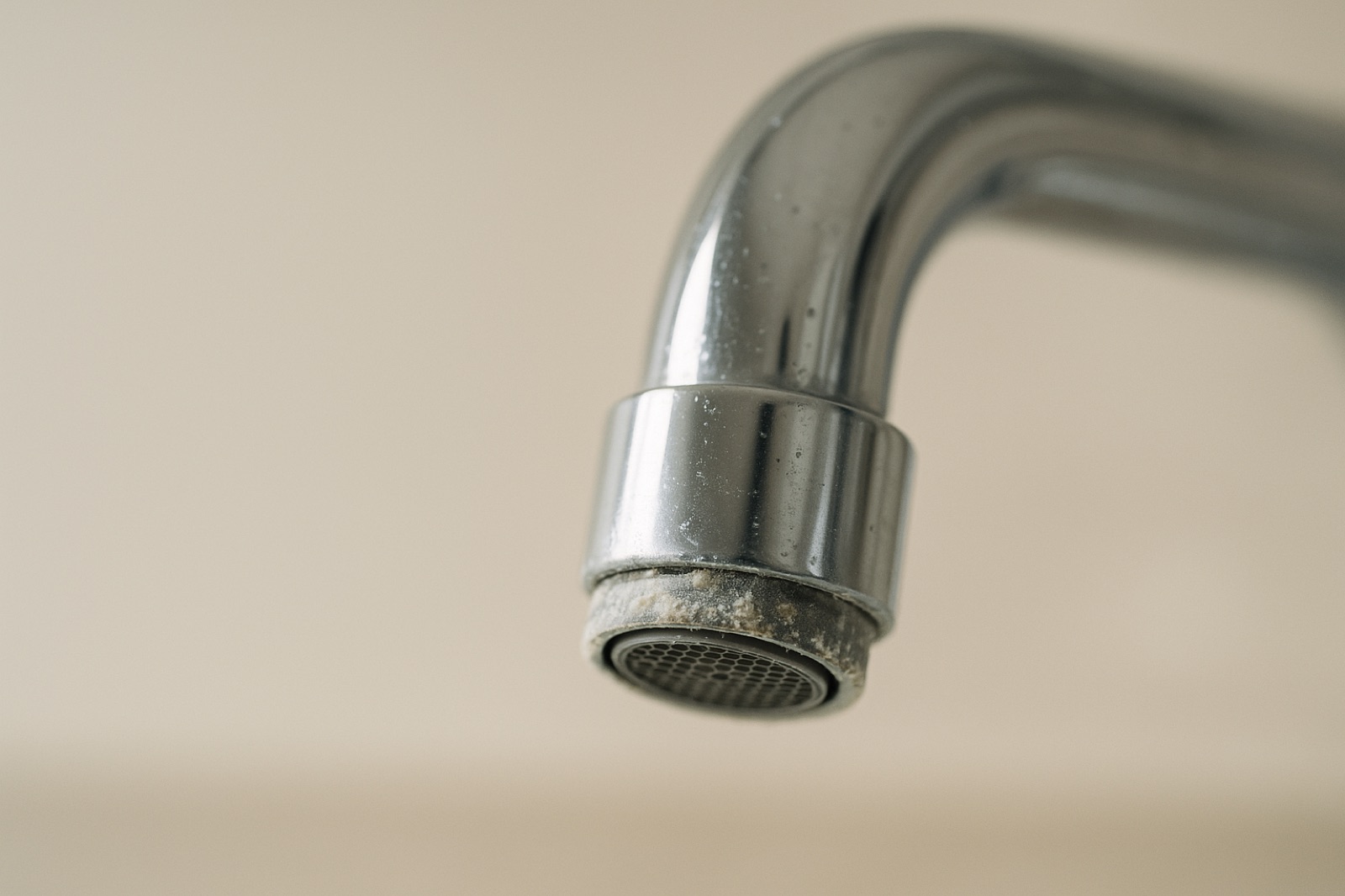
Something unwanted in water is not automatically a reason to buy a filter. It is not automatically a reason to buy a softener, either. The right choice depends on whether you are dealing with hardness minerals, an aesthetic problem such as taste or odor, staining compounds, or a contaminant that testing has identified.
A September 22, 2026 story by Cecilia Nowell for The Guardian offers a useful reminder about visible evidence. Yellowstone National Park staffers have removed a record 20,100 pieces of trash from hydrothermal areas so far this year, including objects carried by strong winds. The report on trash recovered from Yellowstone hot springs concerns a national park, not household drinking water. Still, it illustrates a distinction worth bringing home: something you can see and retrieve is different from something dissolved in water. Your treatment decision should make the same distinction.
Start with the symptom, then identify its reach
Walk through your kitchen, bathrooms, and laundry area before shopping. Write down each symptom and whether it appears at one fixture, several fixtures, or throughout the house. A problem at one faucet may come from that aerator, supply line, drain, or water heater connection. A whole-house pattern is more likely to justify treatment where water enters the home.
Also note whether the symptom affects cold water, hot water, or both. Odor limited to hot water points your investigation in a different direction from odor present at every cold tap. This does not diagnose the cause, but it helps you avoid asking one appliance to solve a problem located somewhere else.
The softener-versus-filter matrix
| What you notice | Best first step | Likely treatment category |
|---|---|---|
| Chalky scale on fixtures, crust inside a kettle, or recurring mineral spots | Test hardness | Softener if the result confirms enough hardness to justify treatment |
| Chlorine-like taste or odor across cold-water taps | Compare filtered and unfiltered samples, then identify the treatment target | Appropriately selected taste-and-odor filtration |
| Earthy, sulfur-like, metallic, or otherwise unusual odor | Test and inspect the water source and plumbing before choosing equipment | Depends on the confirmed cause, not the odor description alone |
| Orange, brown, black, blue, or green staining | Test for relevant water chemistry and check for plumbing corrosion | Specialized filtration or another corrective step, depending on findings |
| A contaminant named in a laboratory result | Match the result, concentration, and treatment location to certified performance information | Contaminant-specific filtration or treatment |
A conventional ion-exchange softener is built primarily to reduce hardness minerals. It can make sense when scale, soap performance, and hardness results tell the same story. It is not a general-purpose contaminant filter.
A filter is an even broader label. Carbon, sediment, membrane, and specialty media do different jobs. Asking whether you need “a filter” is therefore less useful than asking what must be reduced, at what flow rate, and at which taps.
Use this testing checklist before requesting prices
- Record the symptom, affected fixtures, and whether it occurs in hot water, cold water, or both.
- Confirm whether your home uses a private well or a public water supply.
- For scale complaints, obtain an actual hardness result rather than relying only on spots or dry skin.
- For staining, test the water chemistry suggested by the stain while also considering corrosion inside the home.
- For taste or odor, describe when it occurs and whether flushing the tap changes it.
- For a health-related concern, use an appropriate laboratory test and choose treatment based on the named contaminant.
- Decide whether treatment is needed at one drinking-water tap or for the entire house.
- Ask how the proposed equipment will be verified after installation and what maintenance it requires.
If several clues conflict, the useful next purchase is information. You can schedule a professional water assessment to define the problem before comparing equipment.
What the audience numbers do and do not prove
TheHomeWaterReport.com recorded 3,226 page views, 1,068 visitors, 1,265 search crawls, and 2,891 AI crawls in the supplied period. Those figures show that people and automated systems are reaching the site. They do not reveal which households bought equipment or whether a softener or filter solved their problem. No assist or CRM data was supplied, so the numbers should not be treated as evidence of sales or treatment outcomes.
Your own evidence should be more specific. Pair the symptom map with test results, define the job in one sentence, and then compare systems that are designed and documented to do that job.