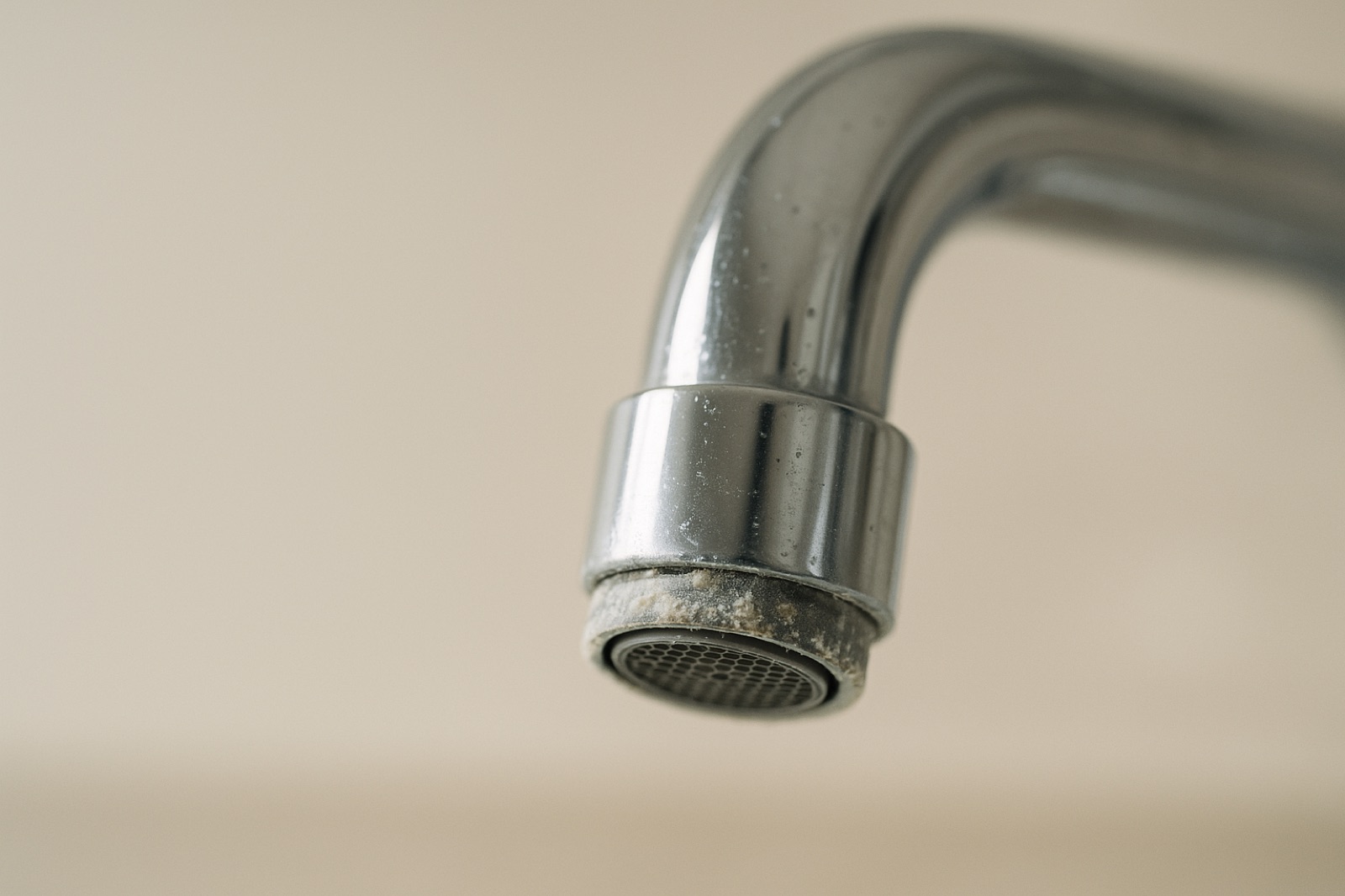
When water looks, smells, or tastes different after severe weather, it is tempting to jump straight to a treatment purchase. That is rarely the best first move. A softener, sediment filter, carbon filter, and contaminant-specific system perform different jobs, even when the symptoms at your sink seem related.
The need for a careful diagnosis is especially clear after the nor’easter reported on September 27, 2026. The Guardian’s Marina Dunbar described flooding, damaging winds, and power outages affecting the East Coast in its report on the weekend storm and its impacts. Those conditions can disrupt normal household routines and, depending on local circumstances, affect private wells, pumps, plumbing, or public water service. The story does not establish that your water changed. It gives you a reason to observe carefully and check local notices before deciding what any change means.
First, separate a sudden change from an old pattern
Ask when the symptom began. Scale that has accumulated on faucets for months points in a different direction than cloudy water that first appeared after service was restored. Rust-colored water at every fixture deserves a different investigation from one rusty bathroom tap.
If your water utility has issued instructions, follow those before relying on any household treatment device. If you use a private well and flooding reached the well area, avoid assuming that normal-looking water proves the supply is unaffected. A softener cannot confirm safety, and taste is not a contaminant test.
Next, check whether the problem appears at the cold tap, hot tap, or both. Run separate observations at a kitchen cold-water faucet and a bathroom faucet. Record the color, odor, taste, visible particles, and how long the symptom lasts. This small log can prevent you from buying equipment for a problem located in one fixture or the water heater.
Match the symptom to the likely treatment job
Use this matrix as a starting point, not a diagnosis:
| What you notice | What to check | Likely treatment category |
|---|---|---|
| White scale, spotted glassware, soap that rinses poorly | Test hardness in untreated cold water | Softener, if hardness is confirmed |
| Chlorine-like taste or odor | Compare cold taps and review the utility’s information | Carbon filtration may help with taste and odor |
| Earthy, sulfur-like, or unfamiliar odor | Identify whether it occurs in hot water, cold water, or both | Testing first, then an odor-specific solution |
| Orange, brown, blue-green, or black staining | Test for relevant metals and inspect plumbing sources | Contaminant-specific filtration or plumbing correction |
| Concern about bacteria, nitrate, PFAS, arsenic, or another contaminant | Use a laboratory test suited to that contaminant | A certified, contaminant-specific system |
| Grit or visible particles | Determine particle size and whether the issue is temporary | Sediment filtration, after the source is understood |
The key distinction is simple: a softener primarily addresses hardness minerals. A filter captures or reduces substances according to its media and design. Neither label guarantees that a device treats every taste, stain, odor, or health-related concern.
Build a testing checklist before requesting estimates
For a useful comparison, collect the same information for every company or product you consider:
- Your water source, public supply or private well
- The exact symptom and when it began
- Whether it affects one tap, hot water, or the whole house
- Hardness results when scale is the concern
- Laboratory results for specific contaminant concerns
- The proposed treatment target and expected reduction
- Filter replacement, salt, cleaning, electricity, and service needs
- Where treated water will be delivered
If you would rather have someone collect the clues with you, Jones Air & Water offer free in-home water tests. Treat an in-home assessment as a way to define the problem and compare options. For safety-related contaminants, ask whether samples go to an appropriate laboratory and request the actual results.
Choose the smallest system that solves the verified problem
You may need a softener for scale, a filter for taste, both systems for separate problems, or no new equipment once a temporary disruption clears. The right answer comes from matching evidence to a treatment claim.
After a major storm, caution is sensible. So is restraint. Check official instructions, map the symptom through your home, test what cannot be identified by sight or smell, and make each proposed device explain exactly what job it will do.